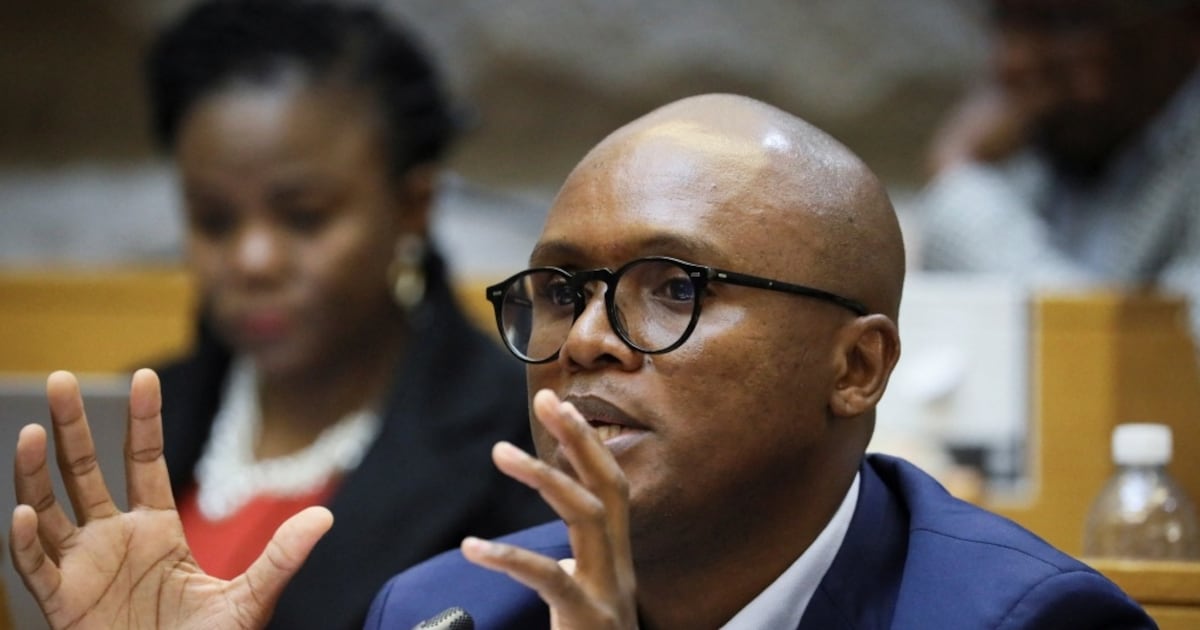
Solly Malatsi, Minister of Communications and Digital Technologies, whose department is the custodian of the Draft National Policy on AI. The writer argues that digital tools may make reporting faster, but speed without assurance can become a governance hazard.
By Nqobani Mzizi
The irony was difficult to miss. A draft policy intended to guide South Africa’s artificial intelligence (AI) future had to be withdrawn after fictitious references were found in it. In that moment, a document meant to guide responsible thinking about AI became a lesson in why AI itself must be governed with care.
The Department of Communications and Digital Technologies withdrew the Draft National AI Policy after an internal process, with Minister Solly Malatsi acknowledging that the department had not met the standard expected of an institution entrusted with leading South Africa’s digital policy environment. The issue went to credibility, trust and the discipline of human verification in this AI era.
The incident should be treated as a valuable governance warning, rather than an embarrassment to be quickly forgotten. AI can generate, summarise, analyse data and accelerate work that would otherwise take many hours. Yet it can also fabricate, distort, mislead and create a false sense of confidence. The danger is not only that AI may be wrong. It is that it may be wrong with fluency.