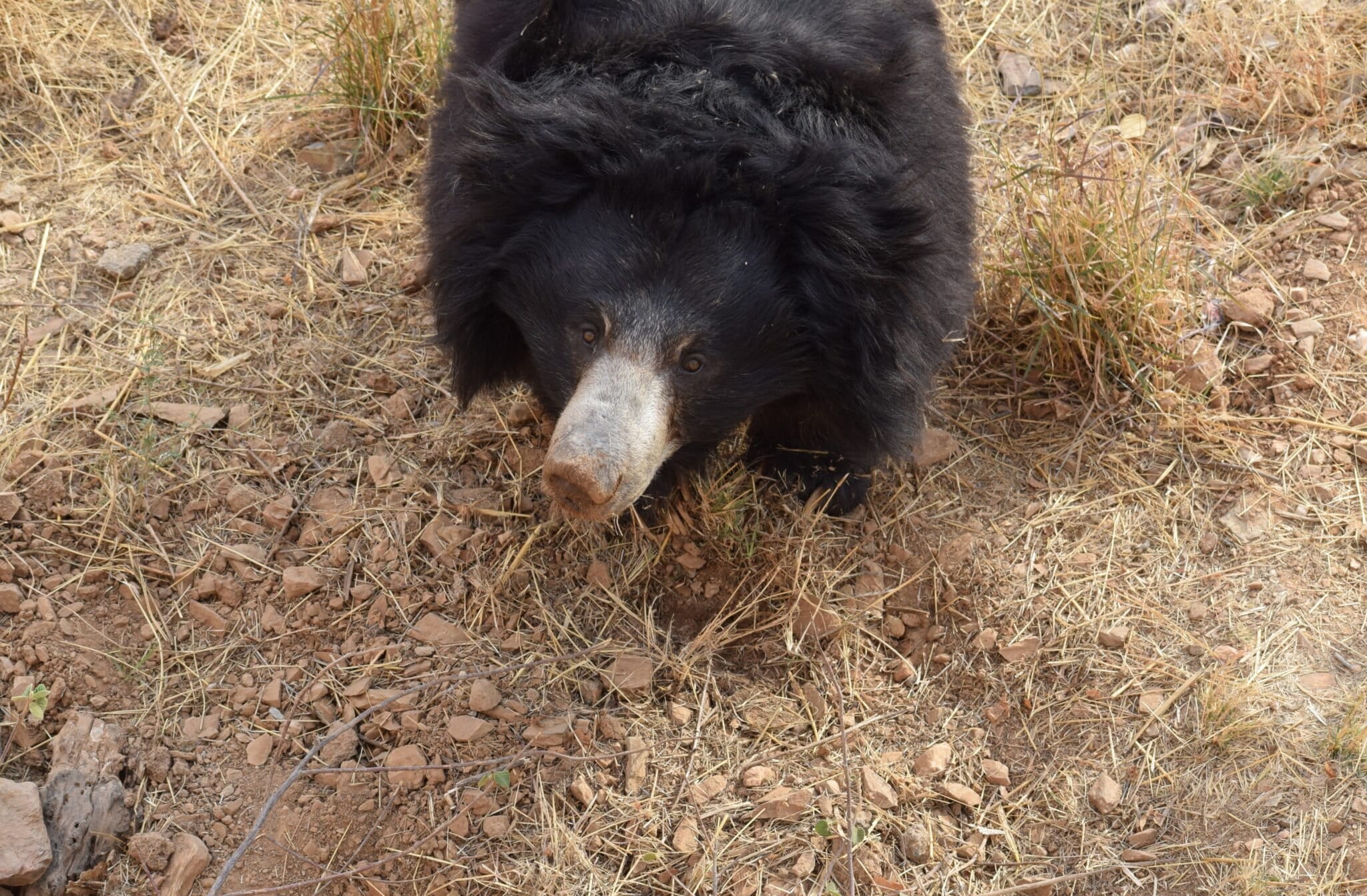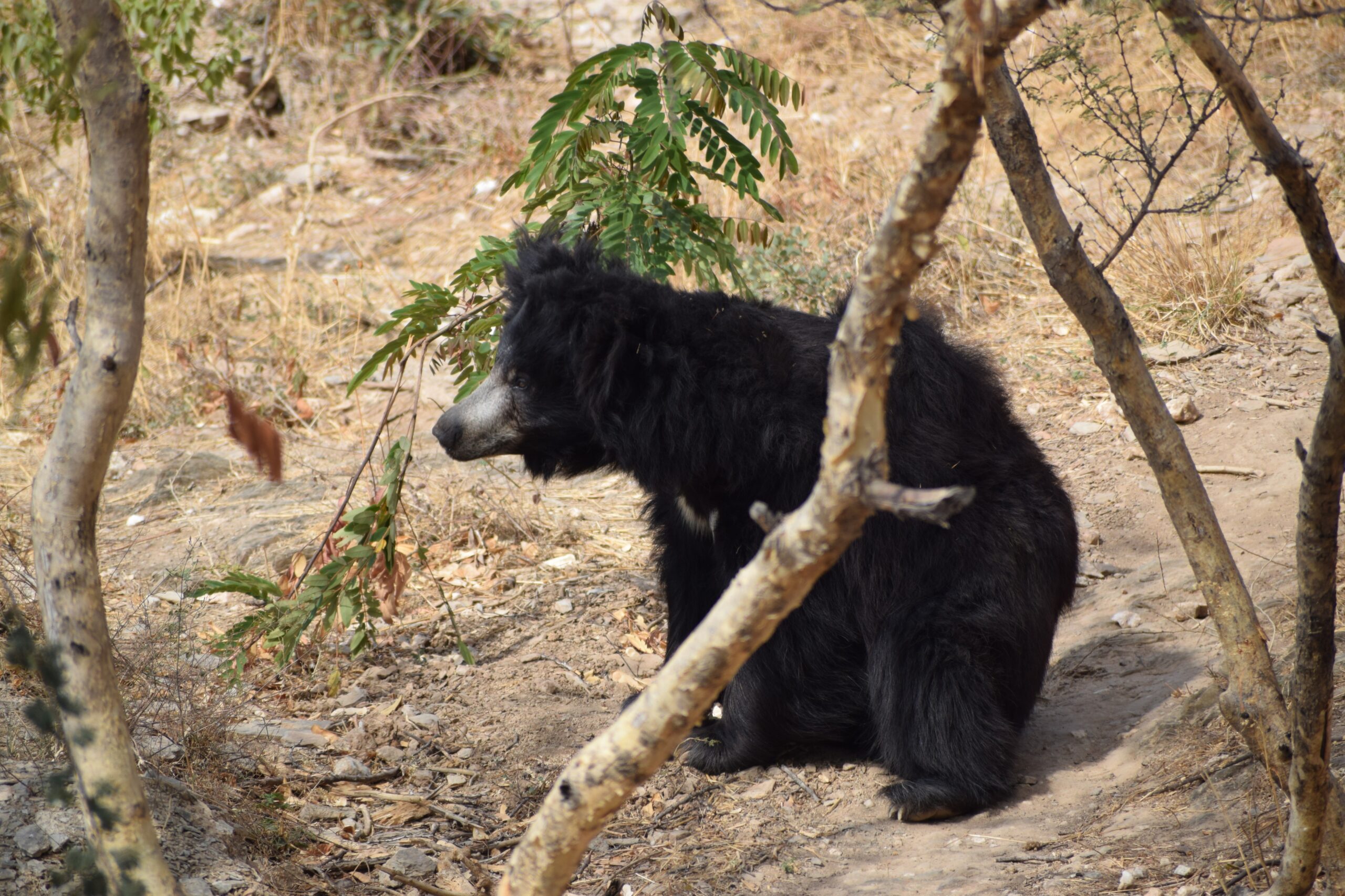
A study from Rajasthan’s Aravalli hills has found that sloth bears may help shape dry deciduous forests by dispersing viable seeds and influencing plant regeneration.The bears switched from fruit-rich diets during winter to insect-rich diets during summer, reflecting seasonal changes in food availability.The study also found that Lantana camara seeds germinated only after passing through a sloth bear’s digestive system in the experiment, suggesting the animals may also help disperse the invasive shrub.
Sloth bears may be doing much more than foraging across Rajasthan’s semi-arid deciduous forests. A new study from the Aravalli hills suggests they may also help shape the forests by dispersing viable seeds.
“A relatively small number of careful studies have been conducted on sloth bear diet ecology, and an even smaller number on their role in enabling seed dispersal,” says K.S. Gopi Sundar, independent scientist and co-author of the study. “Since we studied both of these aspects, we are able to show that bears are influencing a number of plant species in germinating more and faster than if they were left to germinate naturally. Clearly, dry deciduous forests’ plant compositions are a function of sloth bear presence, movement, and dietary habits,” he says.