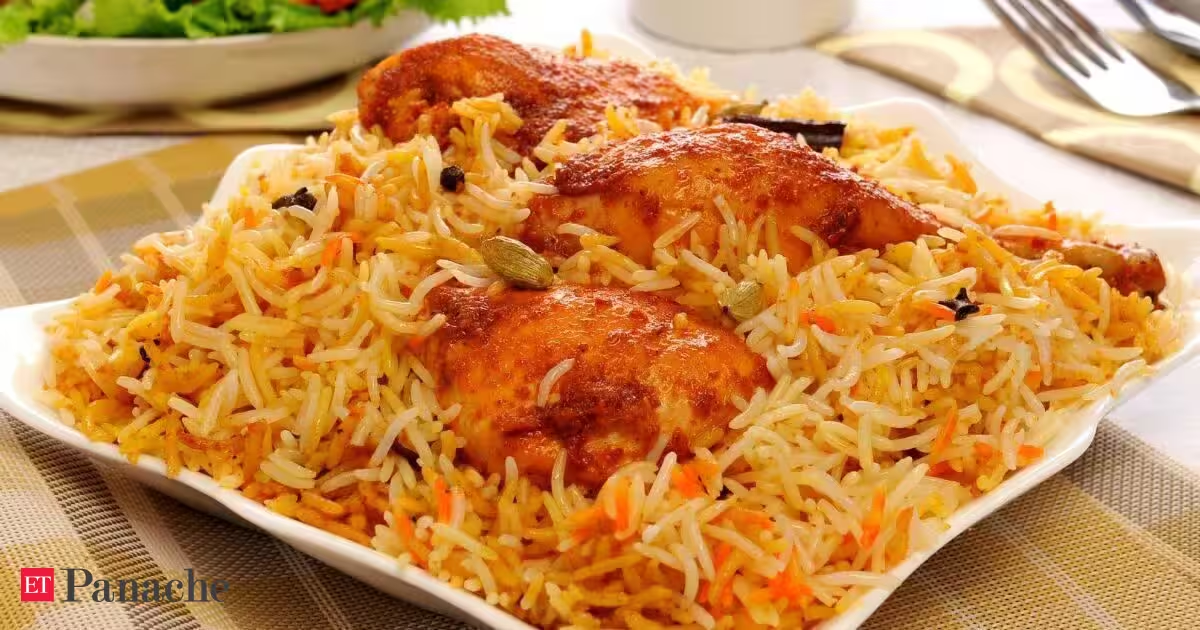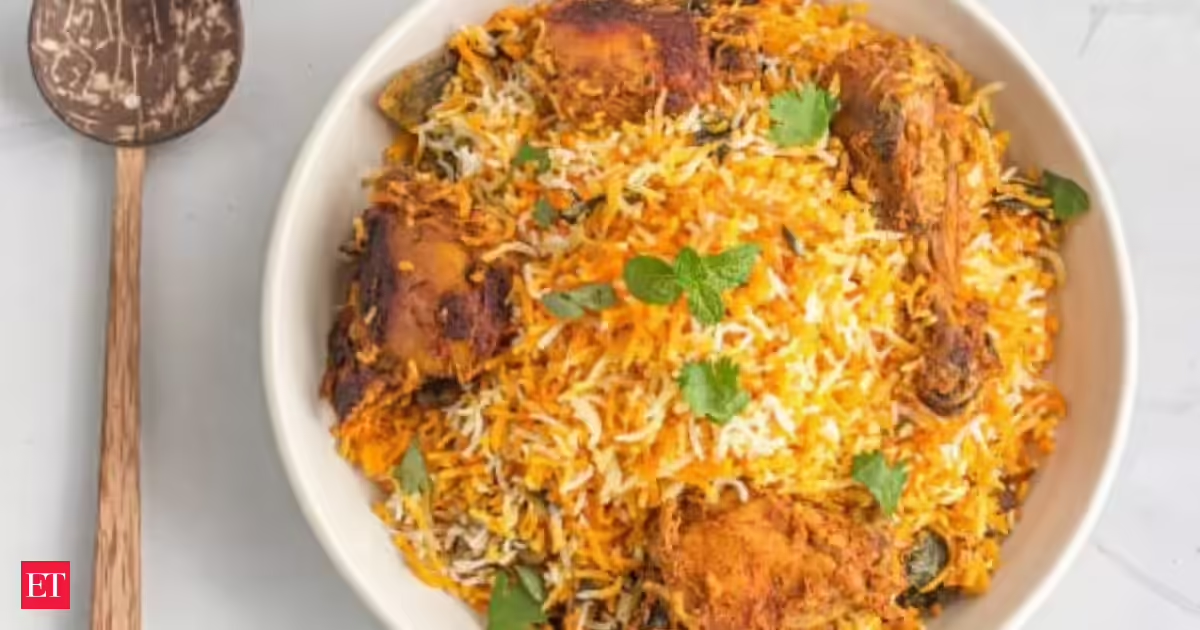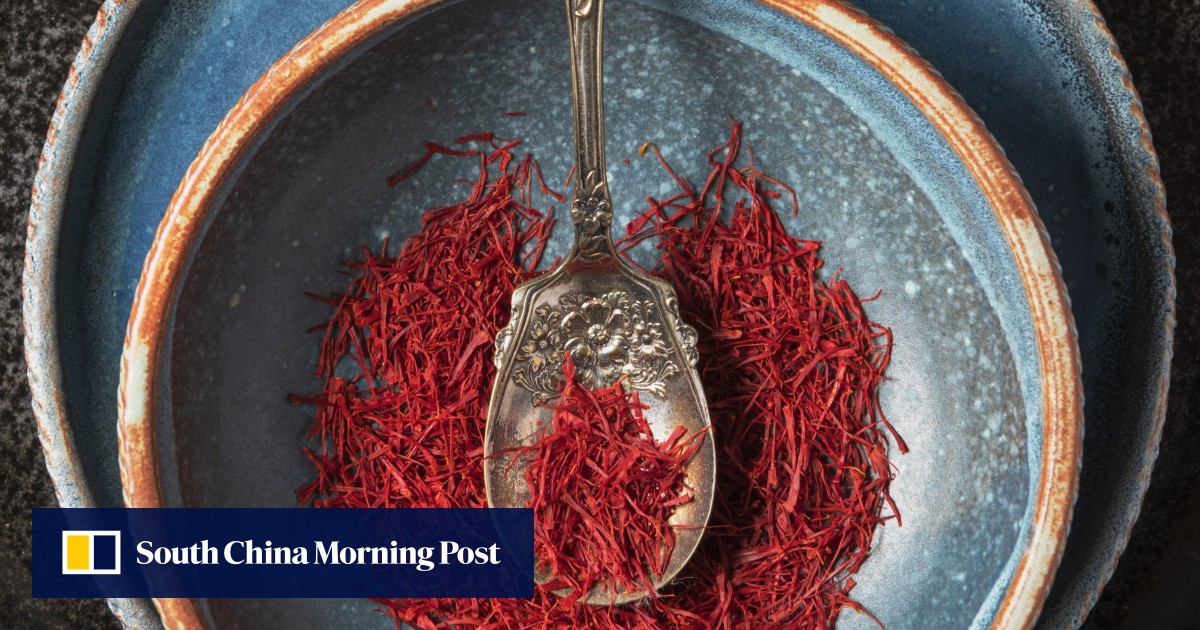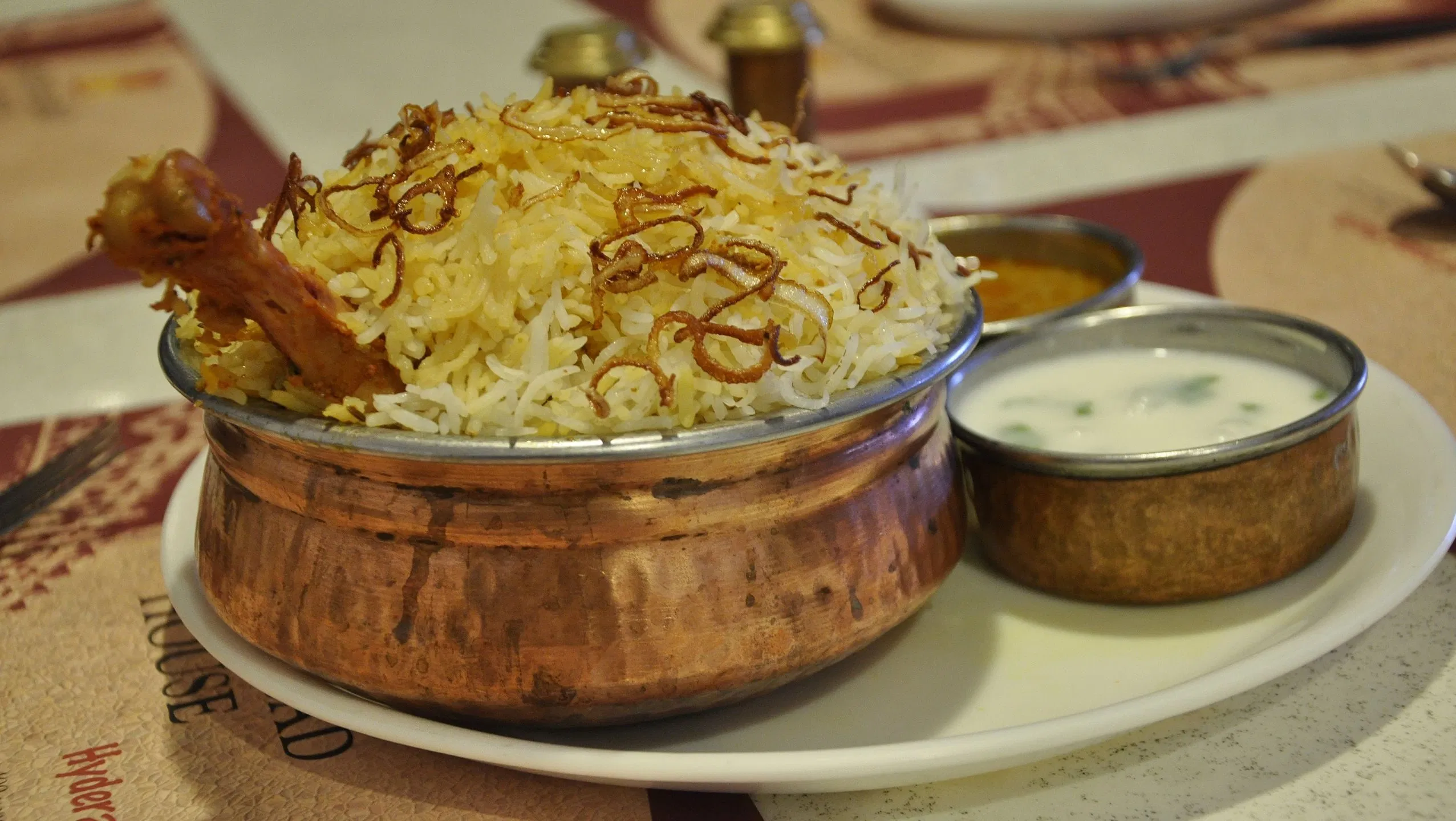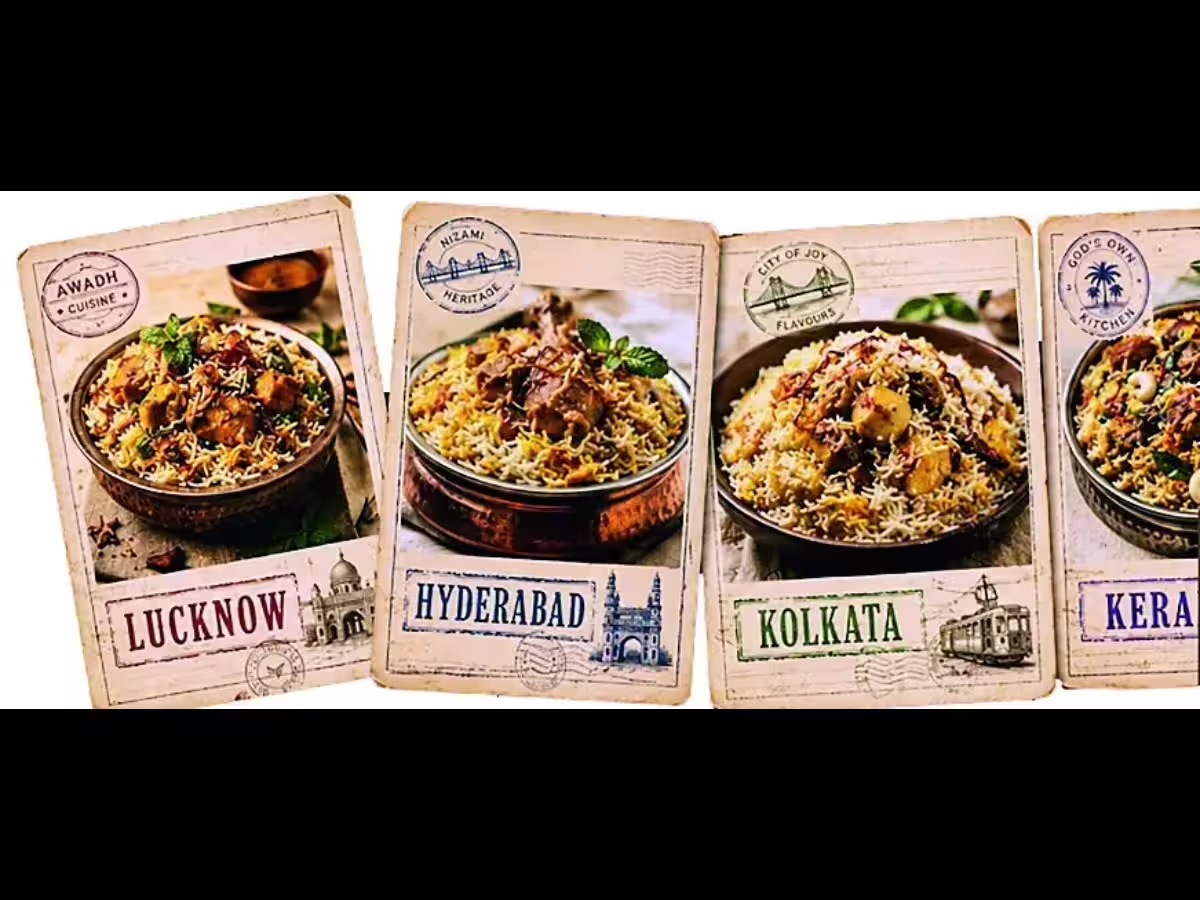
A colourful roadside advertising kiosk in Gurgaon caught my eye. It featured a close-up of a copper patila of Hyderabadi biryani, each golden grain of basmati aglow in succulent detail as an imagined symphony of spices suffused the monsoon-laden air with an ambrosial aroma.The ad was for a kitchen appliance, the USP of which was that unlike other devices of a similar nature that cook one dish at a time, this could cook two dishes simultaneously. Ek ticket, do mazaa.The next kiosk for the same appliance depicted Bombay biryani, looking equally delectable. The third kiosk showed Awadhi biryani, and the one after that, Calcutta biryani, each vying with the other for appetising appeal.This blitzkrieg of biryani was puzzling. If the idea behind the ads was to highlight the culinary ambidexterity of the 2-in-1 device, wouldn't it have made more persuasive sense to have had a sequence of different dishes like, say, dal makhani, matar paneer, or baingan bharta, instead of a repetitive quartet of biryanis? And then it struck me. The four biryanis were, in fact, four distinct and different dishes, in respect of some of the ingredients used, the recipes followed, and the places they came from.While they were all subsumed under the generic rubric of biryani, they differed from each other in much the same way as a Jamini Roy is different from an Amrita Sher-Gil, and both from a FN Souza.In that sense, the collective term biryani is reflective of the Indian ethos itself, which in its overarching Indianness incorporates individuated identities, such as Bengali, Marathi, Malayali, and Punjabi, inter alia, all belonging to the great joint family called Indians.Similarly, the biryani baradari has some 50 offshoots. There's the Hyderabadi version, cooked in the kachchi dum way. The Lucknowi or Awadhi style, in which the animal protein and rice are cooked separately and then put together. The Calcutta manifestation, which includes hard-boiled eggs and potatoes. The Bombay variant, which also has potatoes but omits the eggs. A Kerala biryani. A Chettinad biryani. Not one, but two biryanis from Karnataka. And a shudh shakahari avatar in which unripe jackfruit replaces the non-veg component.Thanks to GID - Great Indian Diaspora - the biryani banyan has spread far afield in the form of Myanmar danpauk, Indonesian kebuli, and Thai khao mhok.The putative origins of biryani are almost as numerous as its recipes. The word 'biryani' itself is said to trace its etymology to the Persian 'biryan' or 'beriyan,', meaning to fry or roast, which, according to one dictionary, is related to the Sanskrit 'bhrjjati,' which has the same meaning.Was the precursor of biryani - ur-biryani, as it were - an early form of the US army's K-ration, a WW2 daily field package devised as a meal-in-one convenience food for soldiers on the march, as some food historians would persuade us? Or can it be traced to haute cuisine of the Mughal court dating back to Abul Fazl's late 16th c. Ain-i-Akbari, which features several references to the dish and ways of preparing it?A Portuguese priest who travelled to Lahore during the reign of Shah Jahan in the 17th c. mentions in his journal 'the rich and aromatic Mogol Bringes [biryani]' being sold in tented bazaars.Even the austere and ascetic Aurangzeb was not impervious to the tantalising seductiveness of the dish, mentioning in an admonitory letter to his son Bahadur Shah, 'I wanted to have from you... Saliman who cooks 'biryani', but you did not allow him to serve as my cook. If you happen to find a pupil of his, skillful in the art of cooking, you will send him to me.'Whatever its provenance, imperial kitchen or military encampment, and however heterogeneous its regional incarnations, and whether its ambience be a roadside dhaba or a gala 5-star banquet, biryani remains an alimentary iteration of eclectic individualism, which gives you total freedom of choice. To paraphrase a famous proclamation of independent resolve - swaraj is my biryani, and I shall have it!(Disclaimer: The opinions expressed in this column are that of the writer. The facts and opinions expressed here do not reflect the views of www.economictimes.com.)
Never mind the type, Swaraj is your biryani & you shall have it! - The Economic Times
Biryani advertisements highlight its diverse regional variations and culinary appeal. The dish's origins are debated, with links to Persian and Sanskrit roots. Historical accounts mention biryani in Mughal courts and military encampments. Its many forms reflect India's eclectic individualism and freedom of choice. Biryani's widespread popularity spans from local eateries to grand banquets.
685 words~3 min read