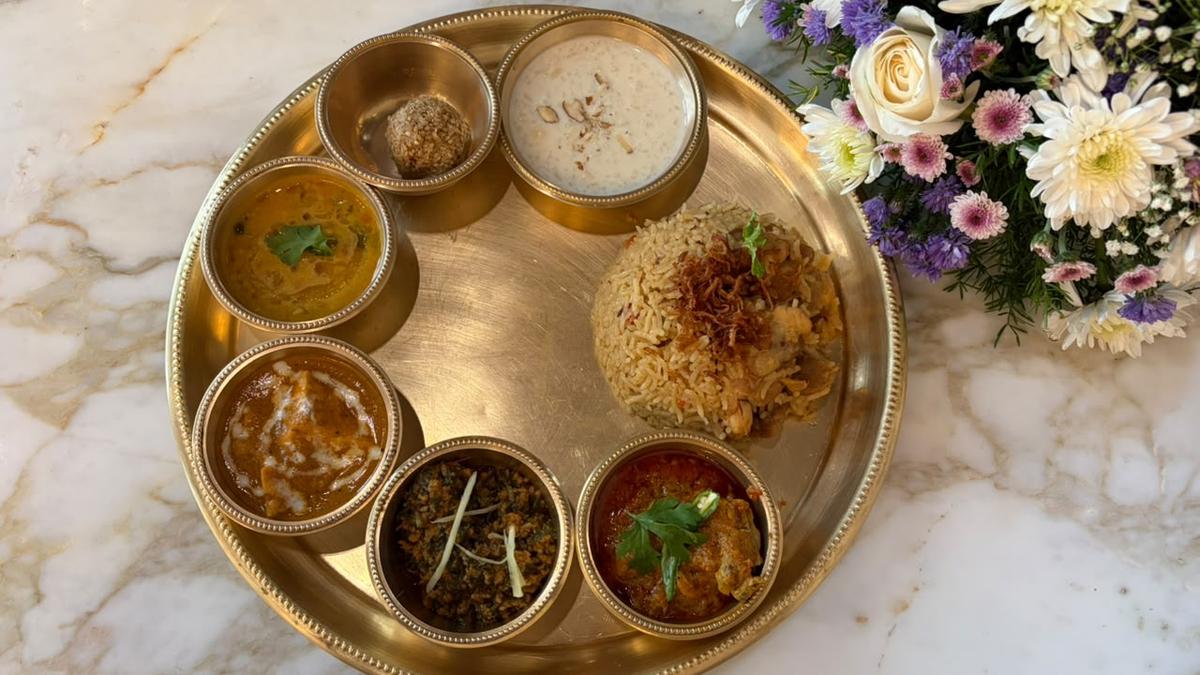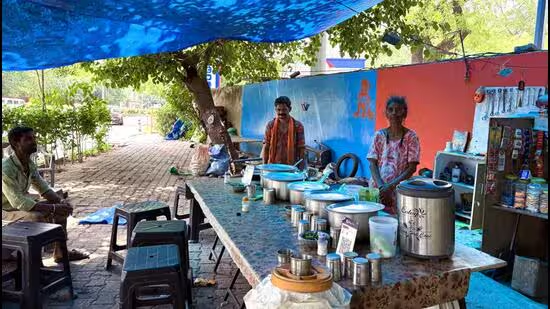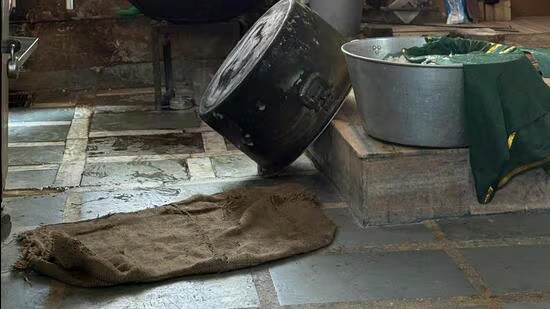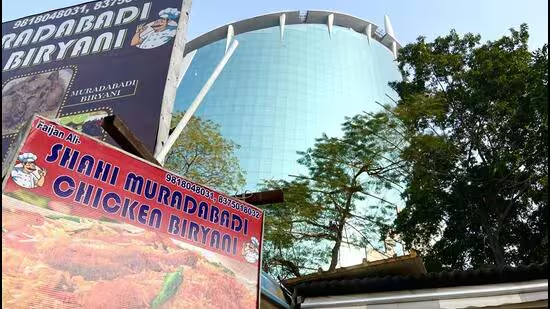
On lifting the lid off the giant aluminium deg, clouds of pure scented steam escapes into the city’s smoggy air. Beneath the steam lie long grains of rice, each separate and glistening, entwined here and there with pieces of chicken, and with limpid strands of whole green chillies.Across Delhi, Ghaziabad and Gurugram, small eateries and roadside shacks serve this rice dish from morning till night. It is biryani, but not Delhi-style biryani, Lucknow-style biryani or Hyderabad-style biryani. It is Moradabadi biryani. (HT Photo)Across Delhi, Ghaziabad and Gurugram, small eateries and roadside shacks serve this rice dish from morning till night. It is biryani, but not Delhi-style biryani, Lucknow-style biryani or Hyderabad-style biryani. It is Moradabadi biryani.The city that lent its name to this particular biryani has now crossed the 400-year mark, completing four centuries of history. Moradabad was founded in 1625 and named after Prince Murad Baksh, son of Shah Jahan, the Mughal emperor who gave us what is now known as Old Delhi. Known as Pital Nagri for its brass industry, Moradabad has lately been building, very quietly, a very different kind of fame.Over the past decade, Moradabadi biryani has become one of the most visible street dishes in the Delhi region. Today, it is as common on city streets as momos and golgappas. You are likely to find more street carts hawking Moradabadi biryani than any other city-named biryani.Yet, Moradabadi biryani remains difficult to define. Unlike Lucknowi or Hyderabadi biryani, there is no peaceful consensus on what exactly makes it distinctive. Some vendor-cooks identify the generous use of green chillies as its chief characteristic. Others refer to the practice of jointly cooking raw chicken and rice. One gourmand says that it is distinctive for having an excess of zeera and whole garlic, skin intact. Food scholar and author Pushpesh Pant, who lives in Gurugram, once offered rather radical views on Moradabadi biryani to this reporter, questioning whether it exists as a clearly defined category at all. In his view, if chicken and rice can be cooked together with lots of spices, and sold under the Moradabadi label, then almost any cook can claim to be making Moradabadi biryani.That said, the celebrated gourmand did share a recipe for his version of Moradabadi biryani. It begins with chicken marinated in curd, garlic, ginger, green chilli paste and freshly ground spices. Rice is added to the same pot and cooked with the meat. Ghee is preferred over oil. Fennel powder, garam masala and a touch of kewra complete the dish.Whatever the uncertainties surrounding the dish, they have done little to slow its rise. An unnamed eatery on the Delhi-Jaipur highway near Gurugram’s Rajiv Chowk serves Moradabadi biryani with korma and garlic chutney. A fancier Moradabadi biryani place stands right under the shadow of Gurugram’s most iconic high-rise, the so-called Gateway Tower, see photo. Indeed, 400 years after its founding, Moradabad is being eaten by many.But wait, dear reader, our story hasn’t ended. A small joint has been discovered outside Delhi’s Kasturba Hospital, specialising in Meerut ki biryani. What are the chances that one day humble Meerut might trump mighty Moradabad, taking over our megalopolis? You’ll be kept informed.
Delhiwale: We’re eating a 400-year-old city
Moradabadi biryani, a rising street food in Delhi, blends rice and chicken with spices, highlighting the city's 400-year culinary journey. | Latest News Delhi
527 words~2 min read