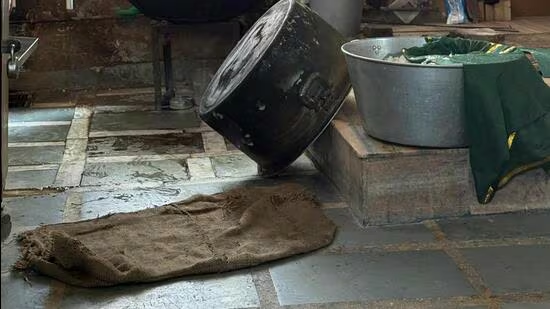
Afternoon daylight is entering the kitchen through two large windows, falling softly across the floor. The eye though is immediately drawn to massive cooking pans lined along the walls. One pan contains boiled rice, another contains yellow masoor dal. Some pans are severely blackened by years of use over open fires.The kitchen is huge and airy, and is part of a sprawling Sufi shrine in South Delhi’s Mehrauli. (HT Photo)The kitchen (see right photo) is huge and airy, and is part of a sprawling Sufi shrine in South Delhi’s Mehrauli. This historic dargah is the resting place of the 13th century Sufi saint Hazrat Khwaja Qutbuddin Bakhtiyar Kaki. The long history of the sacred site is reflected in the hundreds of centuries-old marble graves spread across the premises. Also notable is the shrine’s aforementioned kitchen, which serves free langar meals daily to visitors.The kitchen stands deep inside the dargah premises, almost never seen by visitors. It prepares simple khana, alternating between dal and rice, rajma and rice, chhole and rice, and karhi and rice. The kitchen is staffed by cooks Munshik Khuda Nawaz and Sheikh Saleem, and their “helper” Muhammed Sikander. The three men have just finished preparing the day’s meal.Opposite the kitchen stands the Langar Khana Wali Masjid (see other photo). Its name is believed to come from the daily meals prepared in the langar kitchen across from it. A shrine caretaker explains that the mosque’s original name has been lost over time. He says it was built by the Nawab of Banda and is more than a hundred years old. On this midsummer June afternoon, an air cooler is humming at one end of the mosque. The next-door kitchen has no cooler, yet it is surprisingly comfortable. Perhaps because the kitchen is well ventilated, its high ceiling forcing the warmer air to rise above.With the lunch hour just beginning, a few elderly men connected to the shrine gather inside the small mosque to eat, sitting crosslegged on the floor in a circle. The main langar, however, is hosted elsewhere in the shrine, in a corridor running beside a courtyard dense with graves. Patient pilgrims are sitting quietly on either side of the corridor floor, facing one another. Servers in white kurta pyjamas move between them, carrying large pans of rice and dal.The lunch ends in half an hour. Here and there, small yellow stains of dal mark the floor. Dargah staff quickly clean the corridor.Meanwhile, back in the kitchen, the pans have already been washed and stacked, with no trace of the lingering aromas that usually follow a meal. The tandoor oven in the corner has cooled. The spotlessly clean kitchen is now deserted, resting in peace.
Delhiwale: The Mehrauli langar
A historic Sufi shrine in South Delhi serves free langar meals daily to visitors. Kitchen staff prepare simple meals like dal and rice. | Latest News Delhi
449 words~2 min read