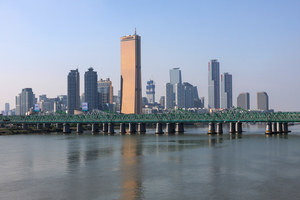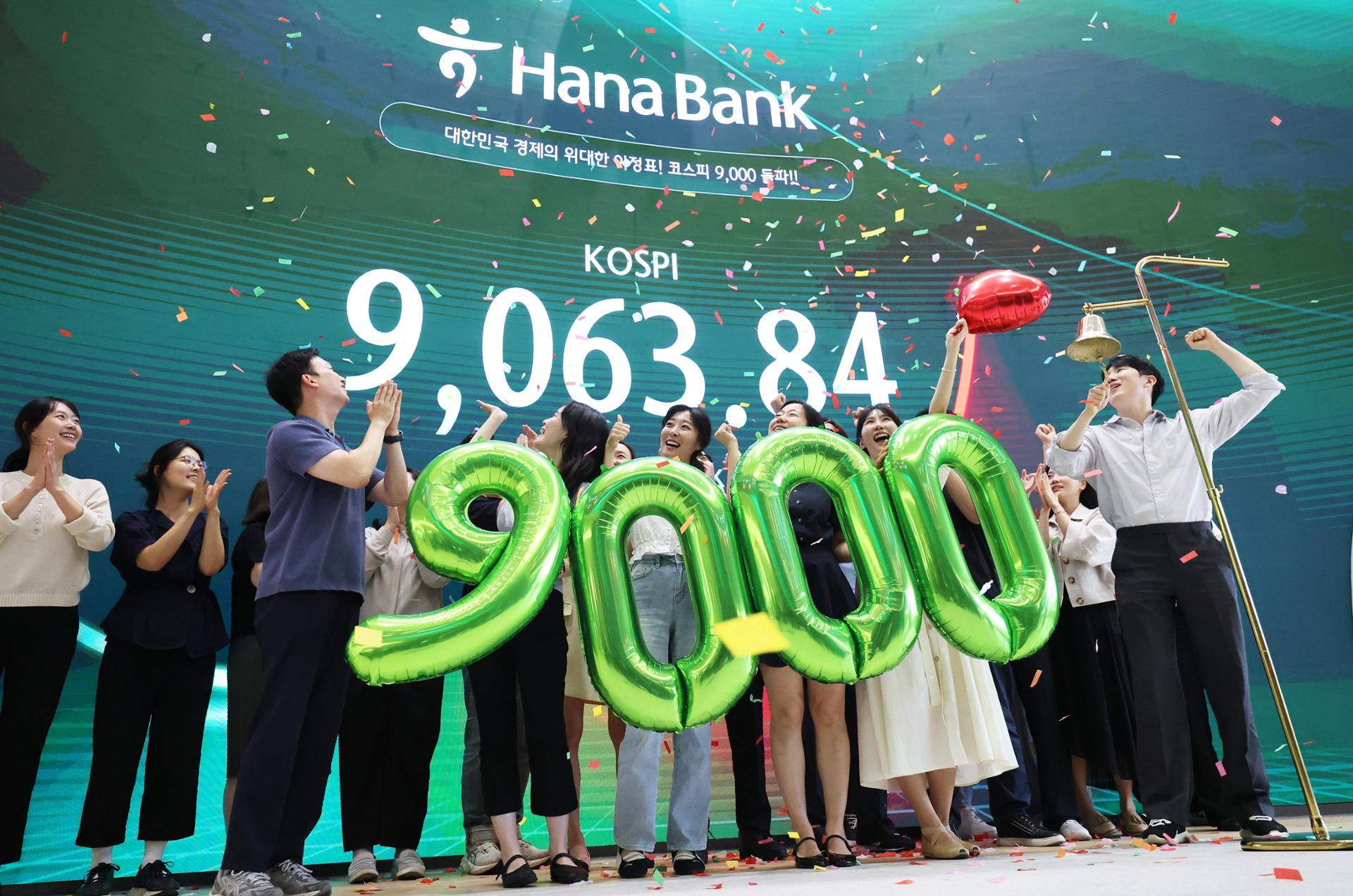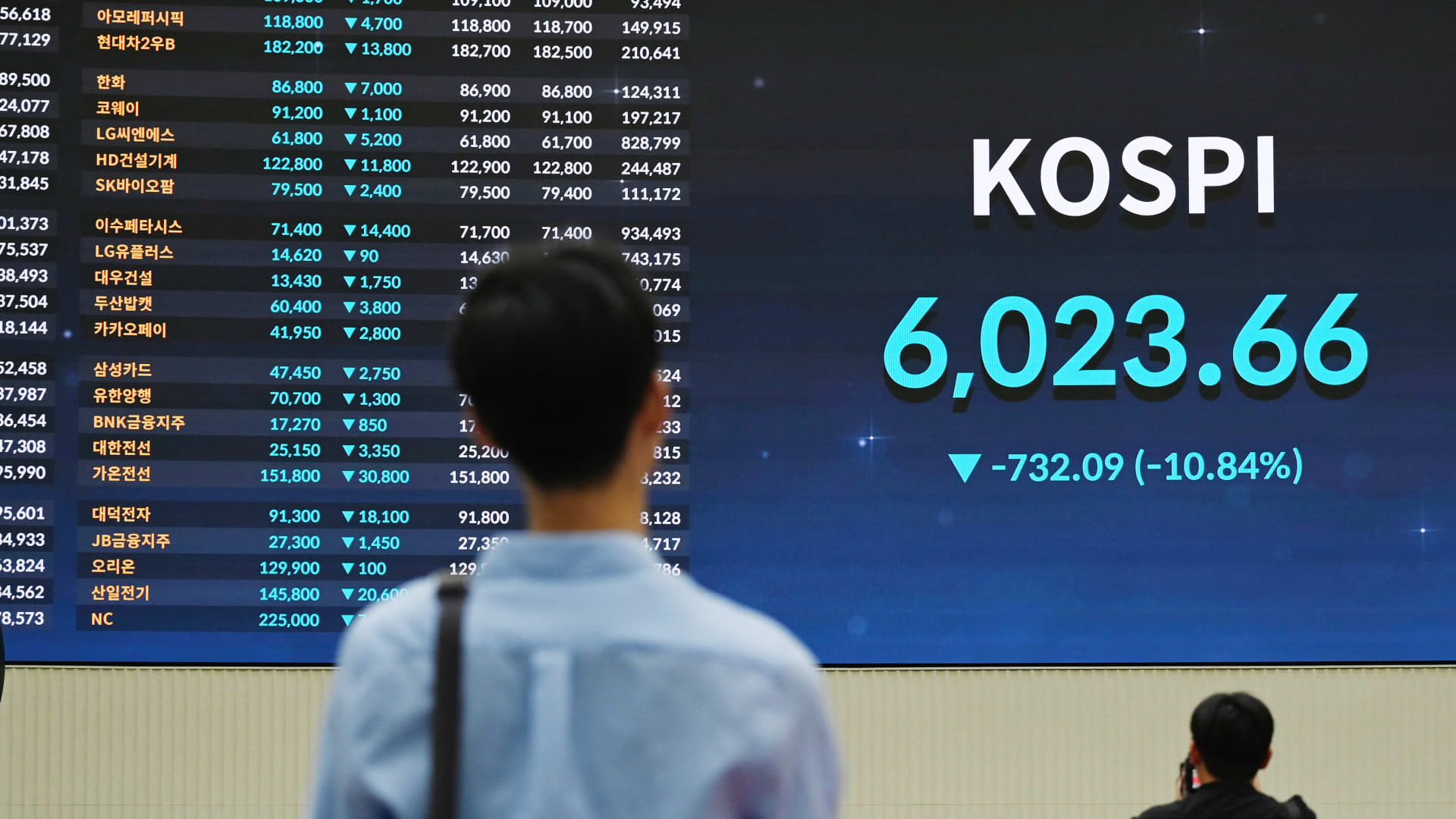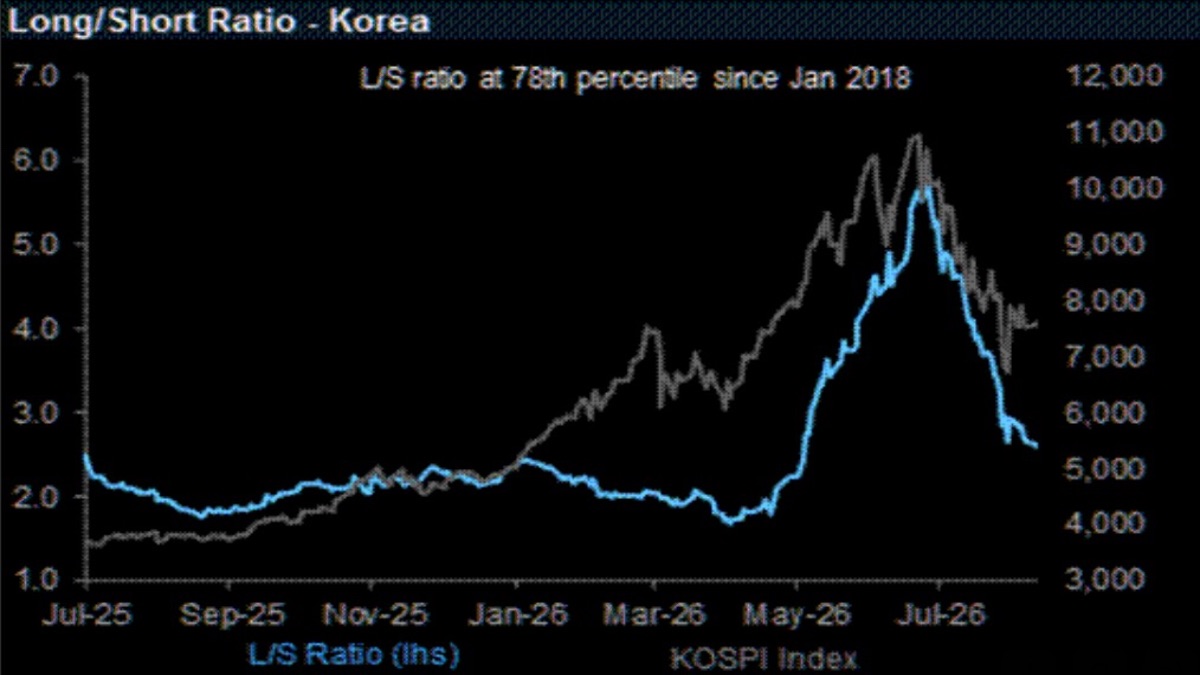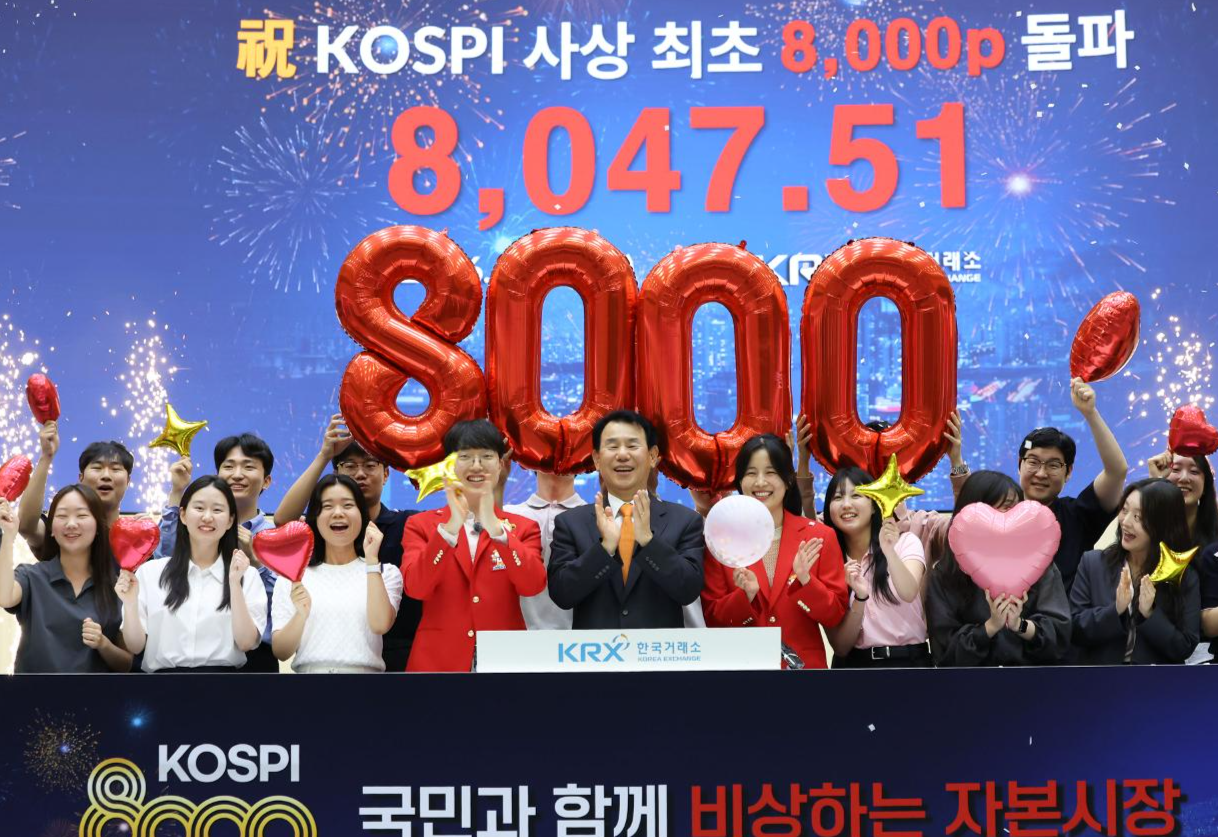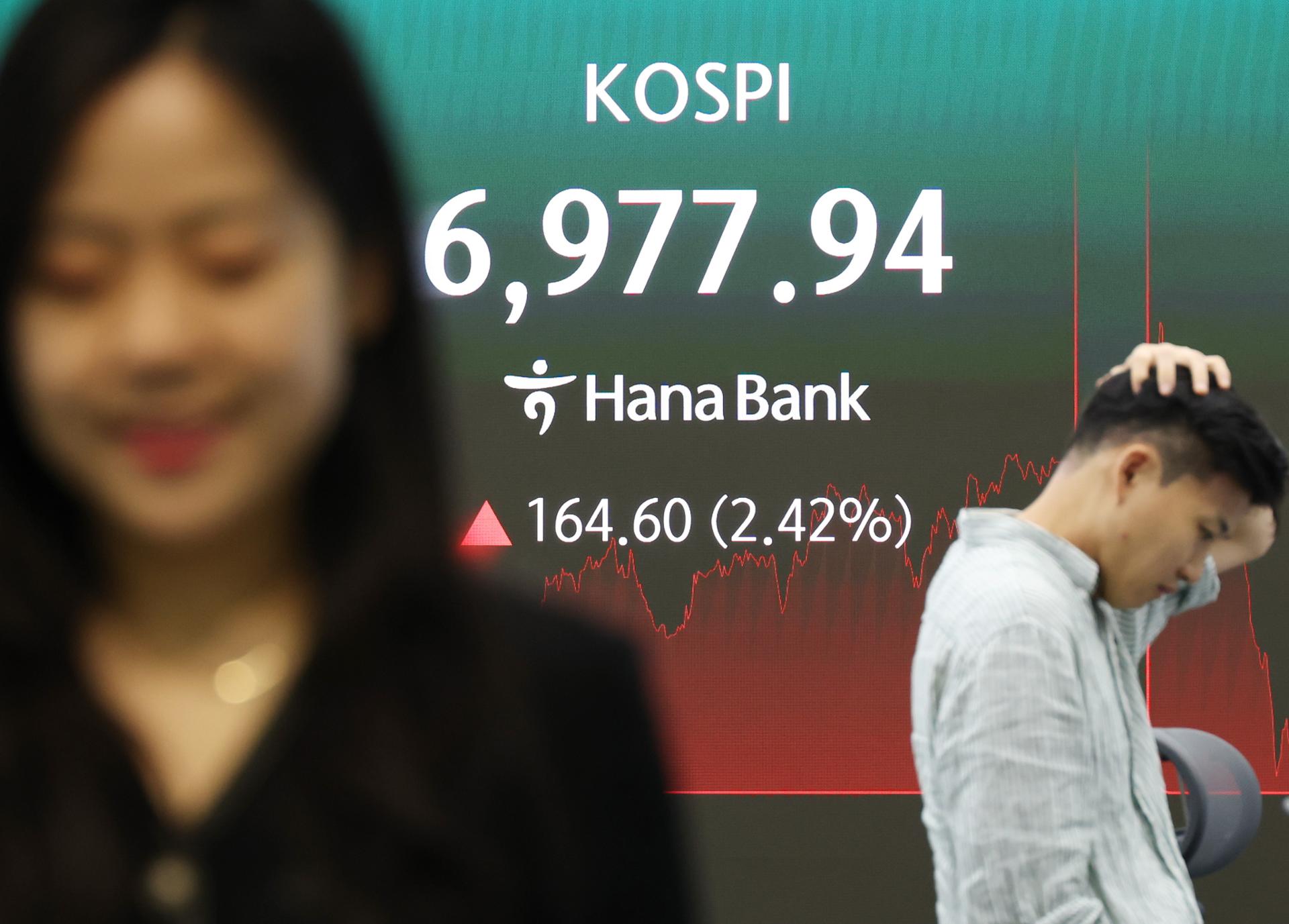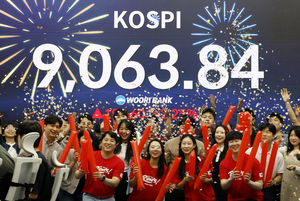
Experts say predictable shareholder returns and sustained foreign investment are key to moving beyond Korea discount Woori Bank employees celebrate Kospi's first close above 9,000 on June 18 at the bank's headquarters in central Seoul. (Newsis) The Kospi has proved it can rally. The harder test is whether Korean companies can keep commanding higher valuations after the momentum fades.That challenge lies at the heart of Korea’s push to turn its decades-old “Korea discount” into a “Korea premium.” This year’s surge brought that goal closer, fueled by governance reform, stronger shareholder returns and a historic semiconductor earnings boom.But the summer correction exposed the rally’s narrow foundations. Samsung Electronics and SK hynix can power the index higher, but a strong chip cycle alone does not mean investors have fundamentally reassessed corporate Korea.While market experts expect the Kospi to recover gradually from its recent pullback, a lasting rerating will require gains to spread beyond semiconductors. Korea’s premium is beginning to emerge in sectors such as banking, but it is not yet broad or durable.The bigger question is whether corporate reform and more predictable shareholder returns can keep foreign capital in Korea after the chip cycle turns.A chip boom is not a Korea PremiumNo sector better illustrates the distinction than semiconductors.Samsung Electronics and SK hynix have done much of the heavy lifting in both earnings and the market, leaving the Kospi unusually sensitive to memory prices, AI investment and global chip demand.For now, the fundamental case remains strong. Hwang Seung-taek, head of research at Hana Securities, said the summer selloff did little to undermine the earnings outlook."The price has weakened, not earnings," Hwang said. "As semiconductor exports and corporate earnings forecasts remain robust, the bullish case centered on semiconductors remains intact."The more important question for the longer term is whether memory itself is becoming a different business.Hwang sees the industry moving away from its traditional boom-and-bust model as long-term supply agreements give chipmakers greater visibility over volumes and pricing. If that structure holds, investors may eventually be willing to assign memory companies higher valuations through the cycle rather than repeatedly pricing them as short-lived beneficiaries of an upturn. A screen at a Hana Bank dealing room in Seoul shows the prices of SK hynix, Samsung Electronics and the Kospi on July 29. (Newsis) Hong Dong-hee, senior investment strategist at Standard Chartered Bank Korea, said that case still has to be demonstrated quarter by quarter."What matters is whether this can be proven through earnings," Hong said. "If the market can confirm through the coming quarters that profitability remains structurally high and earnings visibility extends into next year, there could be room for another stage of rerating."Even a structural rerating of memory, however, would not by itself amount to a rerating of Korea.Banks show the wayThere is evidence that a broader rerating has already begun elsewhere.Korean banks offer one of the clearest examples of a rerating driven not primarily by a cyclical earnings boom, but by changes in how companies manage capital and reward shareholders.Park Ji-young, senior emerging markets equity portfolio manager at Amundi, said banks began to command higher valuations as they improved shareholder returns and put greater emphasis on return on equity."There are some sectors that have genuinely rerated, such as some of the banks as they have improved shareholder returns and have started to focus more on ROE," Park said. "However, we cannot say that this has been broad."Banks offer a clearer example. Investors did not simply pay more because profits rose; they responded to a change in how those profits were being used.Hong also saw a broader shift earlier in the rally, when enthusiasm over governance reform and shareholder protection lifted companies beyond the semiconductor heavyweights.That story later faded into the background as the memory boom became the dominant force in the Kospi. "Ultimately, the Commercial Act revision will be what drives a fundamental rerating," he added.Making reform stickThe next leg of the Korea Premium depends less on new reforms than on making existing changes stick.Reforms to corporate governance and capital market rules have raised expectations for shareholder protection, treasury-share treatment and capital allocation. Companies have also faced growing pressure to return more excess capital through dividends, buybacks and share cancellations.Amundi welcomed the direction of the reforms, while arguing that investors now need greater visibility into how companies intend to deploy their capital."We applaud the corporate governance and capital market reforms thus far," she said, adding that Amundi also views buybacks, treasury-share cancellations and improved dividends positively. "However, to see some further rerating, there is room for further reforms such as having companies clearly articulate what their capital allocation plans are over the short- and long-term." Seoul's financial district of Yeouido (Getty Images) That predictability matters because a one-off shareholder-friendly action can lift a stock without changing how investors value the company over a full cycle.Hwang said Korean companies need to move closer to the practice of developed-market peers by making shareholder returns something investors can anticipate rather than hope for."Like companies in developed markets, it is important to present shareholder returns as a predictable, long-term policy rather than a one-time event," he said.Will foreign capital stay?The final test may come from the investors who can most easily leave.Foreign investors have long treated Korea as a cyclical market, with allocations moving alongside the won, global risk appetite and the semiconductor cycle. A lasting Korea Premium would require more than another wave of buying when chips are strong or Korean stocks look cheap.External conditions still matter. Hong said high US yields and a strong dollar have made it harder for capital to spread into markets such as Korea, while easier financial conditions could reopen that channel."If the dollar weakens and interest rates stabilize, capital could spread toward opportunities outside the US," Hong said. "From a fundamental perspective, we see Asia as one of the regions with the strongest earnings momentum this year and next."Amundi has already added to some Korean holdings as leveraged exposure declined and the earnings picture remained solid, while favoring greater diversification after the recent volatility."We are constructive on the Korean equity market now as we feel that the leverage from the single ETFs is at a lower level and the fundamentals earnings picture remains solid. Hence, we have added to some of our positions but have also taken the view to be more diversified."The harder test is whether foreign investors stay once Korean stocks are no longer cheap and the semiconductor cycle becomes less favorable.Standard Chartered is not there yet. Despite seeing further upside in the second half, Hong said Korea's volatility still argues against concentrating exposure in the market."Even if there is room for Korean stocks to rebound after the recent decline, I would not increase concentration in Korea again," Hong said. "The market is still not free from volatility, so combining it with other global markets is a better way to capture the AI cycle while reducing that risk."
From rally to rerating: Can Korea make its premium last?
The Kospi has proved it can rally. The harder test is whether Korean companies can keep commanding higher valuations after the momentum fades. That challenge li
1,154 words~5 min read