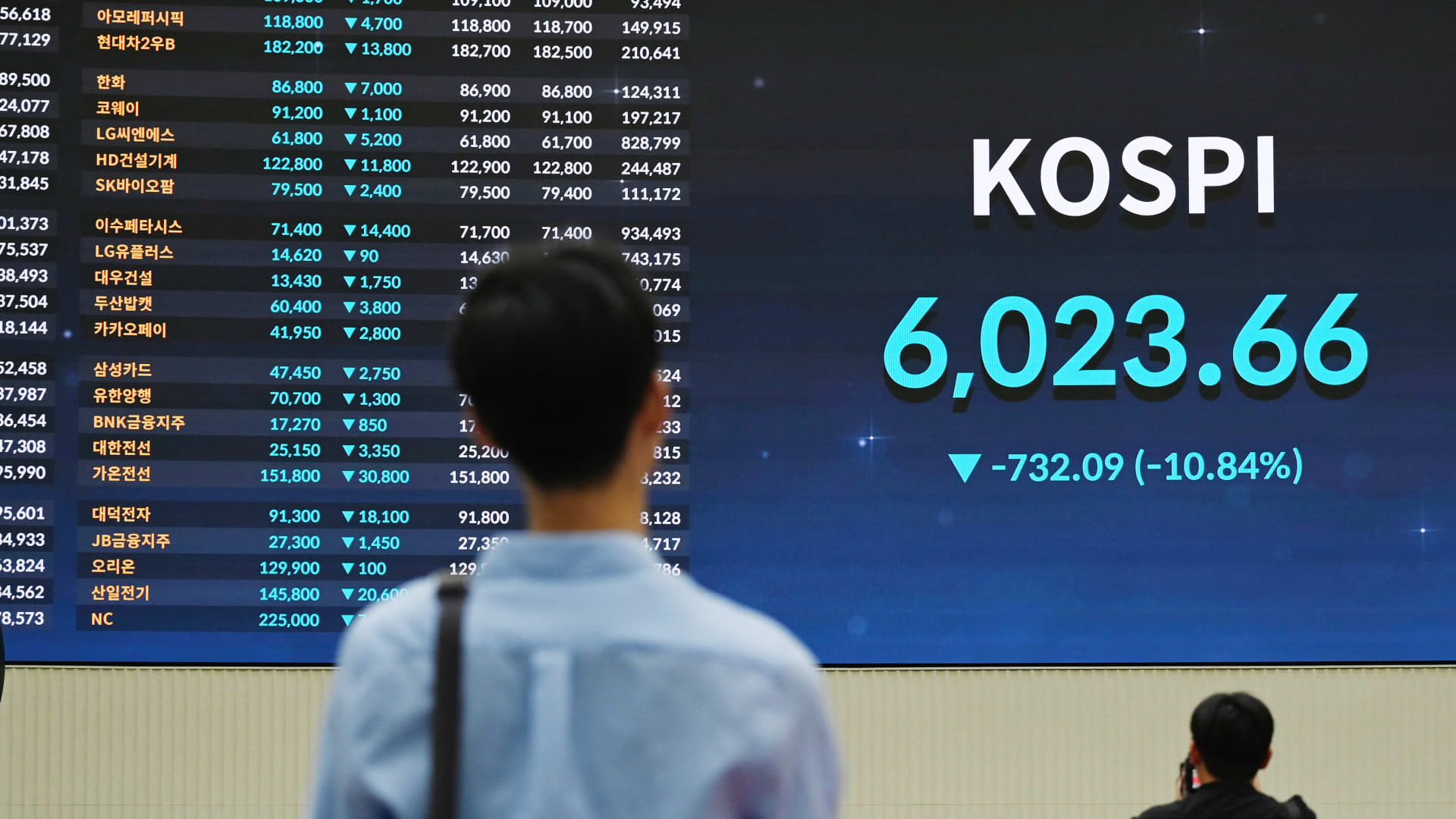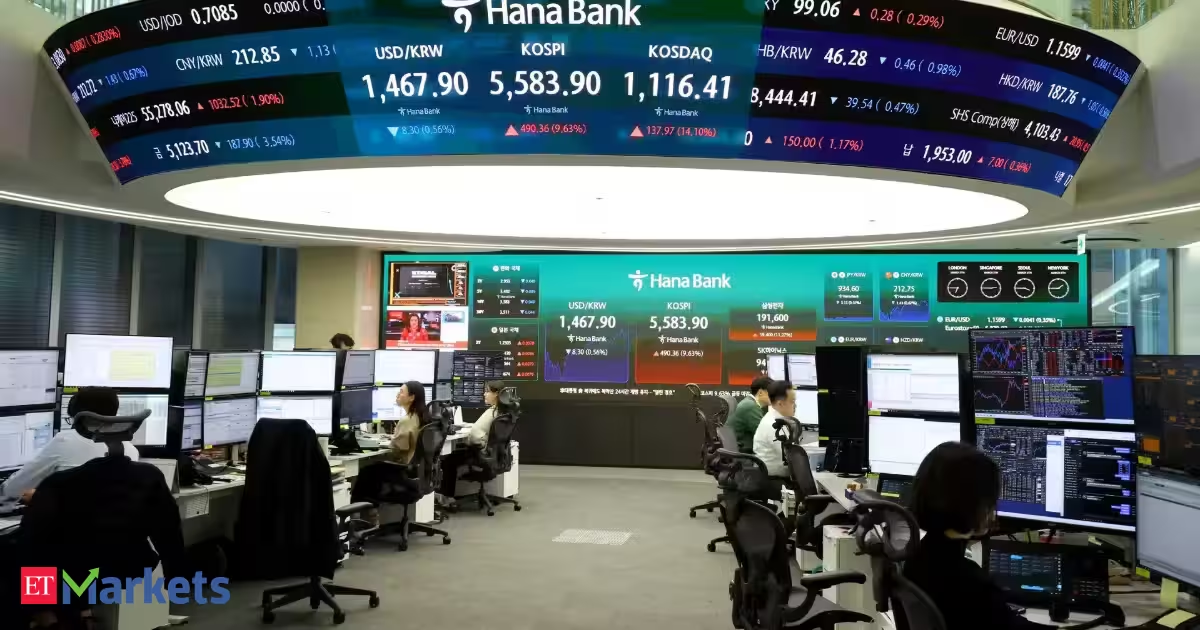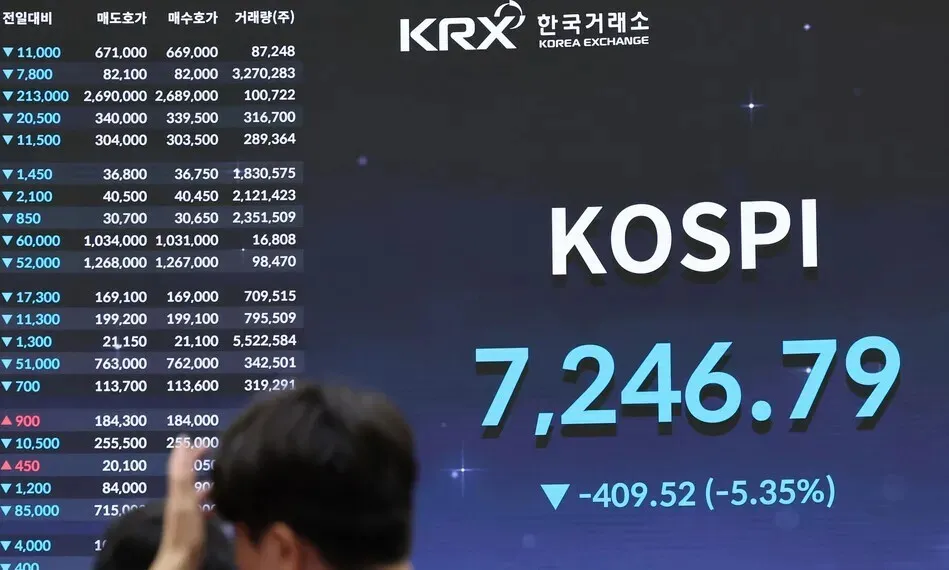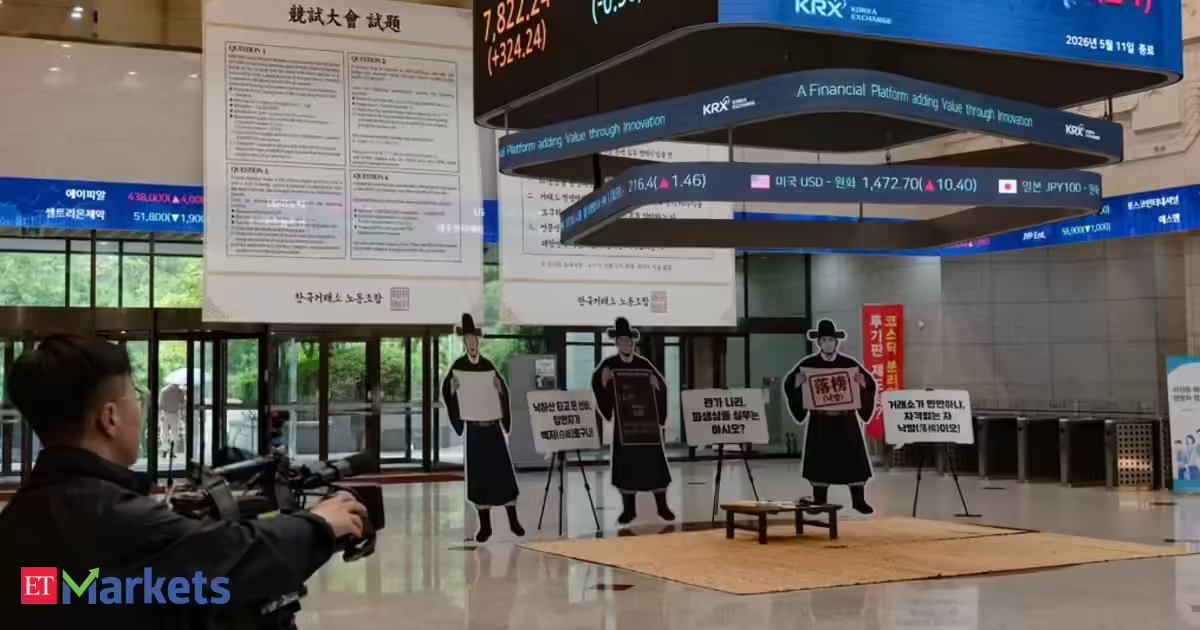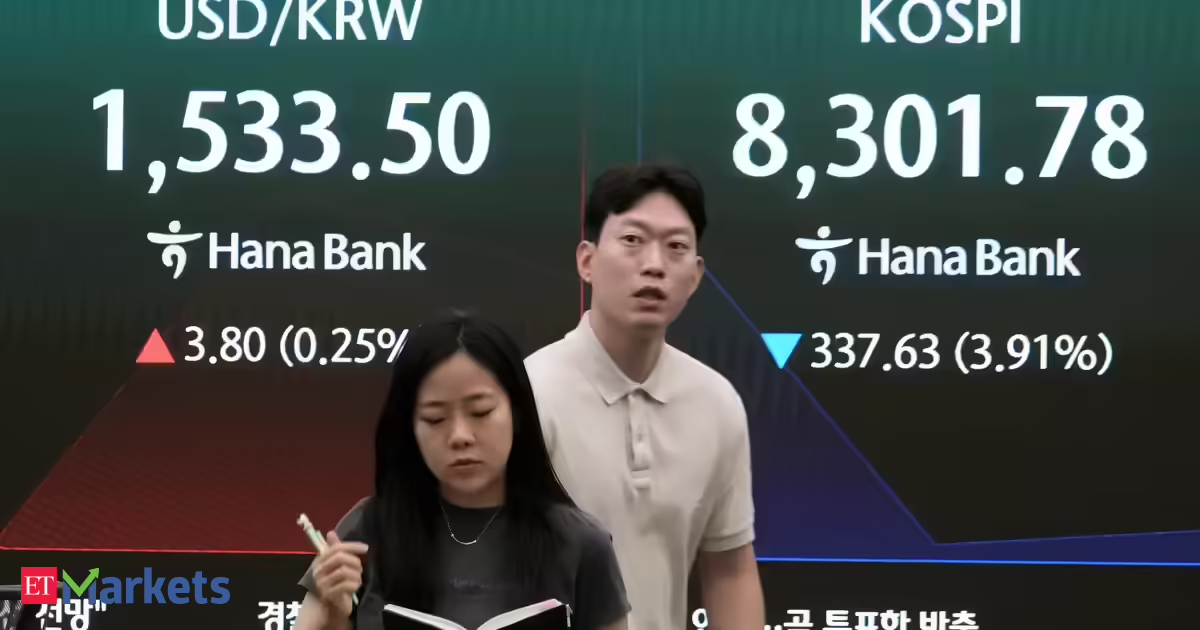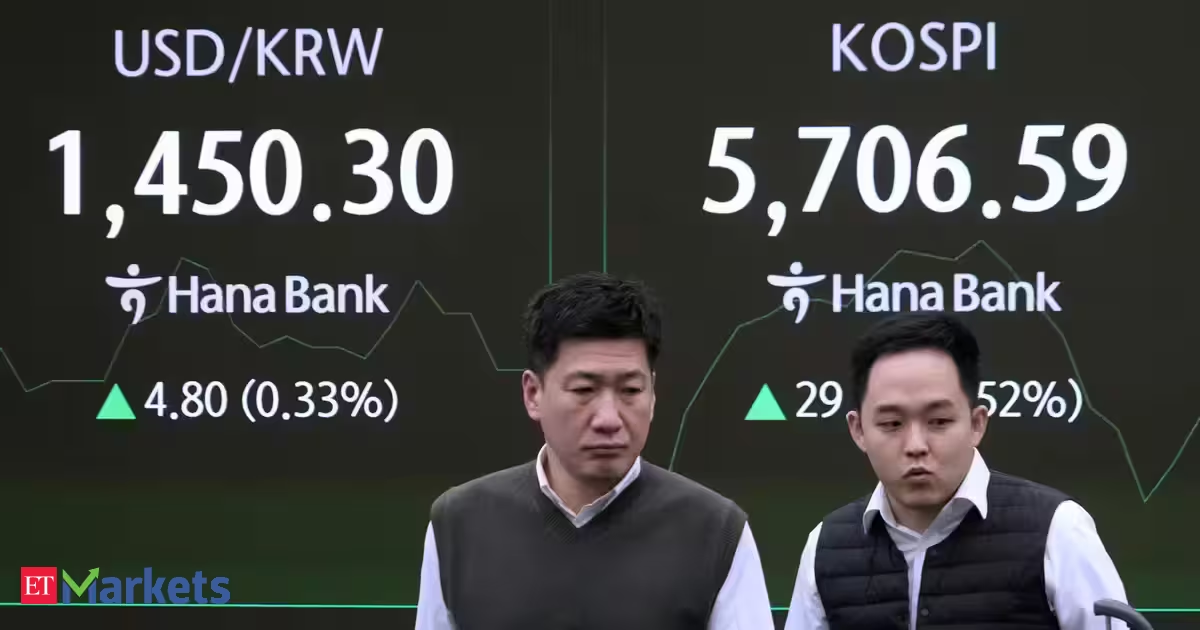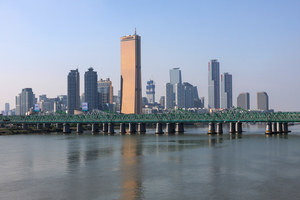
Analysts expect gradual recovery, believe AI investment and chip earnings hold the key View of Yeouido financial district in Seoul (Bloomberg) The Kospi has lost momentum after a blistering first-half rally, fueling fears that the semiconductor cycle is nearing its peak and casting doubt over the market’s next move.The benchmark has remained range-bound in recent months, and weakening conviction in chip heavyweights Samsung Electronics and SK hynix keeps it from recapturing its earlier highs.Does this retreat mark a pause before another advance or will it be the beginning of a prolonged stall?For its 73rd anniversary special edition, The Korea Herald spoke with market experts at home and abroad to gauge the Kospi’s outlook for the coming months.Most viewed the recent pullback as a correction, arguing that the Kospi has likely bottomed and should recover gradually. But they expect chips to continue dominating the market as artificial intelligence remains the central growth story.A pause, not a reversalWhile the Kospi has struggled to achieve any meaningful recovery following its steep decline in July, experts viewed the downturn as a short-term correction rather than a shift in the market's underlying fundamentals."We are still overweight on Korea and emerging market Asia stocks, as real money buying concentrates almost entirely in tech and communication stocks," Choi Ji-uk, senior APAC macro strategist at State Street Markets, said."As long as this positioning remains intact, we view the recent correction as short-lived rather than indicative of a fundamental change in market direction."Other experts echoed Choi's tone."Although the market underwent a sharp correction in July, the decline does not appear to have damaged the broader uptrend, given the strong gains posted in the first half of the year," Lee Young-gon, research center leader at Toss Securities, said.“Nor does it signal the start of a fundamental shift in the long-term outlook, considering the tight supply-demand balance in AI memory and continued earnings growth.”Staying on the AI boom-driven growth trajectory, Korean chipmakers posted strong earnings in the April-June period.Samsung Electronics’ second-quarter operating profit surged 1,810.3 percent from a year earlier to a record 89.4 trillion won ($63 billion). SK hynix posted a 557.2 percent on-year jump to 60.54 trillion won.Although some analysts have lowered their earnings projections for the chipmakers for next year and beyond, earnings growth is expected to remain solid."Contrary to some concerns, if large-scale AI investment continues and the earnings outlook for Korean chipmakers remains strong over the medium- to long-term, investor sentiment toward the semiconductor sector — which remains significantly undervalued compared with global peers — is expected to recover," Park Yeon-ju, head of research at Mirae Asset Securities, said."Stock prices appear to have already priced in an excessive amount of concerns. For starters, Nvidia’s second-quarter earnings report, due in late August, is expected to help ease concerns over the semiconductor sector," Kim Hak-kyun, head of research at Shinyoung Securities, said.Yet the heightened volatility fueled by leveraged exchange-traded funds that shook the domestic market earlier this year still lingers."Positioning has outweighed the fundamental bull case in the Korea market recently," Tanvir Sandhu, chief global derivatives strategist at Bloomberg Intelligence, said."The good news is that much of this technical pressure from leveraged ETFs has now eased, although the rebalancing flows will still have a meaningful impact."Waiting for the next catalystWith the rally having been driven by the strong chip boom, earnings growth in the semiconductor sector will be key to reviving the market."Higher pricing of high bandwidth memory, likely starting from the second half of this year, should also provide an additional tailwind for semiconductor stocks. That said, we are closely monitoring Korea's semiconductor export trends. Any moderation in semiconductor export price growth could signal a more meaningful shift in the market outlook,” Choi at State Street Markets said.“Whether global AI investment can continue is fundamentally an important variable. We need to watch whether US Big Tech companies can continue to expand their AI capital expenditure," Lee of Toss Securities pointed out."It is important not only that they are increasing investment now, but also whether they are building the financial capacity to sustain that investment going forward."Still, the Kospi's recovery is likely to be modest and the market is unlikely to resume the rapid pace of gains seen in the first half."During the previous rally, expectations for increased AI investment and improving liquidity worked in tandem, driving a rapid expansion in valuations," Lee said."Going forward, however, we expect the market to shift from pricing in expectations alone to scrutinizing actual earnings and companies’ capacity to sustain AI investment."Choi stressed the recovery could be measured as more Korean investors are moving to overseas stocks, including the US market, with the recent slowdown in the local market rally.Korean investors’ net purchases of US stocks totaled $4.64 billion in July, the largest monthly figure since January, marking a sharp turnaround from net selling in April and May, when they offloaded $468.92 million and $939.76 million, respectively."We believe the recovery is likely to be gradual rather than a sharp increase, as retail investors have started to move their investment from the domestic market to overseas stocks,” Choi said.Chips retain their gripEven if the rally resumes, the Kospi’s heavy concentration in chipmakers, widely seen as a key vulnerability, is likely to persist. Despite the recent slide, Samsung Electronics and SK hynix still account for roughly 48 percent of the Kospi's total market capitalization."Given that the growth story driving the Korean stock market was effectively centered on AI semiconductors, this trend is likely to recur," Lee from Toss Securities said, adding that foreign inflows are also concentrated in chips.Some experts pointed to the changing nature of the semiconductor industry, arguing that it should no longer be viewed through the same cyclical lens as in the past."While semiconductors remain cyclical, the nature of the cycle has changed, with demand now driven increasingly by AI infrastructure rather than consumer products such as PCs," Kim from Shinyoung Securities said.Yet the benefits of the AI boom could eventually spread beyond the chip sector, moving down the supply chain. While the previous rally was largely concentrated in chipmakers, the gains from AI are expected to broaden across a wider range of industries over the longer term."While the current cycle is still being led by companies benefiting from AI infrastructure spending, the value creation is expected to shift toward AI model and service providers over the medium term," Park from Mirae Asset said.Reflecting this shift, Morgan Stanley recently replaced chip giant Samsung Electronics with Samsung Electro-Mechanics as its top pick among Korean technology stocks. The Samsung affiliate is an integrated parts manufacturer providing key components for AI-related infrastructure."With the AI revolution still in its early stages, its eventual winners could capture a significant share of the value created, making a diversified approach to leading global companies more appropriate over the longer term," she said.
Kospi rally hits pause, but experts see rebound ahead
The Kospi has lost momentum after a blistering first-half rally, fueling fears that the semiconductor cycle is nearing its peak and casting doubt over the marke
TL;DRAI
Samsung and SK hynix (48% Kospi) posted record Q2 earnings (+1,810%/+557%) on AI demand; pullback is pause, recovery tied to sustained global AI investment and HBM pricing lift H2. Concentration risk and Korean retail outflows to US suggest gradual recovery, not rapid gains.
1,225 words~6 min read