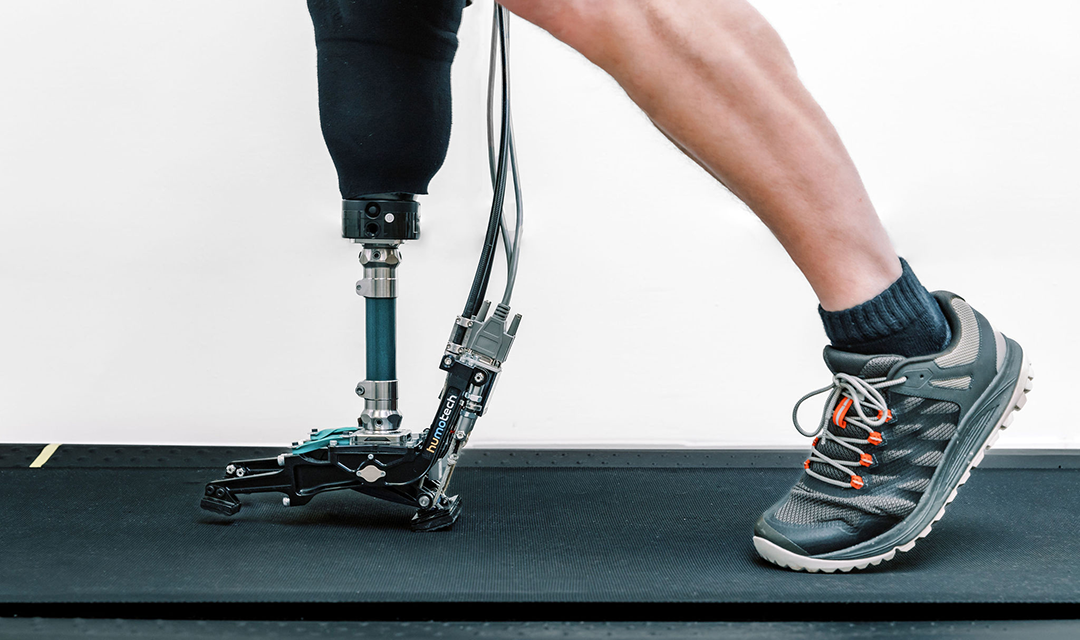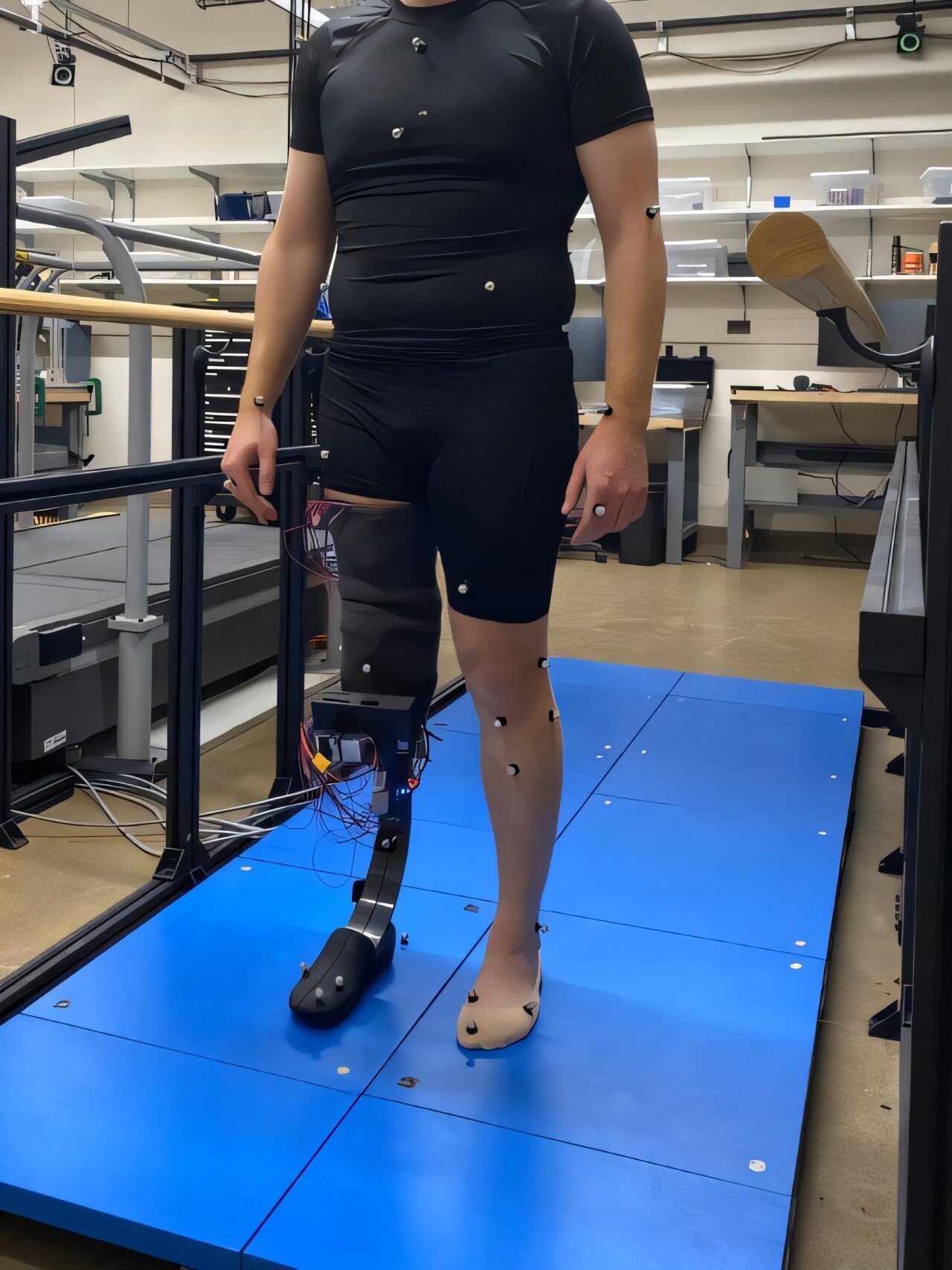
A research participant wears Purdue's embroidered textile sensor system inside a prosthetic socket during gait testing, part of a new study on real-time multiaxial force monitoring at the limb-socket interface. Credit: Purdue University
Prosthetics are a fact of life today. It's estimated that more than 50 million people globally—some 2 million of them in the United States—have lost a limb, and most could benefit or already do benefit from artificial limbs to restore mobility and lifestyle.
A big challenge with prosthetics is ensuring a proper fit where the residual limb inserts into the prosthetic socket. This interface must manage complex multidirectional forces during everyday activities: standing, walking and even altering one's posture. Monitoring these forces in real time is vital to optimize socket fit and prevent secondary injuries.
Purdue University engineers, with collaborators at the University of Notre Dame, have developed a wearable solution using embroidered, light-emitting textiles that integrate illumination and sensing to detect both normal and shear forces at the limb-socket interface. Their findings have been published in a Science Advances paper titled "Embroidered textile sensors for real-time multiaxial force mapping in prosthetics."