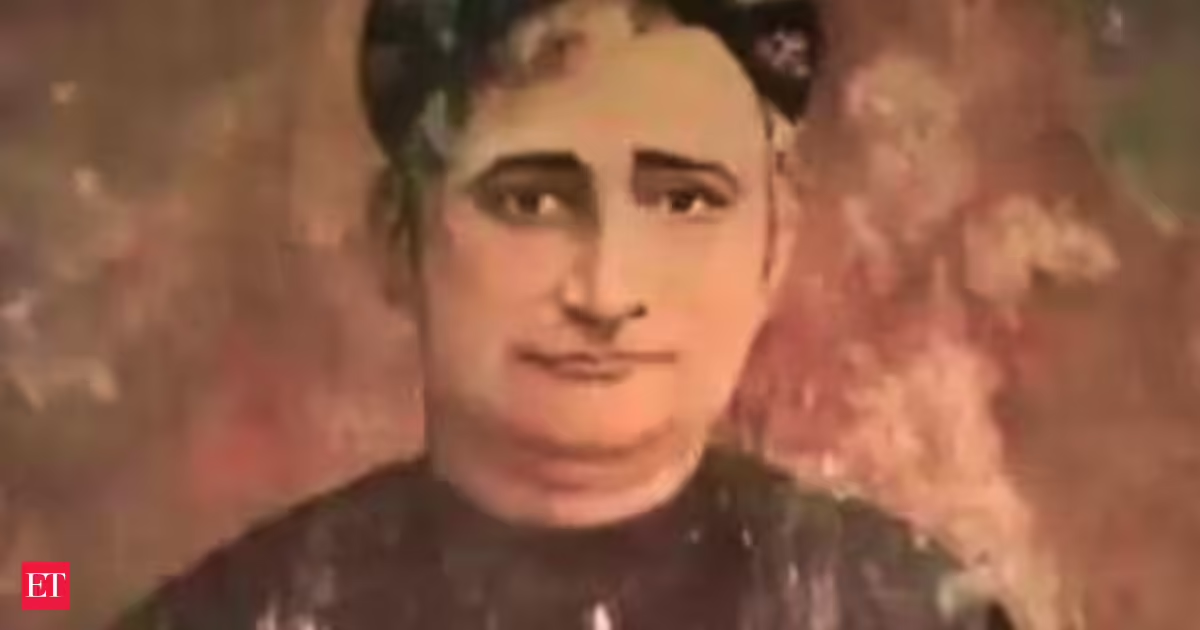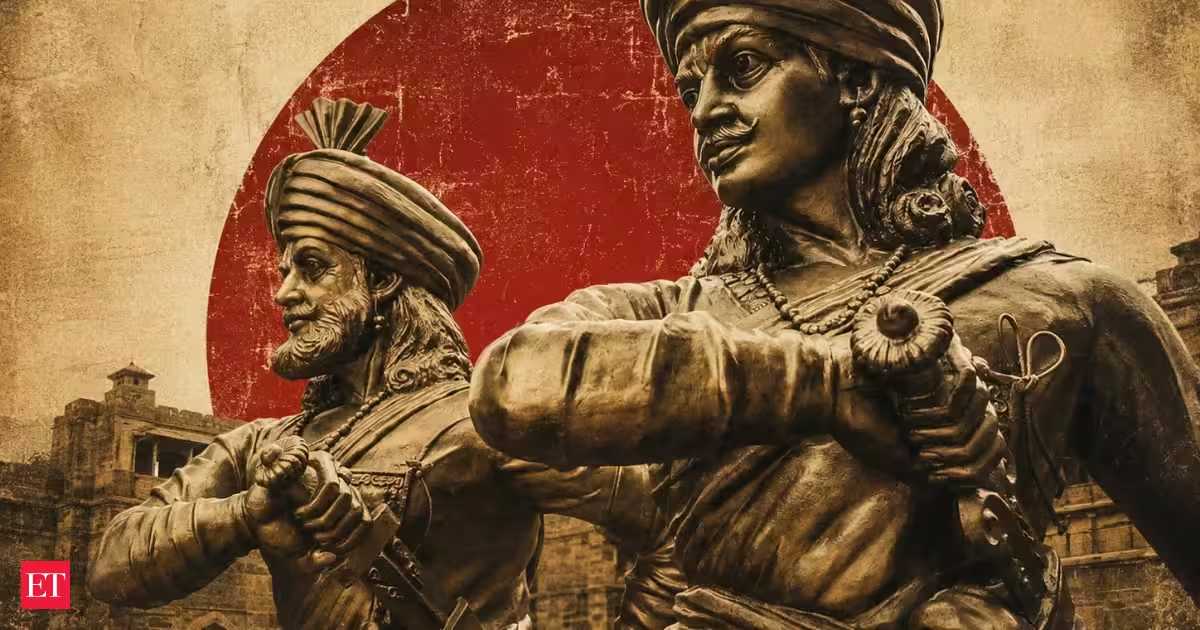
In September 1857, at the heart of then-colonised India, British soldiers came looking for a rebellion. Inside the Jabalpur residence of Raja Shankar Shah, they found something far less conventional: handwritten verses.The verses were not harmless in the eyes of the colonial authorities. They invoked the goddess Chandi against the British, while other papers recovered during the search included letters and documents linked to plans for rebellion.Four days later, on September 18, Shankar Shah and his son, Raghunath Shah, were tied to the mouths of cannons and blown apart. A Madhya Pradesh government account of the episode records the arrest, recovery of the papers and the execution.The evidence that brought the two men to the British authorities' attention was not a stash of rifles or swords.It was a poem.ET Online1857: A Gond revolution before India attained its Independence.Also read: The road to UPI — India’s payments revolution was centuries in the makingA king without a kingdom, but not without influenceShankar Shah belonged to the Gond royal line of Garha-Mandla, a dynasty whose history stretched back centuries in central India and is closely associated with Rani Durgavati, who fought the Mughals in the 16th century.By 1857, however, the old kingdom had long since lost its sovereign power. Shankar Shah lived in Jabalpur under British rule, but his royal lineage still gave him influence among people in the region.That influence mattered as the uprising that had begun at Meerut spread across north and central India.The 52nd Bengal Native Infantry was stationed at Jabalpur. British authorities became suspicious of contacts between soldiers and Shankar Shah and his son. The Madhya Pradesh government's account says Deputy Commissioner E Clark sent informers disguised as sadhus to discover what was being planned. The information they brought back led to the raid on September 14.A force of 20 cavalrymen and 60 infantrymen descended on Shankar Shah's residence at Garha-Purwa. The two men were arrested. Their poems were seized, along with a red silk bag containing documents and letters.The discovery gave the British something tangible to put before a military court.And the poems made the case unusually personal.ET OnlineTried and sentenced: Mapping a journey that contributed to India's freedom.Also read: 79 years of an India on the rise as its households dream biggerThe words that became evidenceOne of the verses attributed to Shankar Shah called upon Chandi to destroy the British. The poem was translated into English by Jabalpur Commissioner Major W. C. Erskine and became one of the grounds on which the British treated the writings as evidence of rebellion.The language was not a coded bureaucratic appeal. It was a religious invocation against colonial power, calling upon the goddess to bring destruction upon the British.Raghunath Shah, too, was associated with anti-British poetry recovered during the search.The writings mattered because they were connected to something larger than private anger. The British believed Shankar Shah's residence had become a meeting point for a conspiracy involving soldiers and local figures at a moment when the colonial administration was struggling to contain the spread of the uprising.The father and son were therefore not treated merely as men who had written inflammatory verses. They were tried by the military court for their role in the rebellion and sentenced to death.On September 18, 1857, they were brought before a crowd in Jabalpur.They were tied to the mouths of cannons.Before orders were given to fire, Shankar Shah recited the opening lines of the poem that had been used against him — a prayer for the destruction of the British.Then the cannons fired.ET OnlineA legacy of resistance Also read: Sabse bada rupaiyah! The rupee's journey to becoming truly IndianBut the British had not finished dealing with the consequences of their decision.The soldiers who were meant to contain the revoltThe presence of the 52nd Bengal Native Infantry had been part of the British concern from the beginning. The execution did little to ease those fears.Raja Shankar Shah Tribal Freedom Fighter Museum in Jabalpur specifically documents the aftermath of the execution, including the resistance associated with the 52nd Regiment and the role of women of the Shah dynasty. Its account presents the regiment's defiance as part of the continuing upheaval in the region.What makes Shankar Shah's story endure is not simply the brutality of the execution.The episode offers a glimpse into the nature of the 1857 revolt itself. The rebellion did not travel only through battlefields and barracks. It moved through letters, personal networks, religious appeals and words that could turn private resentment into collective action.For the British, that made the written word dangerous.
Independence Day 2026: An Indian king weaponised his pen. The British answered with a cannon
Raja Shankar Shah and his son Raghunath Shah were executed by the British in Jabalpur in 1857 after poems invoking goddess Chandi against colonial rule were recovered from their residence. Their story shows how poetry, letters and personal networks became powerful instruments of resistance during the uprising against British rule.
757 words~3 min read