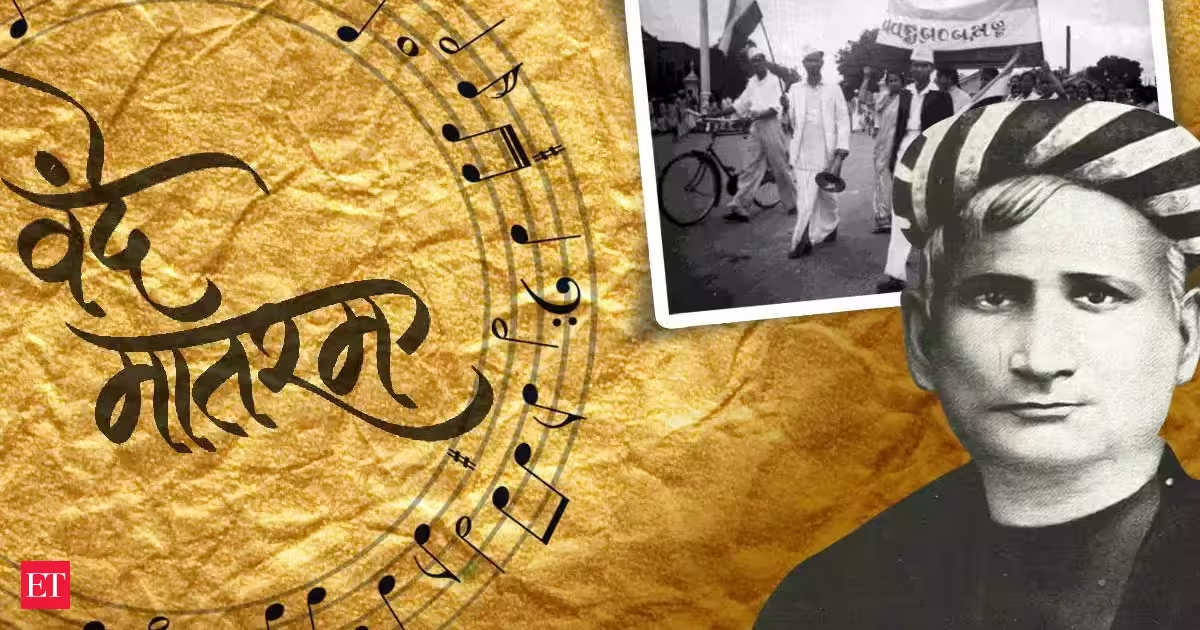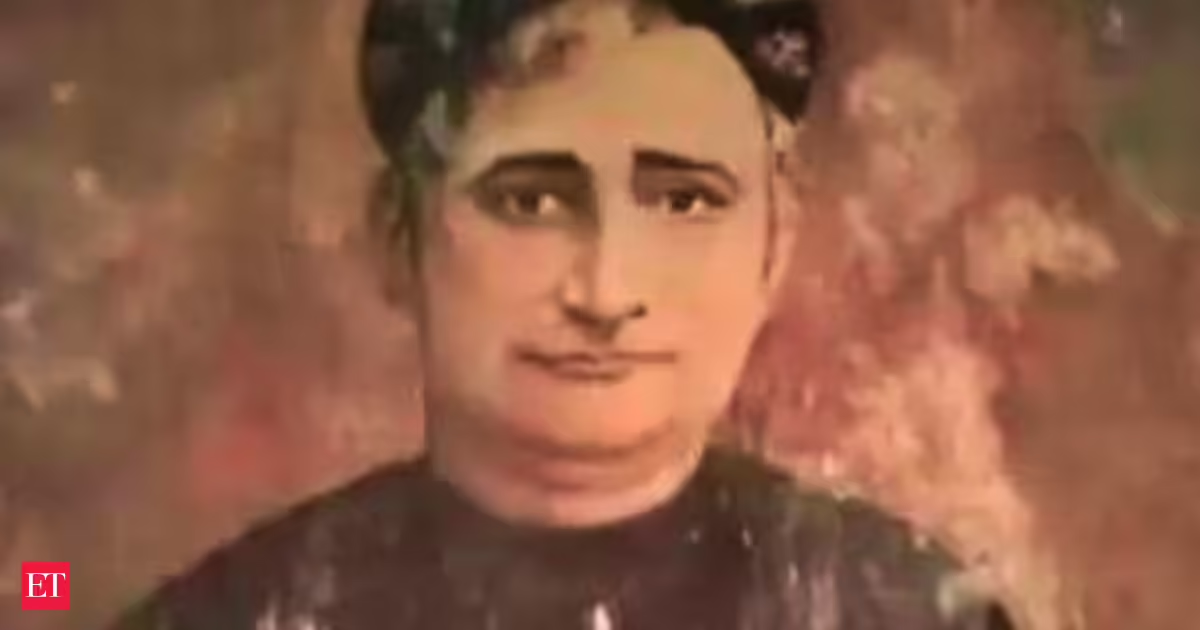
Sometimes, history changes in the most unexpected way. One ordinary journey home in a palanquin is believed to have sparked an idea that would eventually give India one of its most powerful patriotic songs. According to Britannica, an unpleasant encounter between Bankim Chandra Chattopadhyay and a British officer in 1873 became a turning point that inspired the author to ask himself a life-changing question: "What can I do for my country?"The answer, many historians believe, was Vande Mataram, the song that would later inspire countless freedom fighters and become India's national song.Today, on the birth anniversary of Bankim Chandra Chattopadhyay, let's revisit the inspiring story behind one of India's greatest patriotic songs, Vande Mataram.The palanquin incident that changed everythingAccording to Britannica, Bankim Chandra Chattopadhyay was serving as a bureaucrat in Berhampore (Baharampur), Bengal, in 1873.One day, while returning home from work in a palanquin, his procession passed through a field where Colonel Duffin, the commanding officer of the Berhampore cantonment, was playing cricket.The British officer reportedly became furious that the palanquin bearers had interrupted the game. He confronted and assaulted Bankim Chandra Chattopadhyay.Rather than remaining silent, Chattopadhyay took the officer to court. According to Britannica, the court ruled in 1874 that Colonel Duffin had to issue a public apology.While the legal victory was significant, historians believe the incident had a much deeper impact. It awakened a strong sense of patriotism within Chattopadhyay and inspired him to think about how he could serve his country through his writing.How 'Vande Mataram' was bornThat moment of reflection is widely believed to have led to the creation of Vande Mataram. The poem later appeared in Chattopadhyay's famous Bengali novel Anandamath, published in 1882. However, many scholars believe the poem itself may have been written several years before the novel.More than just a piece of literature, Vande Mataram soon became a powerful symbol of India's growing nationalist movement.What does 'Vande Mataram' mean?The phrase "Vande Mataram" comes from Sanskrit. The word Vande means to praise, honour or salute, while Mataram means Mother. Together, the phrase is commonly translated as "I bow to thee, Mother" or "I salute you, Mother."In the poem, the mother is not an individual person but Mother India, portrayed as a nurturing and divine figure deserving of love, devotion and sacrifice.The connection between 'Vande Mataram' and AnandamathVande Mataram appears in Anandamath, a novel set during the Sannyasi Rebellion, an early anti-colonial uprising against the East India Company's rule.The story unfolds against the backdrop of the devastating Bengal famine of 1770.The novel follows Mahendra, a wealthy zamindar who loses his home and becomes separated from his family during the famine. He eventually finds refuge with a group of revolutionary sannyasis.One of the novel's most memorable moments comes when these rebels worship the motherland as a goddess and sing Vande Mataram, transforming the poem into a symbol of courage, unity and resistance.How 'Vande Mataram' became the voice of India's freedom struggleAs India's freedom movement gathered strength, Vande Mataram spread far beyond the pages of a novel.The song was sung at political meetings, protest marches and public gatherings. It inspired generations of freedom fighters and became one of the most recognisable slogans of the independence movement.Its stirring words encouraged people to place love for their motherland above fear and personal sacrifice.Why 'Vande Mataram' is India's national songWhen India became a republic in 1950, Vande Mataram was given the status of the country's national song, while Jana Gana Mana was adopted as the national anthem.Only the first two stanzas of Vande Mataram are officially recognised for ceremonial use.Although the song's status has been debated over the years because of different interpretations of some later verses, its historical importance in India's struggle for independence remains widely acknowledged.A song born from one unforgettable momentHistory often turns on moments that seem ordinary at first. A routine journey in a palanquin, an act of humiliation by a colonial officer and one writer's determination to respond with words instead of anger helped shape one of India's greatest patriotic songs.More than 150 years later, Vande Mataram continues to remind Indians of the courage, resilience and love for the motherland that inspired an entire generation to dream of freedom.Inputs from agencies
In 1873, had Bankim Chandra Chattopadhyay's palanquin not taken a wrong turn, India might never have got 'Vande Mataram'
An 1873 encounter with a British officer in a palanquin ignited Bankim Chandra Chattopadhyay's patriotic fervor, leading to the creation of "Vande Mataram." This powerful Sanskrit phrase, meaning "I bow to thee, Mother," became a rallying cry for India's freedom fighters. Featured in his novel Anandamath, the song's stirring verses inspired generations, ultimately earning it the status of India's national song.
697 words~3 min read