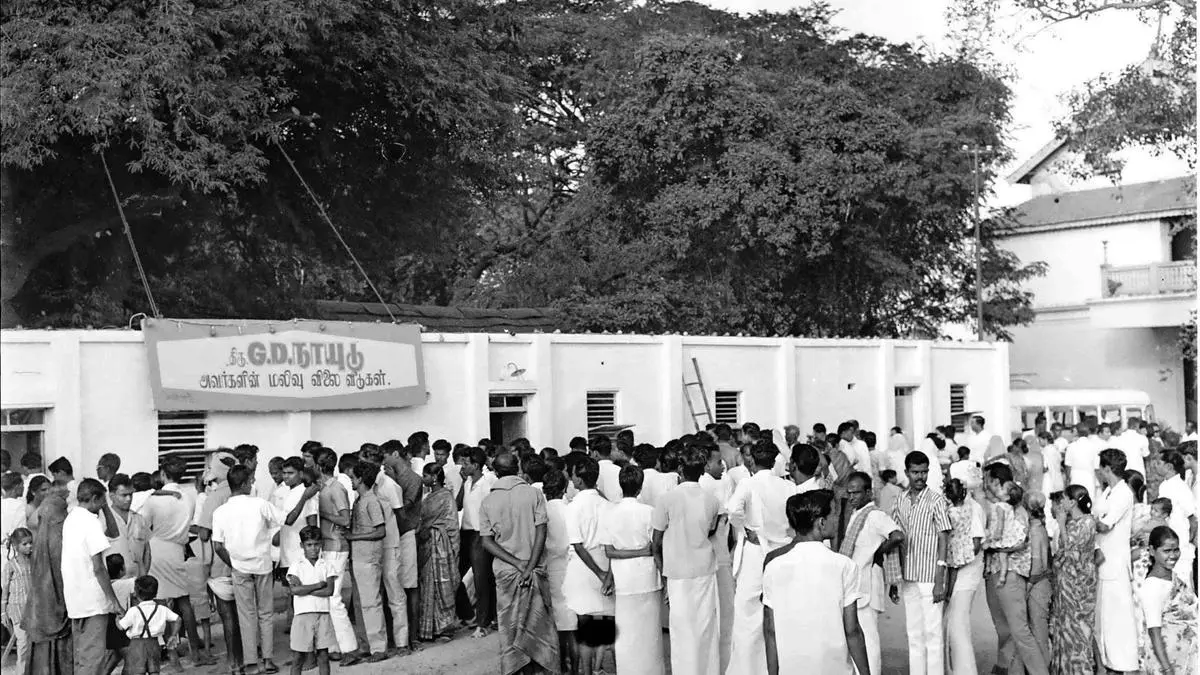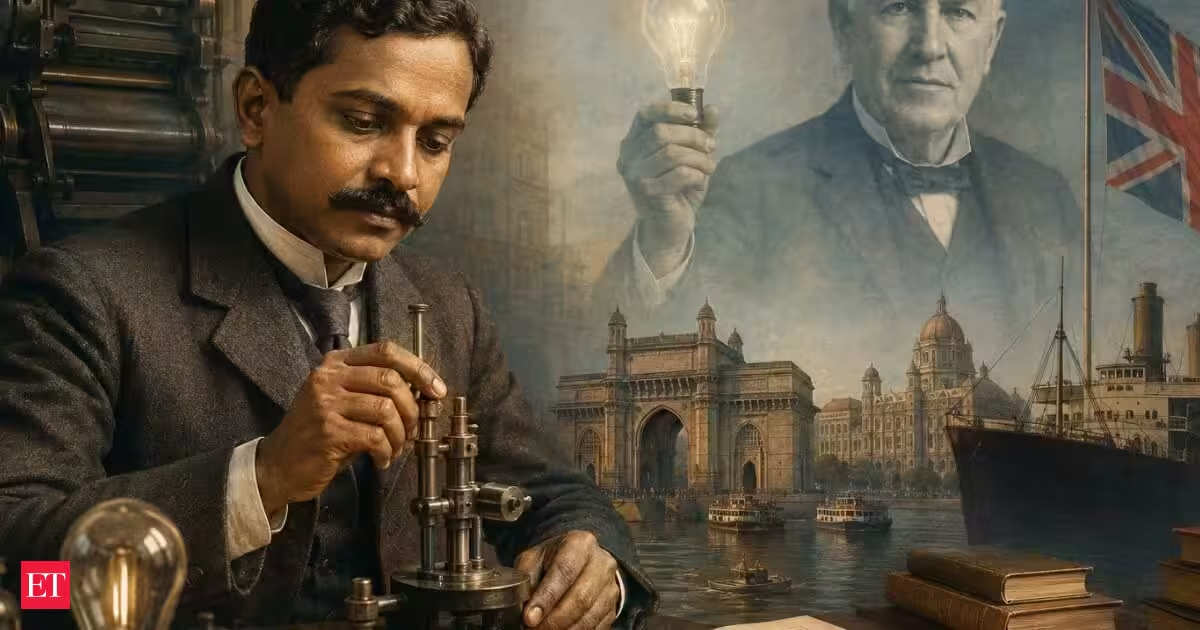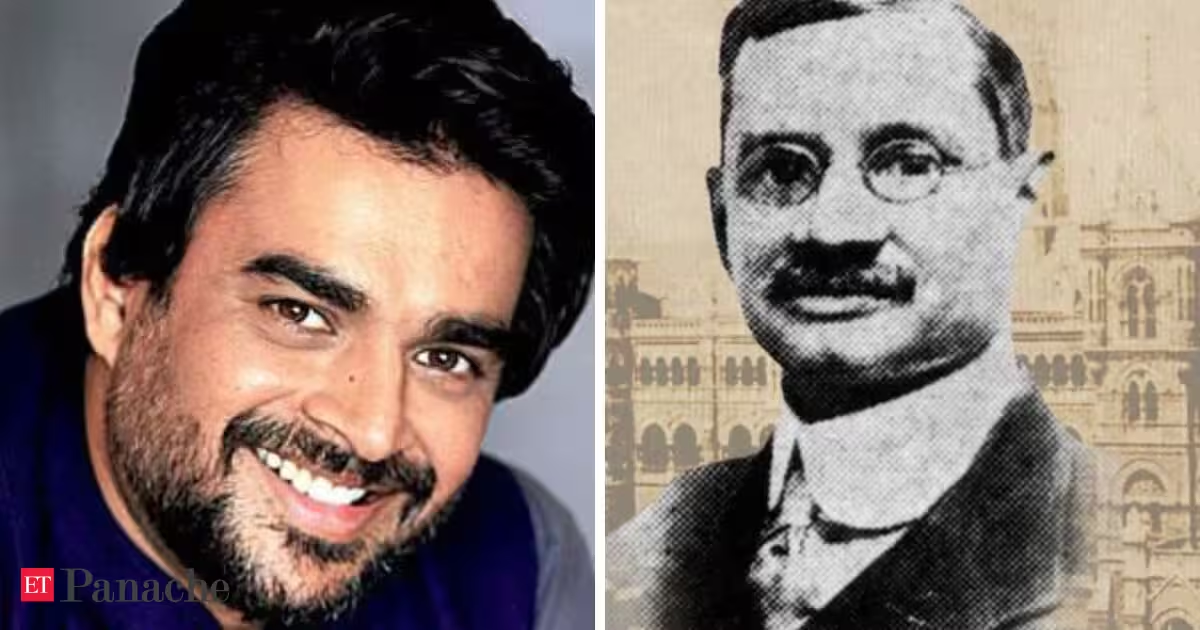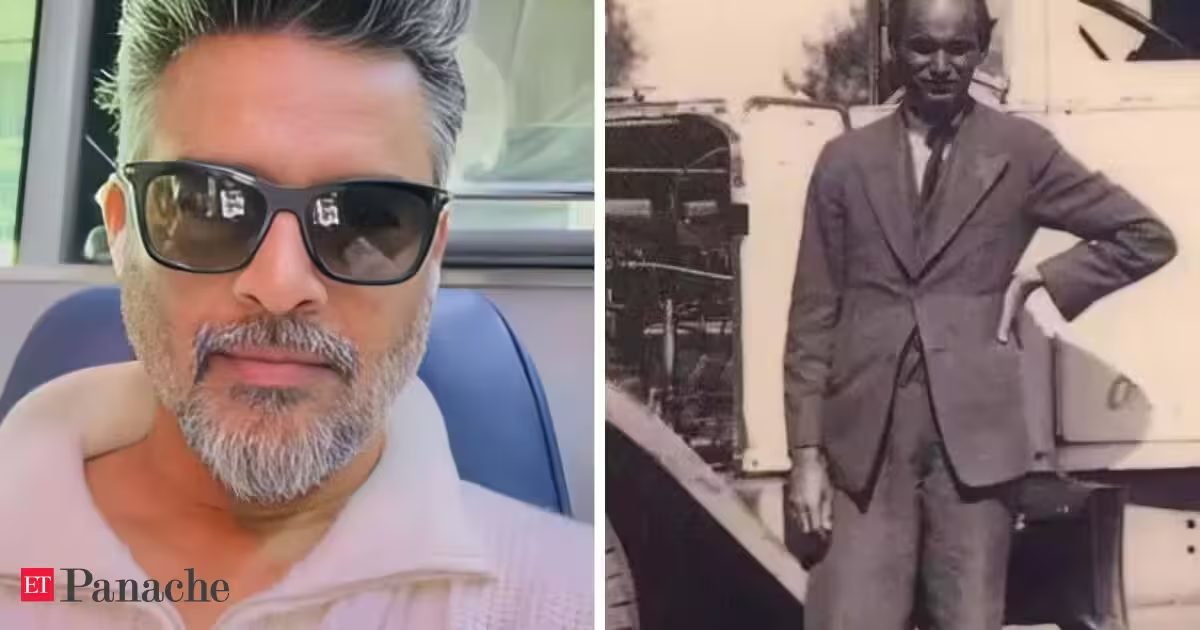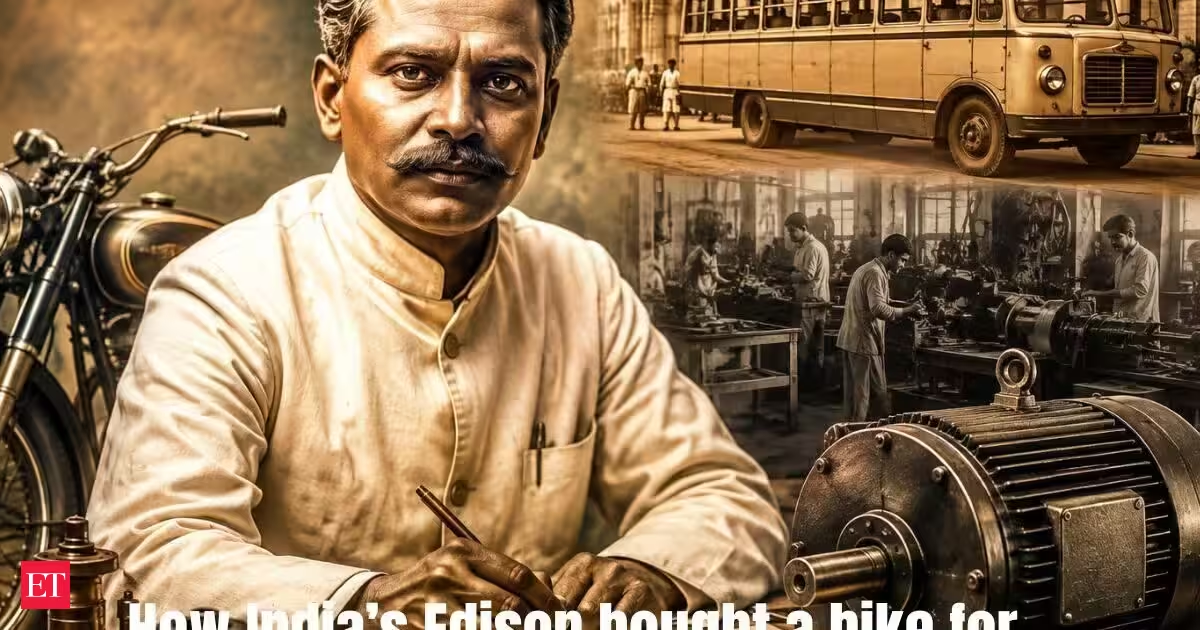
As India celebrates 80th Independence Day, the country’s journey of self-reliance is worth remembering through the stories of people who built and innovated long before the startup era. One such pioneer was Gopalswamy Doraiswamy Naidu, popularly known as the “Edison of India”. A school dropout who left education after Class 3, Naidu bought a motorcycle for Rs 300, taught himself engineering by taking it apart and went on to build India’s first electric motor. His story was not built around academic qualifications. Instead, it was driven by his interest in understanding how things worked and his determination to turn that knowledge into useful inventions.GD Naidu: How a motorcycle changed his lifeBorn in 1893 in Kalangal village in Tamil Nadu, Naidu showed little interest in conventional schooling. He left school after Class 3, but his lack of formal education did not stop his fascination with machines.Also Read: Meet the ‘Edison of India’ who studied science from magazines and shocked the British with his inventionsAt 16, he came across a motorcycle owned by a British officer. The machine caught his attention and eventually became the starting point of his journey into engineering.Naidu moved to Coimbatore and worked as a waiter for three years. He saved his earnings and eventually bought the motorcycle for Rs 300.Instead of simply riding it, he repeatedly dismantled the bike and assembled it again. By examining its gears, wires and other components, he taught himself the basics of mechanical engineering.From one bus to a 280-vehicle fleetNaidu later turned his interest in machines into a transport business. He began with a single motor coach and drove it himself.The business expanded steadily. By 1933, his fleet had grown to 280 buses, and Universal Motor Service (UMS) had become a major public transport network.But running a successful transport company was not the end goal for Naidu. His attention soon turned towards manufacturing and invention.The electric motor that changed his journeyIn 1930, Naidu established a workshop called New Electric Works in Coimbatore. It was here that he developed what is widely described as India’s first electric motor.At a time when India depended heavily on imported machinery, his work represented an effort to develop technology locally.The electric motor was only one part of Naidu’s long list of experiments. His inventions included a kerosene-powered fan designed for areas without electricity, an electric razor known as “Rasant”, a mechanical calculator, a ticket vending machine and an affordable five-valve radio.Naidu also took a practical approach to his inventions. Rather than leaving them as laboratory experiments, he established factories to manufacture several of his creations. In the process, his work also generated employment.He experimented with farming tooNaidu’s curiosity was not restricted to machines. On his farm, he experimented with crops and managed to grow cotton plants that reached around 10 feet in height, along with unusually thick millet. His agricultural methods attracted the attention of physicist and Nobel laureate C. V. Raman, who visited his fields to study them.For Naidu, engineering and agriculture were not separate worlds. Both offered opportunities to experiment, observe results and find better ways of doing things.Why Naidu believed practical education matteredNaidu stepped away from business in 1944 and increasingly focused on education and social work. He was involved in establishing a polytechnic college in Coimbatore, now known as Government Polytechnic College. His approach to education reflected his own experience: practical skills and hands-on learning could be as important as conventional classroom education.Also Read: 'Ghost number' 6174: Meet Dattatreya Ramchandra Kaprekar, the Indian schoolteacher who discovered a mysterious 4-digit number that almost always returns to itselfThrough G.D. Naidu Charities, he also supported researchers and workers who needed assistance. His broader aim was to ensure that innovation could have a practical impact on people's lives rather than remain confined to laboratories.The legacy of India’s ‘Edison’Naidu died in 1974, but his story continues to stand out in India’s history of self-taught innovators. He had little formal education and no conventional engineering degree. Yet, through experimentation and persistence, he moved from studying a motorcycle to building a transport empire, developing electrical and mechanical devices, supporting education and encouraging practical innovation.C. V. Raman reportedly summed up his admiration for Naidu by calling him “truly a man in a million,” adding that even this might be an understatement.Naidu’s life remains a reminder that innovation does not always begin inside a university or a research laboratory. Sometimes, it can start with a teenager taking apart a machine simply because he wants to understand how it works.
He left school after Class 3, bought a British motorcycle for Rs 300 and taught himself engineering, then built India’s first electric motor
Independence Day 2026 Special: G D Naidu, known as the “Edison of India”, left school after Class 3 but went on to become a pioneering inventor and entrepreneur. After buying a motorcycle for Rs 300, he taught himself engineering by dismantling and studying it. He later built Indias first electric motor, developed several other machines and expanded his transport business into a 280-bus fleet.
747 words~3 min read