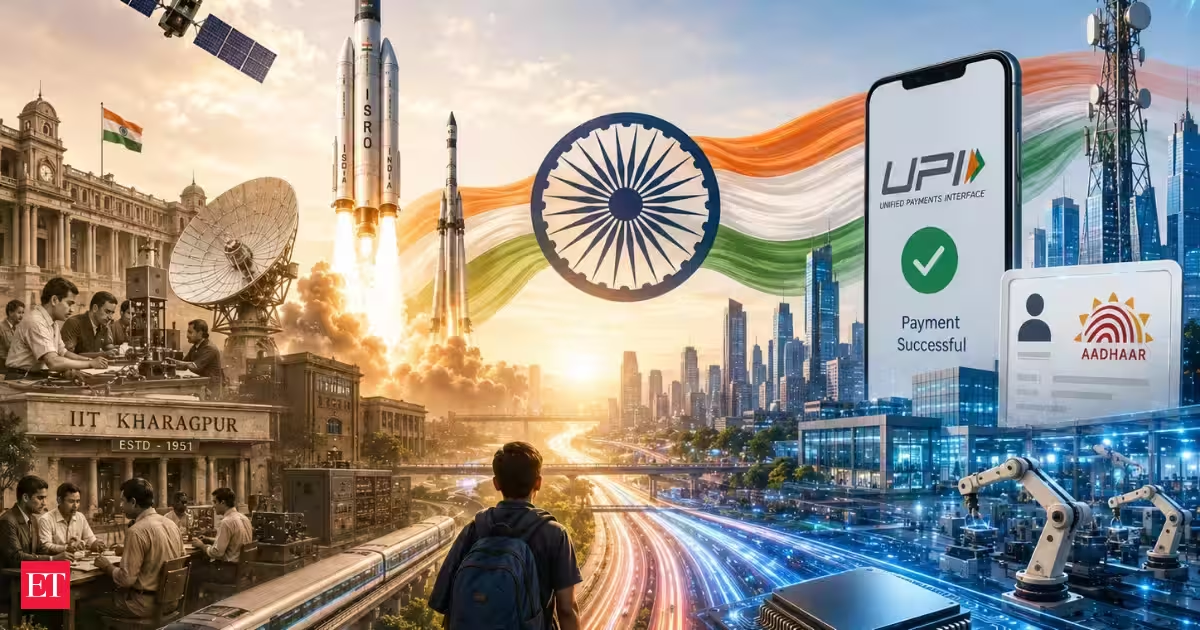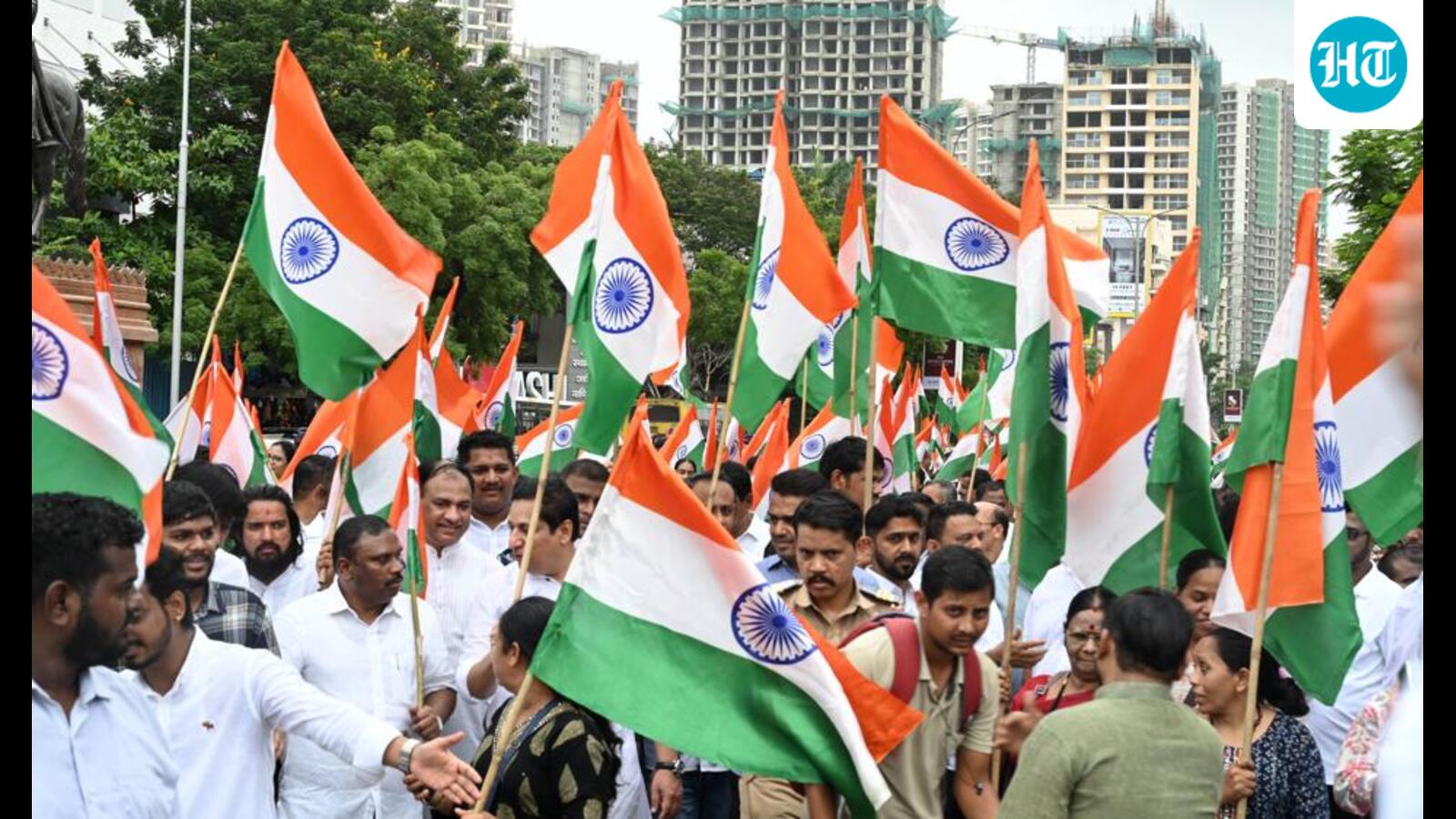
Today, India enters the 80th year of its independence. When freedom came in 1947 — with the material and social scars of colonial plunder and partition — not many in the world gave India a chance. The journey so far has been far from perfect. But it is remarkable and unparalleled in its own way. What makes it most unique is our embrace of what is often described as precocious democracy.Independence Day is an occasion to remember and celebrate our achievement of the past eight decades. However, the past should not be allowed to make us oblivious to the future. (Bachchan Kumar/HT Photo)Independence Day is an occasion to remember and celebrate our achievement of the past eight decades. However, the past should not be allowed to make us oblivious to the future. Just as the world was changing when India first won independence in 1947 — colonialism was in retreat, socialism was at its strongest and even capitalism in advanced capitalist countries had embraced welfare and interventionism in a big way — it is changing decisively once again now.In AI, there is a technology which is already inflicting a generational disruption on the future of white-collar work. The only thing which makes the disruption more complicated for India is that AI leaders are not from this country. The disruption, however, will be felt deeply in India, including in its most successful white-collar employment generating sector, namely, IT. Advanced countries in the West, most importantly the US, are increasingly embracing autarky in matters of both trade and migration. This will generate headwinds for all countries, India included. China, a country, which was at par with India until the 1980s, is now the manufacturing leader by a distance. Its excess capacity is squeezing the industrial endeavours of other countries including ours.India’s future, going forward, especially in the next two decades culminating in the centenary of independence, will depend on how well the country responds to this changed international environment. The first step is to accept that the challenge is critical. Then comes the task of developing a synergy where India’s single largest endowment — its demography — aligns with markets to redesign and repurpose growth going forward. Past experience shows that we cannot take this for granted. Social tensions, governance deficits and sometimes just policy inertia or short-termism can often sidetrack or derail us from pursuing the larger objective at hand.Can the political leadership ensure that our democracy realigns itself to securing the longer-term objective rather than being consumed by what seems to be the more convenient thing to do right now? For decades, India’s body politic has been obsessed with correcting real or perceived historical wrongs or winning palliatives to reduce the pain along the journey to realise our full economic potential. The recent student protests — not just in Delhi but in other states too — mark the resurrection of a collective conscience and political energy inspired more by the need to secure the future than by fighting ghosts of the past. The new generation of citizens who led these protests, some of whom are not even of voting age today, deserve a democracy that channels the energies of its younger people to conquer the future, no matter how challenging that task is compared to the past.This will not happen if the democratic dialogue is consumed by a sectarian urge to settle political scores alone. What it really needed is a radical approach which promises not silver bullets, but a collective effort to undertake reforms, reflection and necessary rectification. Only this can ensure that India punches above its weight in the world rather than being consumed by the weight of its democratic contradictions.
A longer-term vision for India
The youth deserve a democracy that ensures a better future. This needs democratic dialogue, not giving into sectarian urges
613 words~3 min read