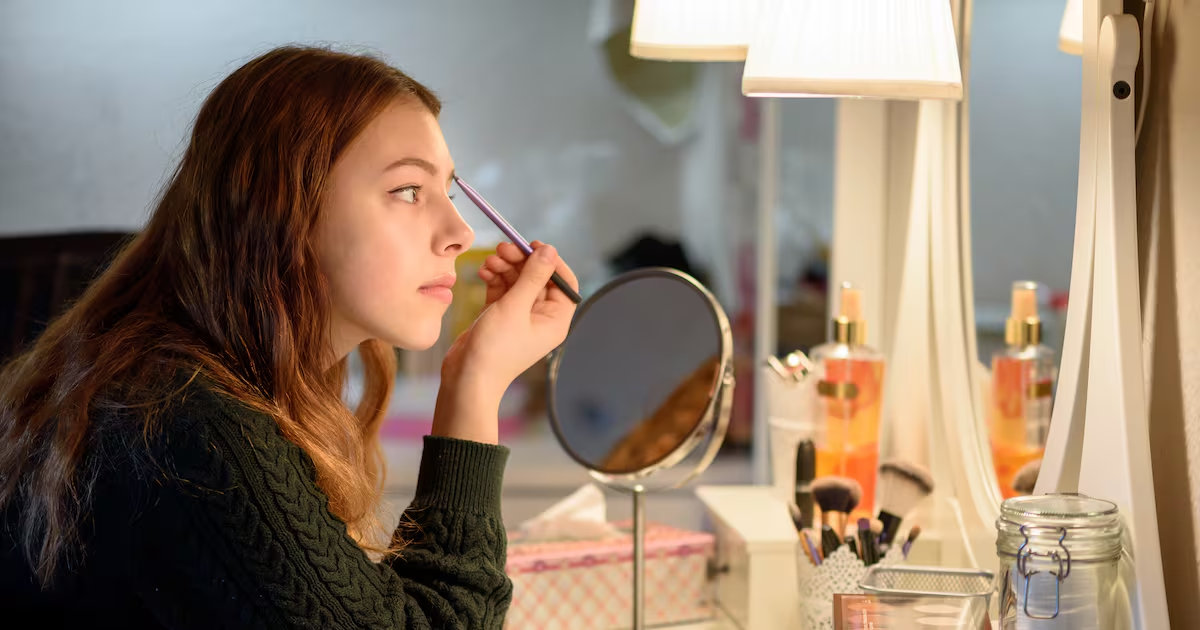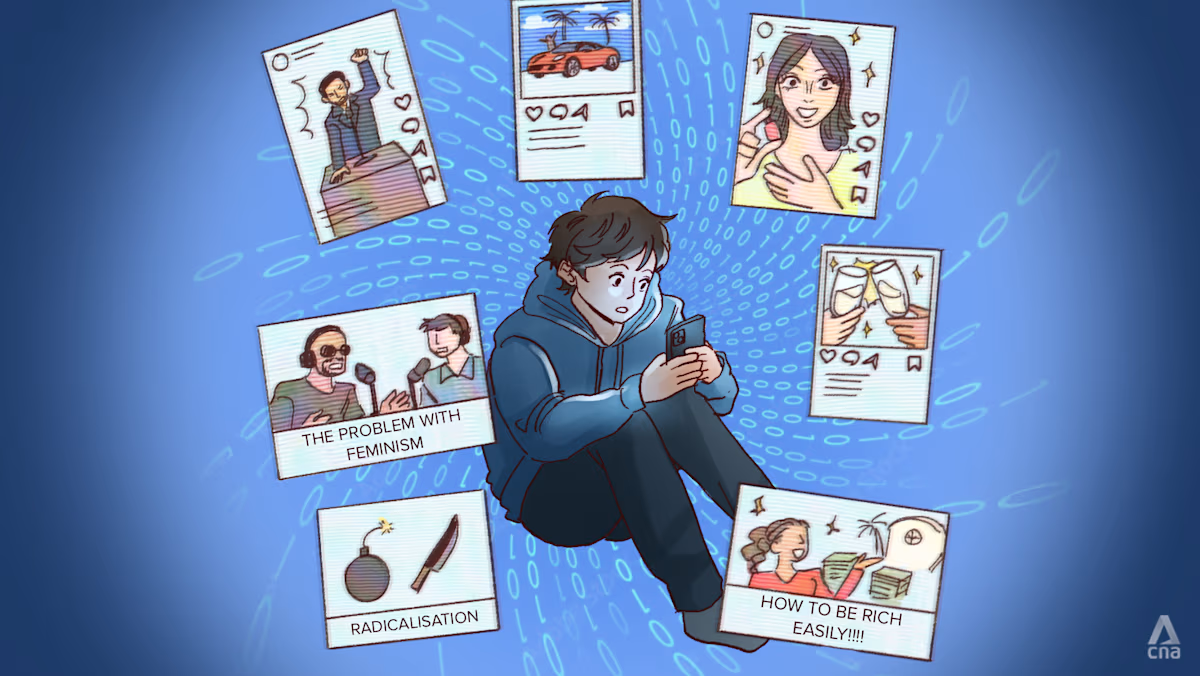
When Renee (not her real name) was around 14, beauty and skincare videos began filling her social media feeds, from products promising better skin, to elaborate "everything showers" where users spend longer than usual on a full-body routine involving steps such as deep cleansing, exfoliation and haircare.She asked not to be identified by her real name because of the sensitive nature of her experience and her young age.Renee had initially sought out skincare and makeup content for clearer skin and to cover her acne, as well as videos on losing facial fat and weight and watched them because they seemed fun. But as the same kind of posts kept appearing even when she was no longer actively searching for them, she started comparing herself more closely with the faces and bodies on her screen."It was mostly insecurity," said Renee, now 15. "It made me feel, 'Oh, maybe I need to look better'. Then it became, 'How do I look better?'"Before long, that question had a ready-made algorithmic answer: cosmetic products. At just 14, she became set on getting a S$100 (US$78) retinol cream – a product more commonly associated with reducing signs of ageing such as fine lines and wrinkles."I tried to convince my mum to buy it for me," she recalled, though her mother ultimately refused. "Looking back, it's stupid. Why do I need retinol (at this age)?"For Aldrin Ardiansyah, 17, the influence of online content became apparent in lower secondary school, when some of his friends began echoing the views of Andrew Tate – a self-described misogynist and social media influencer known for promoting an aggressively masculine persona and views widely criticised as demeaning towards women. Tate's clips were appearing on Aldrin's TikTok feed too. At first, he found himself watching them just as entertainment, but later stopped interacting with the videos because he did not want to help popularise them and hoped the algorithm would stop recommending them.Because such content was already common on his own feed, he said he was not particularly surprised when schoolmates began repeating Tate’s ideas, sometimes in what he saw as a joking or satirical way.The first-year polytechnic student believes his friends' ages made them more impressionable, while the lack of alternative viewpoints around them meant there was little to challenge what they were seeing online."I think the content targeted boys who felt small or powerless, and gave them the wrong kind of confidence by affirming certain ways of thinking," he said.
Down the rabbit hole: Social media is exploiting youthful angst for profit or politics
Teenage insecurities are nothing new, but social media has made it easier for commercial, political and ideological actors to identify what young people worry about, keep feeding those anxieties and offer products, communities or beliefs as answers.
3,571 words~16 min read