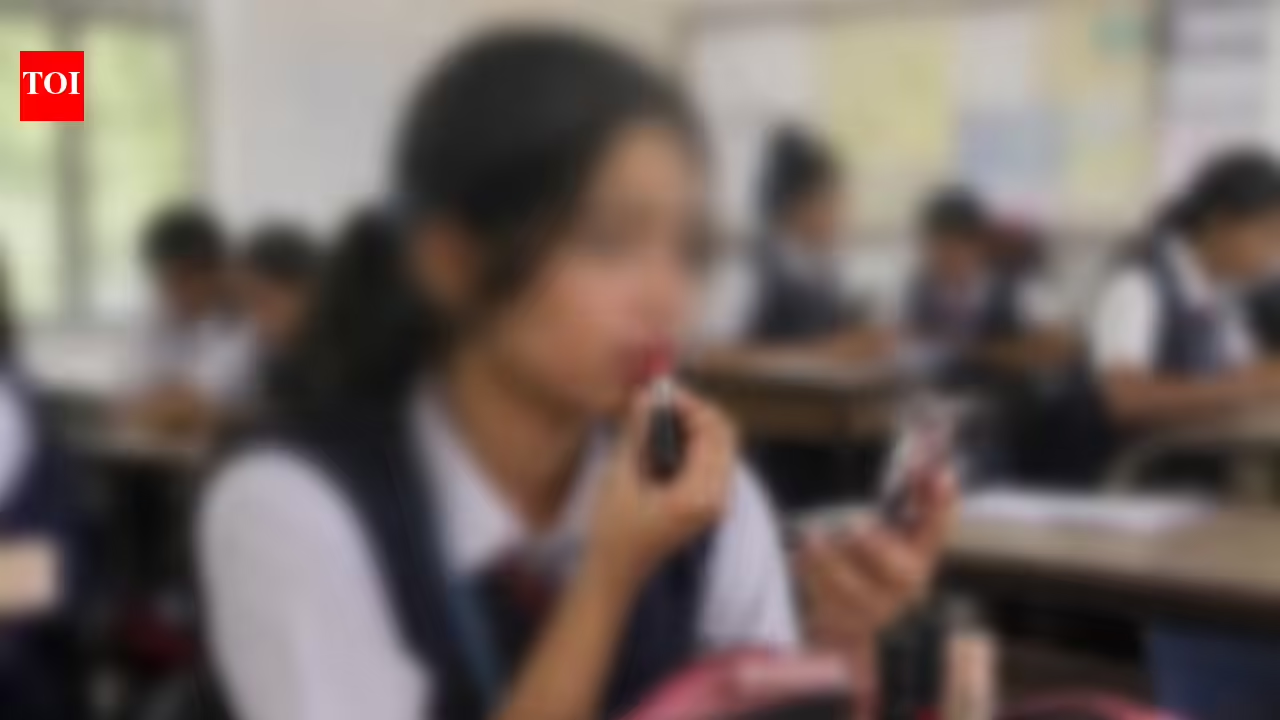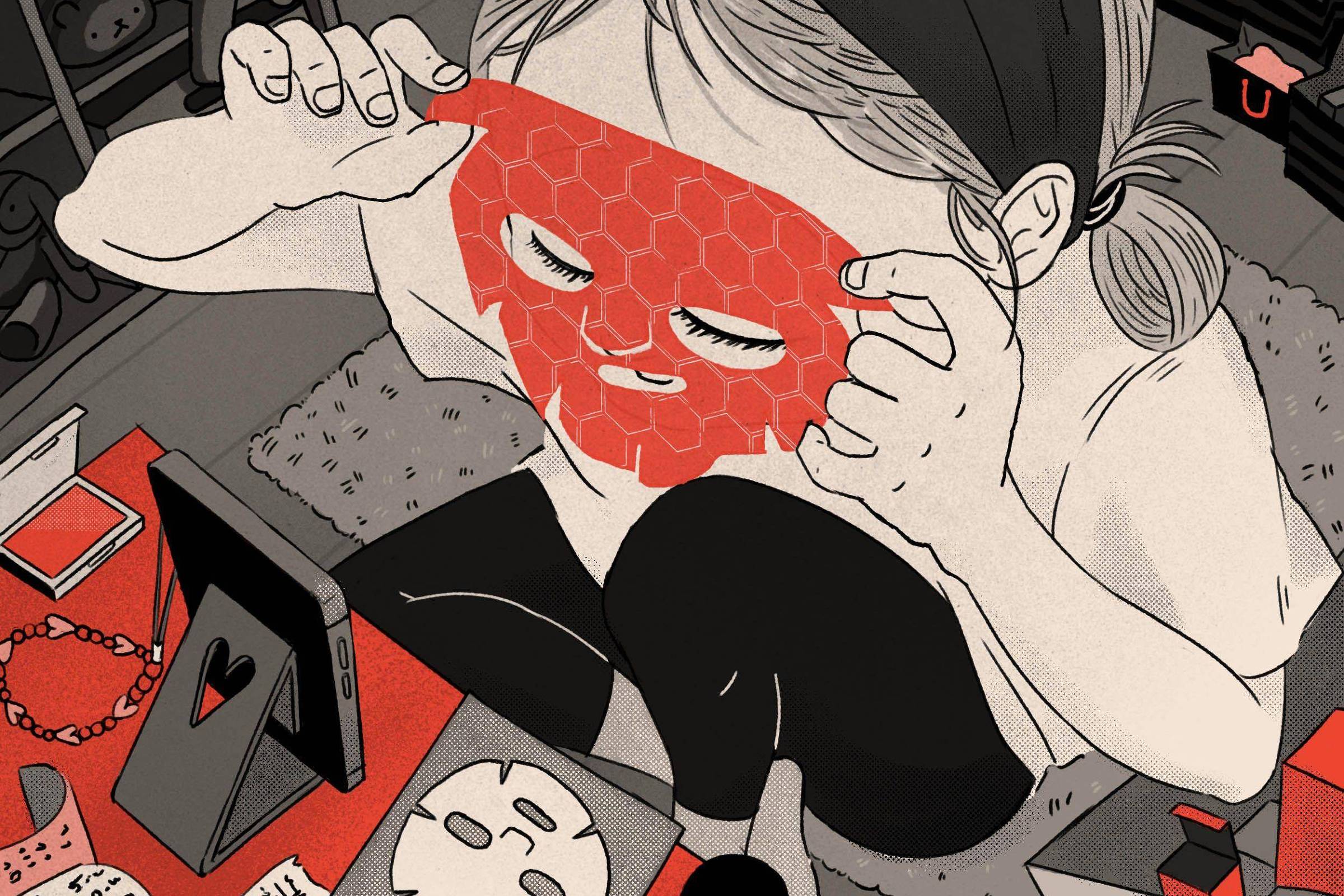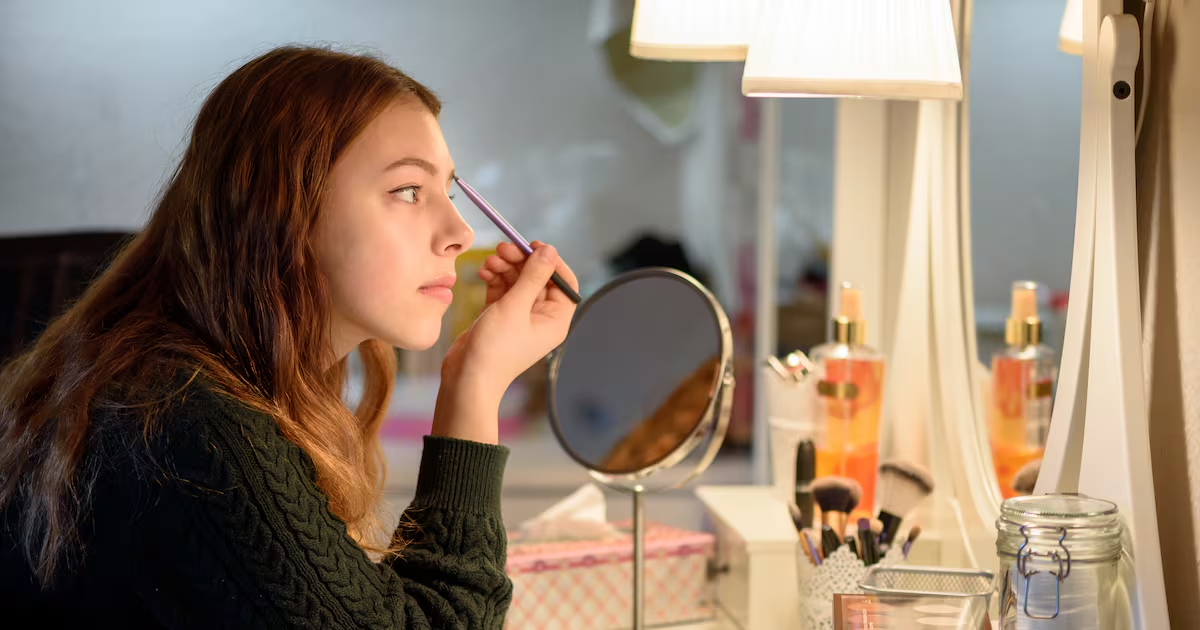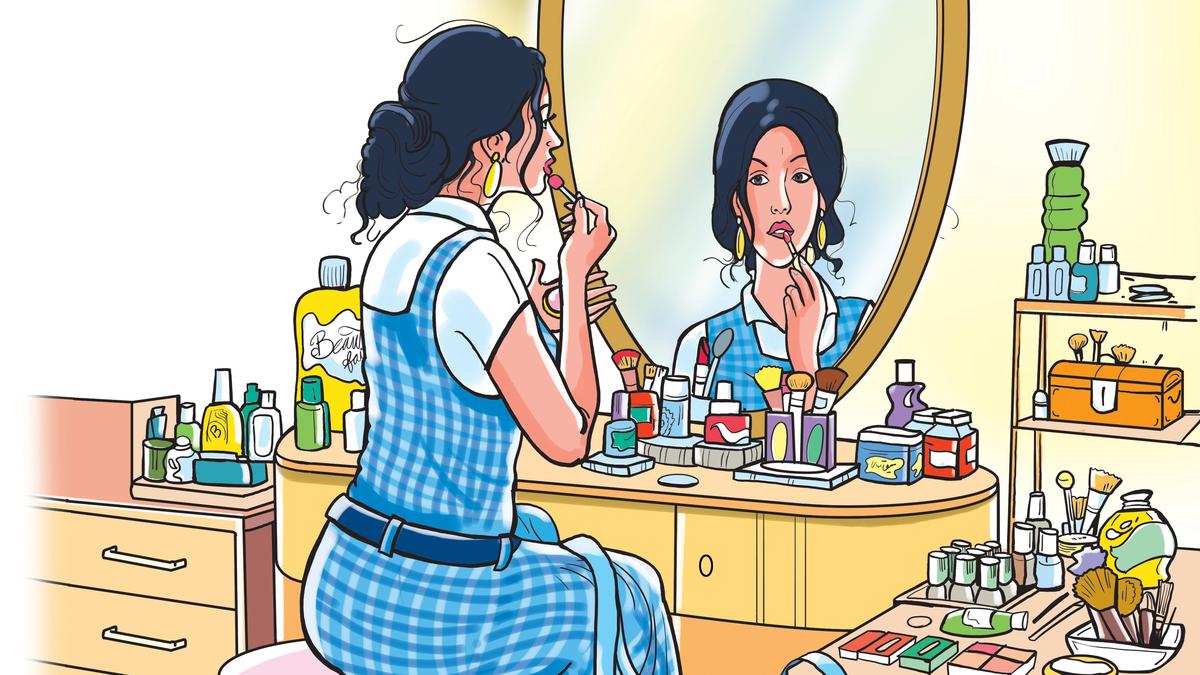
Aliya’s* school bag carries more than just textbooks.Every morning, the eighth-grader goes through a solemn ritual of applying a brightening cream, which gives an instant, chalky brightness to her skin. Then she takes a swipe of a smudge-free kajal stick, followed by a few dabs of the cheap lip-and-cheek tint.To her teachers, she is a quiet, rule-abiding student. But to her peers, and to herself, her entire sense of self is tethered to the tiny make-up kit.Last month a teacher seized her cosmetics and made her wipe her face. The reaction was not simple teenage annoyance but pure desperation. She kept her head down on her desk for the rest of the day, refusing to look at her classmates or pay attention to the lessons.Her mother, a daily wage earner, could not understand the issue. “Young women should look pretty. Shouldn’t they?” she asks.When asked by a school counsellor why she felt so distressed, Aliya’s response perfectly mirrored all the red signals surrounding early cosmetic addiction.“Without it, my face looks dirty and dark. If I don’t wear it, the other girls say I look sick,” she rues.Through videosEight-year-old Sarah first discovered the world of skincare through videos on her mother’s phone. She finally got a chance to try it herself at the makeover station arranged at a classmate’s birthday party. The girl was instantly captivated and demanded a kit of her own. After checking online to make sure the brand was completely safe, her parents gifted her a ‘princess kit’ worth about ₹3,000.Slowly, an addiction took root.“At first, I didn’t see any problem,” her mother recalls. “There was a whole range of safe, organic, and Ayurvedic products available and she started collecting them.” Soon, Sarah’s cosmetics outnumbered her schoolbooks, filling her room with everything from face sheets and nail paints to lip tints and eyeshadows. She began begging relatives and family friends for new products, refusing to ask for anything else on her last birthday.Now, she has multiple make-up kits and a strict daily regime. Her dolls sit abandoned and her parents are taking her to a child psychiatrist.‘Cosmeticorexia,’ a growing obsession with beauty products among children, is quietly reshaping the landscape of modern childhood. Driven by social media feeds and young online influencers, young girls are shifting towards multi-step skincare routines and adult cosmetics. What begins as curiosity quickly transforms into a rigid daily ritual, as young minds seek to mimic the flawless, filtered aesthetics they see on screens, according to teachers and behavioural scientists.This premature transition carries alarming consequences for a child’s mental and physical development. Applying harsh chemical additives, whitening creams, or heavy make-up can lead to multiple health issues. Psychologically, the impact is even more profound—it fosters deep-seated insecurities, anxiety, and early body dysmorphia, according to experts.Teachers say they are witnessing an alarming shift in student behaviour, describing the obsession with cosmetics not as a passing phase, but as a clinical dependency.A teacher from Malappuram recounted the experience of one of her students, who fell victim to the trend. The girl suddenly withdrew from school activities and stopped going outdoors. Her classmates reported that she had been frequently applying a green-tinted cream from an unmarked glass jar. Soon her face became fairer by several shades compared to the rest of her body, the teacher recalls.The hidden dangers of the product became undeniable during a mandatory outdoor school event. Under direct sunlight, the girl’s facial skin reacted violently, breaking out in red patches. Upon inspecting the unlabelled jar, the teacher discovered it lacked any ingredient list, manufacturing details, or brand name. It had been gifted by a relative with a strict warning against stepping into the sun while using it. “The cream carried an incredibly harsh, chemical smell,” the teacher recounts.In classrooms, the preoccupation with mirrors, tubes, and bottles has begun to eclipse academic engagement, turning routine school days into high-stress social battlegrounds. School administrators and teachers find themselves in a precarious position, caught between enforcing discipline codes and navigating complex child rights regulations.“If we confiscate the products, we will be accused of harassment, causing mental agony, or violating the child’s personal liberty. Parents and activists threaten to sue us. So, instead of correcting the behaviour, teachers just look the other way to save their jobs,” says a teacher at a private school.Experts point out that the rapid expansion of digital media, global beauty trends, and video-sharing platforms has significantly influenced how young people perceive themselves and express their identities. “Current evidence indicates that appearance-focussed social media is associated with greater body dissatisfaction, anxiety, depressive symptoms, and body dysmorphic symptoms among vulnerable children and adolescents,” notes Jijo Joseph John, senior paediatrician and Professor of Paediatrics at a private medical college.The recent raids by the Drugs Control department in connection with Operation Soundarya laid bare a terrifying health hazard lurking on Kerala’s store shelves. Authorities have seized unbilled, contraband face creams imported from Pakistan that contain up to 20,000 PPM of toxic heavy metals, a figure that shatters the safe regulatory limit of just 1 PPM. Experts warn that these unregulated products can cause severe dermatological damage and other health complications.“Cosmetic products may contain chemicals that can trigger allergic contact dermatitis, especially in children with sensitive or atopic skin. Lip products deserve particular attention as small amounts may be unintentionally ingested during normal use, leading to heavy metal contamination,” says Dr. John.Regular use of traditional kohl, surma, and some unregulated kajal preparations could lead to elevated blood lead levels in children, he cautions.“For most healthy children, a simple skincare routine consisting of a gentle pH-balanced cleanser, when needed, an appropriate moisturiser, and sunscreen is sufficient. Routine use of cosmetic products is unnecessary unless specifically recommended by a health-care professional,” he suggests.Collective response neededAddressing the broader societal challenge, Dr. John emphasises the need for a collective response. “All stakeholders have important roles in helping children develop a healthy body image, critically engage with online content, and use only regulated, age-appropriate and safe products. Children should be encouraged to value their abilities, character, and overall well-being above their appearance,” he suggests.Child psychiatrists are tracking a disturbing surge in young patients who are obsessively fixated on physical appearance. “Many children walk in hiding their faces, desperately covering themselves as they are trapped in the conviction that their features—the shape of their nose or the alignment of their eyes—are fundamentally flawed. We see them trapped in extreme cycles, either constantly checking their reflection in a state of high anxiety, or avoiding mirrors altogether and refusing to step out in front of people, which is an indicator of psychological distress,” observes Jitha G., a consultant in Child and Adolescent Psychiatry.She adds that there is also a deeply troubling trend in child psychiatry where children become fixated on weight loss, meticulously counting every single calorie until they severely collapse into clinical anorexia.“A massive driver behind this is the sea of misinformation children consume on social media. They digest highly distorted concepts about nutrition and beauty, and when these anxieties about their bodies and faces take root, they rarely find an open channel to discuss them and turn to their peer groups. But these friends too are navigating the same turbulent, algorithm-driven world. When vulnerable children seek guidance from equally confused peers, they exchange dangerous advice and unhealthy coping mechanisms,” she observes.Anson P.D. Alexander, psychologist and director of a non-governmental organisation working in the child-welfare sector, warns that modern childhood is now entirely dictated by digital algorithms. “The very definition of a ‘peer’ has shifted from immediate classmates to an expansive, curated circle of online icons. As social media feeds are tailored to individual tastes, children are exposed to influencers across every socioeconomic tier,” he says.While some content creators introduce high-end, premium luxury brands, others promote budget-friendly, low-cost alternatives designed to appeal to economically weaker demographics. “However, this accessibility creates severe friction at home as children frequently throw tantrums demanding these products and thus exert immense financial pressure on their parents,” he observes.Full-blown crisisAlexander says this phenomenon has transformed into a full-blown crisis. Through Project X, a sexuality education campaign covering around 23,000 students, the NGO had identified this rapid behavioural shift. “In 2023, it was not a significant issue. However, today, it has become a dominant crisis,” he notes.Recognising the gravity of the crisis, the Kollam Child Welfare Council (CWC) recently launched a ‘lipstick-free campus’ campaign across schools. The initiative initially faced resistance from students who had come to view cosmetics as non-negotiable daily essentials. However, the response has turned overwhelmingly positive in due course.“We launched the campaign after discovering that a massive number of young schoolgirls were buying cheap, substandard lipsticks, which are easily available right outside their school gates,” says D. Shine Dev, secretary, CWC.He adds that the campaign has caught up in schools where most of the students voluntarily chose to ditch their make-up routines. The CWC has since extended the campaign to parents and neighbouring districts.As schools step in to break the cycle, students are beginning to discover the mental freedom that comes with abandoning the daily cosmetic ritual. “My mind used to be completely consumed by whether my lip tint was fading or if my skin looked too dark in the classroom light,” says 14-year-old Vrinda*. “Once I finally stopped wearing them all, the constant anxiety slowly disappeared. First I thought everyone was staring at my dark spots. But after a week, nobody cared. And for the first time in two years, I wasn’t spending my break times checking a compact mirror. I finally feel like I can just be a student again.”(*Names of children changed to protect their identity)
Messy make-up: cosmetics addiction takes the sheen out of childhood
Explore the rising trend of "Cosmeticorexia" among Kerala schoolchildren, revealing its psychological and physical impacts on youth.
1,601 words~7 min read