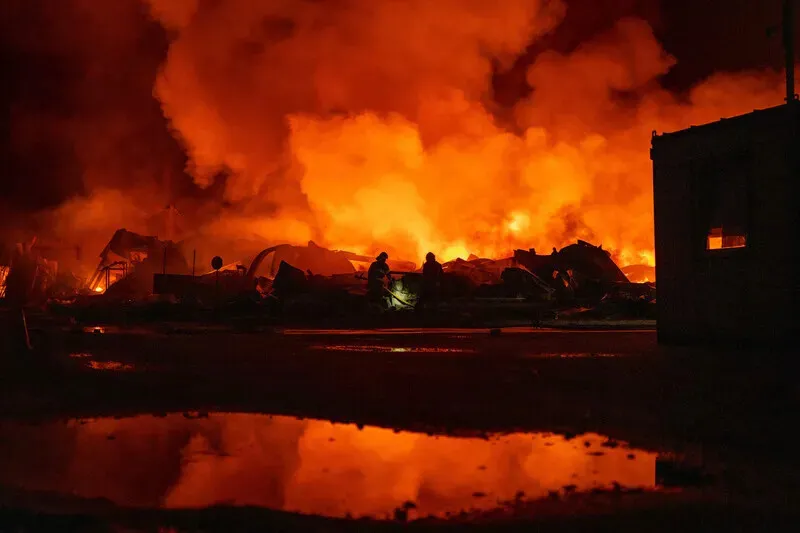
Firefighters work to extinguish a blaze at a warehouse hit by Russian missiles in Kyiv on Aug. 5, 2026. (AP/Yonhap)
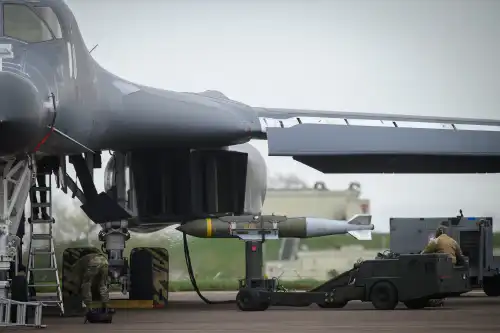
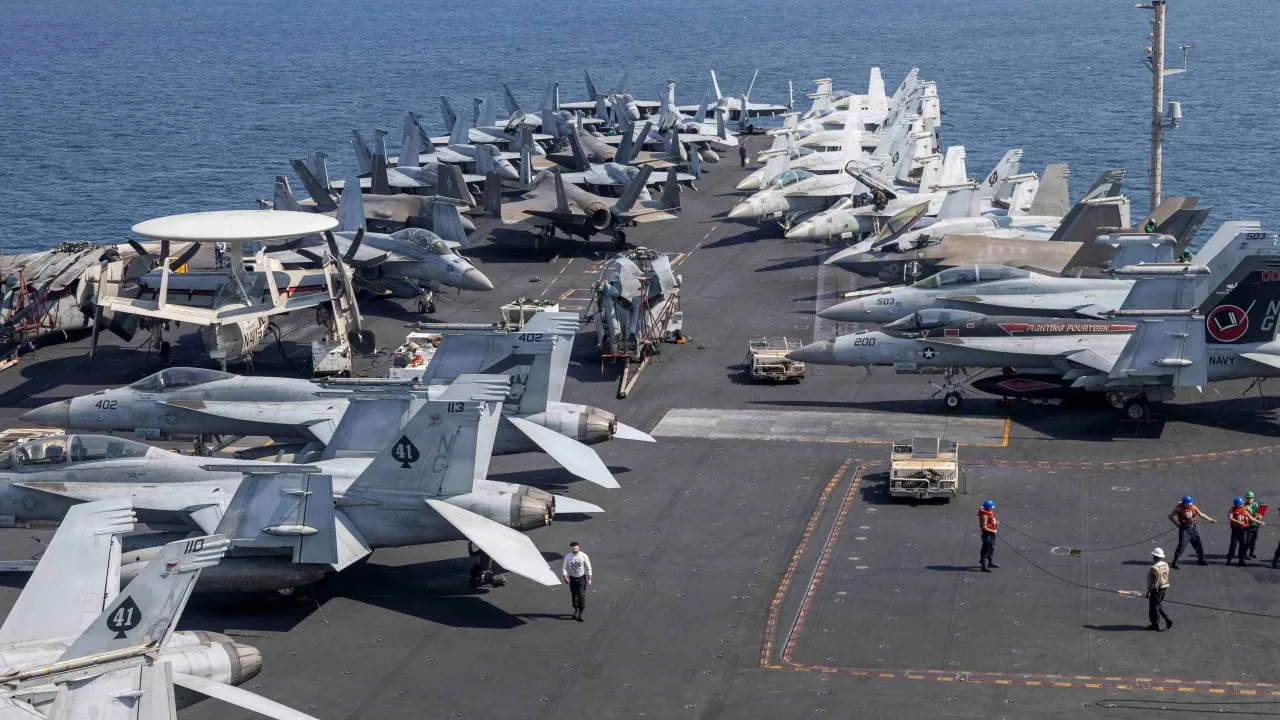
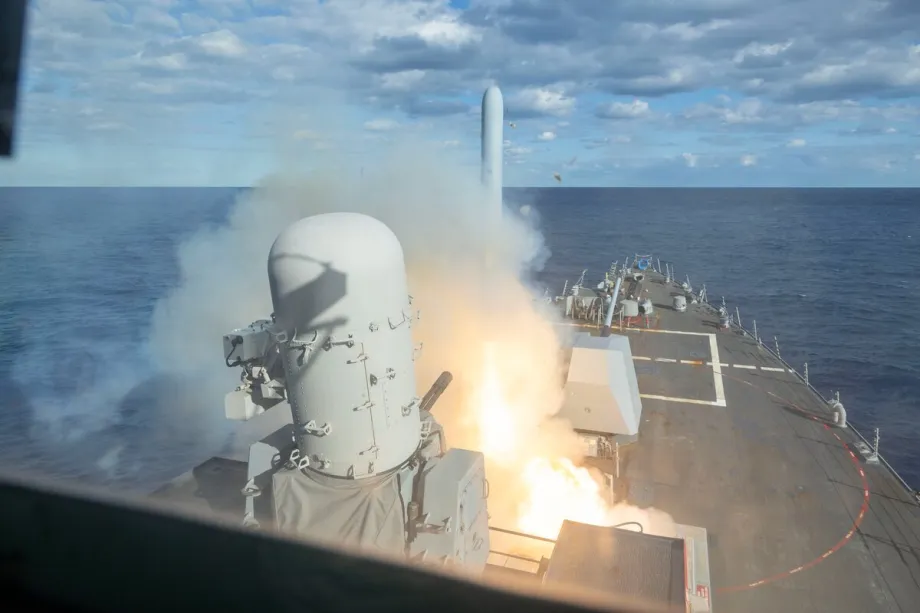
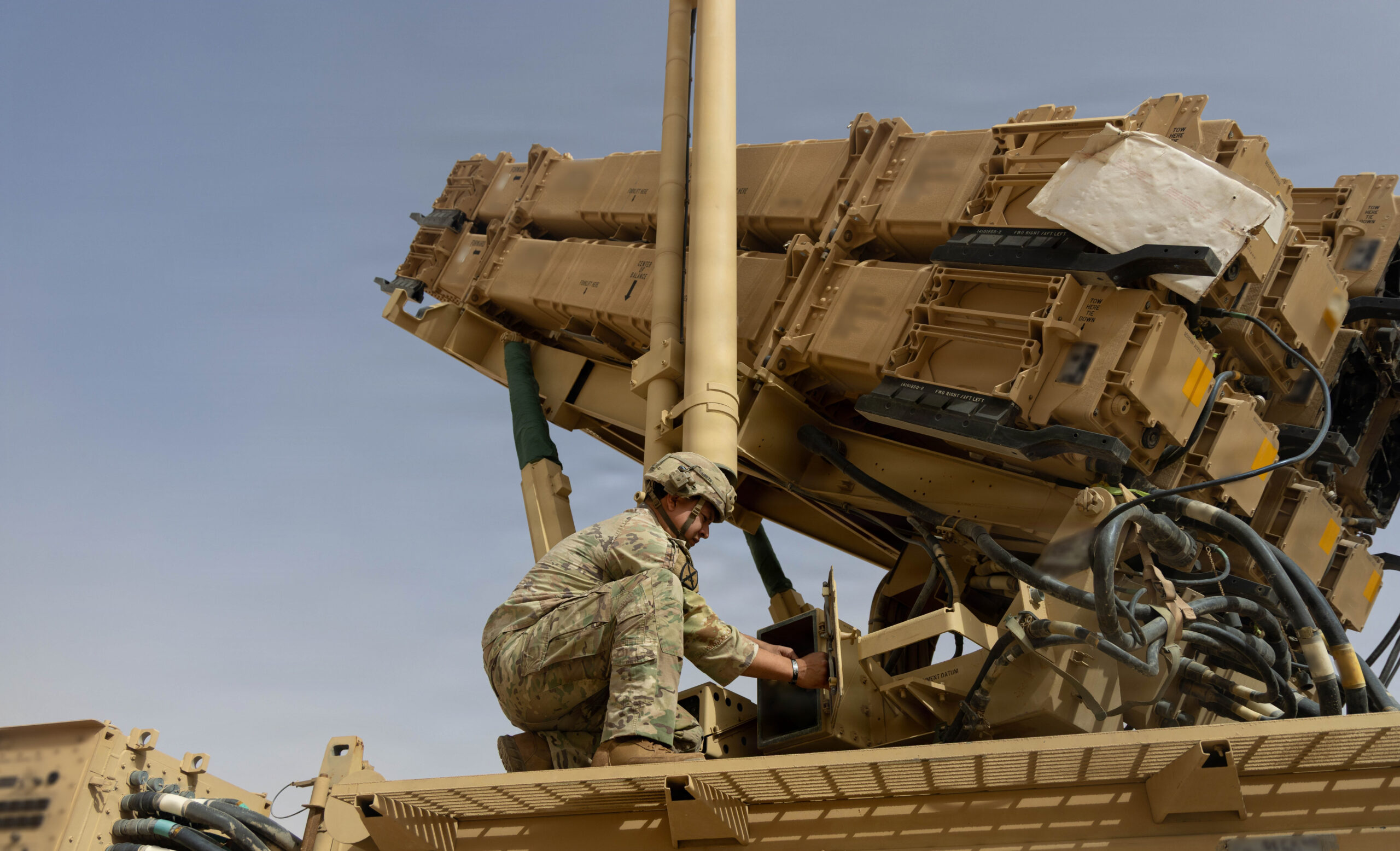
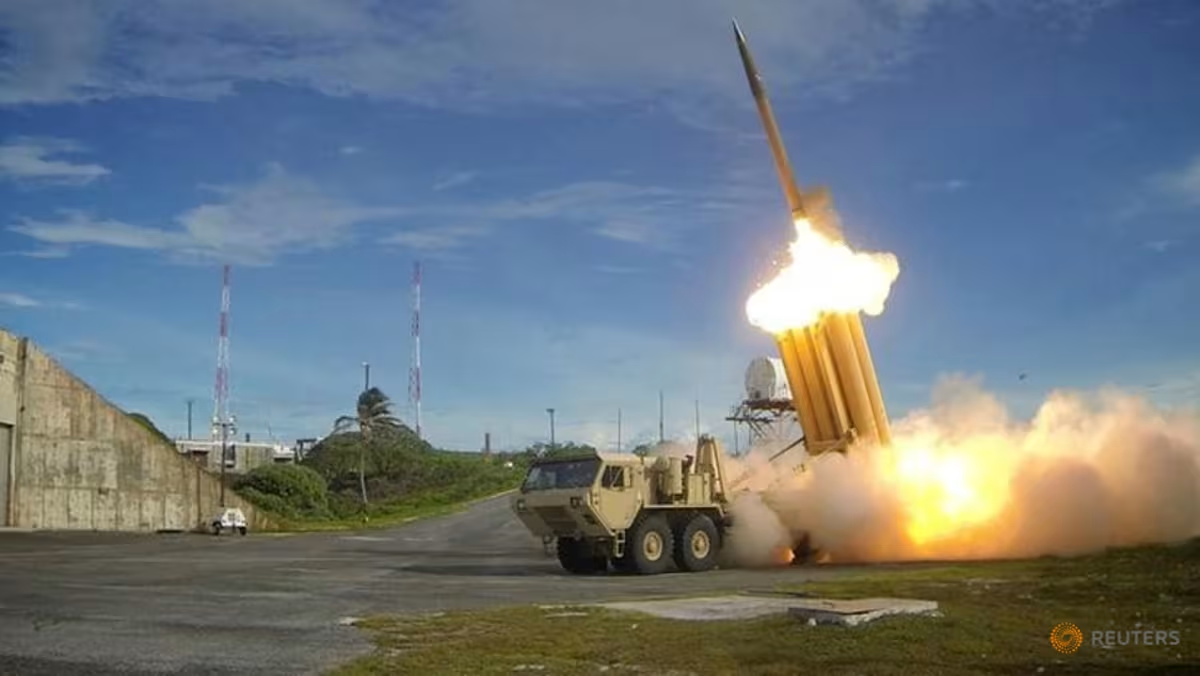
By Kim Jong-dae, former Justice Party lawmakerThe US’ weapon stockpiles are running low, and not simply because of the US and Israel’s war with Iran.This is both a systemic crisis that was long foretold and a symptom of a strategic malaise afflicting the hegemonic state that has dominated the globe since the end of the Cold War. The US military has come to resemble an enfeebled giant no longer capable of enduring protracted conflicts.When Donald Trump returned to the presidency last year, he accused his predecessor, Joe Biden, of wasteful generosity in his policy of supporting Ukraine in its conflict with Russia. Trump’s criticism was grounded in the inescapable truth that the US doesn’t have an endless stockpile of armaments.Even before the Iran war, Gen. Dan Caine, the chairman of the Joint Chiefs of Staff, and other US military leaders had warned that an extended conflict could not only cause personnel losses but also exert devastating pressure on stores of key armaments.If Washington depleted its reserves of ammunition while being bogged down in a single conflict in the Middle East without reliable military support from allied countries, its global deterrence against major powers like China and Russia could ultimately be fundamentally undermined.It turns out such concerns weren’t overblown in the least. Analysts with the US’ Center for Strategic and International Studies (CSIS) and other security think tanks estimate that the US has run through a third of its prewar stock of key guided armaments in the fighting against Iran. For some critical weapon systems, the attrition rate may be more than half.In a few short months, US forces have fired over a thousand Tomahawk cruise missiles and about 1,100 JASSM air-to-surface cruise missiles. There are pessimistic forecasts that restoring reserves to their prewar levels would take from three years for some weapon systems to until the early 2030s for others.More seriously, the US’ munitions stockpile was already woefully inadequate for prosecuting a major war with China even before the war with Iran.The just-in-time production system that the US defense industry adopted in the post-Cold War years to increase efficiency and cut costs may have been suitable for managing peacetime budgets, but it has fatal weaknesses in a protracted, multifront conflict between great powers.Defense industry bottlenecks in solid rocket motors, advanced missile seekers, specialized cast components and skilled labor cannot be resolved in the short term. Furthermore, the semiconductors and rare earths required in cutting-edge precision weaponry are entirely dependent on overseas supply chains.In short, the US has become a country that uses up munitions much faster than it can make them. It takes 18 to 24 months to get a new factory up and running, and it might take decades to rebuild domestic supply chains and the skilled labor needed to operate them.This situation was described by Tom Karako, a senior fellow with CSIS, as a “generational annihilation of the means of conventional deterrence.”But it was the US’ adversaries who were first to perceive and ruthlessly exploit America’s growing weakness.Noticing that the US military had abandoned air strikes, Iran doubled down on its resistance in early August. While it had initially offered to reopen the Strait of Hormuz in exchange for the US easing tariffs, it has now pivoted to six tough demands: that the US stop threatening Iran, lift sanctions completely, return Iran’s frozen assets, pay war reparations, withdraw naval and air assets from the region, and halt attacks on Iranian proxy forces.Iran has figured out that US forces deployed to the Gulf are running low on their Patriot, THAAD, and SM-3 and SM-6 interceptors.Russia’s war against Ukraine in Eastern Europe underscores the tragic consequences of the depletion of American strength.Russian President Vladimir Putin has been pummeling Ukraine’s air defenses, made vulnerable by the exhaustion of Patriot interceptors, and hurling ballistic missiles and hypersonic missiles at Kyiv and other key locations. This month, Kyiv has been completely vulnerable to barrages of Russian missiles.These developments also have major ramifications for the Asia-Pacific region. Given practical resource constraints, Washington is likely to scale back its Indo-Pacific strategy from the current “simultaneous deterrence” approach to a more selective strategy of focusing resources on limited interventions.Simply put, the US military has lost the ability to immediately deploy overwhelming conventional forces on all fronts in the event of simultaneous crises on the Korean Peninsula, in the Middle East and in Europe.This is the point where Koreans have to start asking some tough questions. For starters, how long will we uncritically accept the assumption undergirding the ROK-US alliance — namely, that the US’ nuclear umbrella will totally compensate for the gaps in our national security?Please direct questions or comments to [english@hani.co.kr]