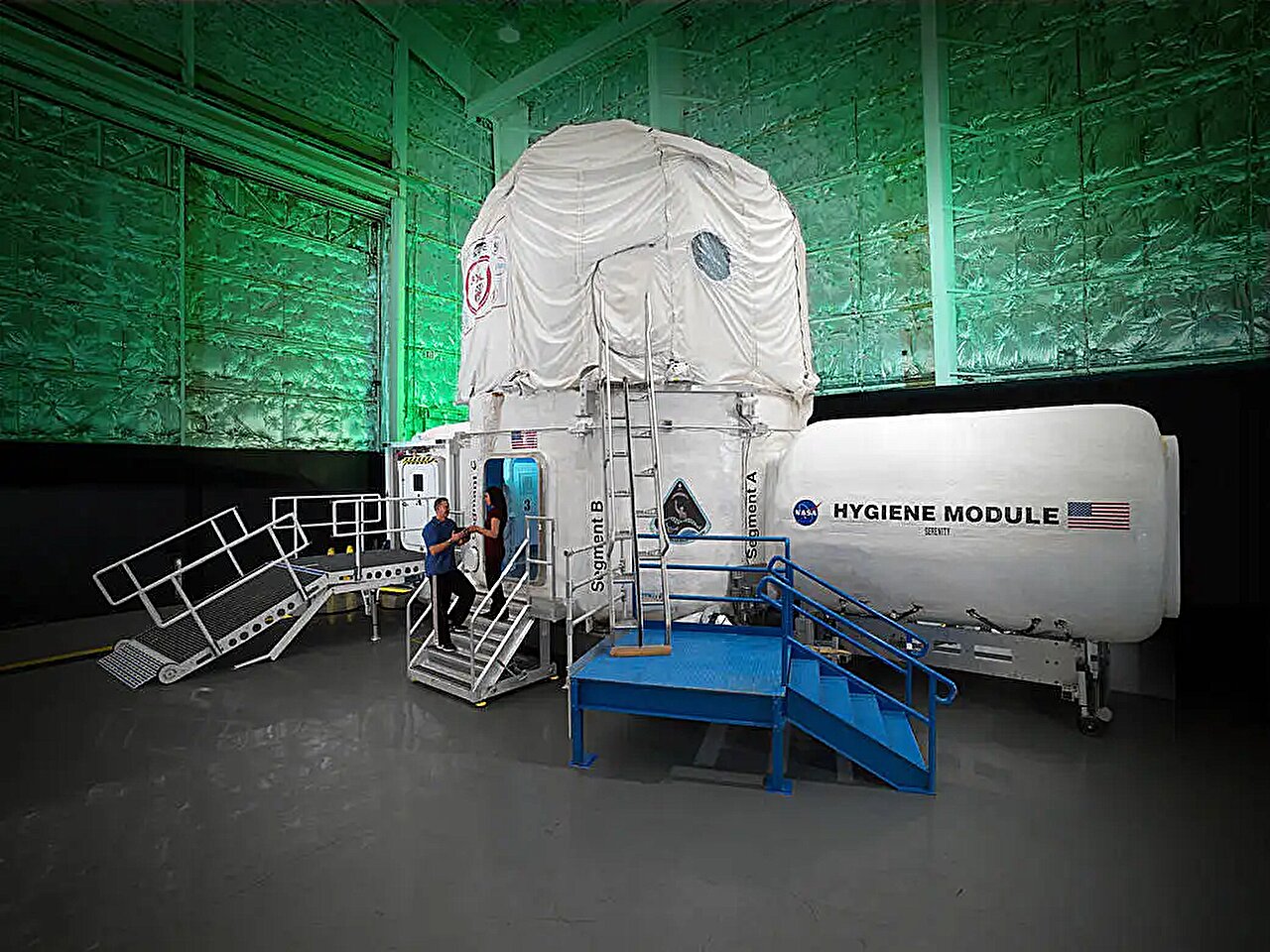
Scientists have mapped how different features of a space habitat could affect astronauts’ mental, emotional and social well-being, in a new study.
Researchers from the Massachusetts Institute of Technology (MIT) and the University of Colorado Boulder in the United States examined links between features such as lighting, privacy and the layout of living spaces, and experiences including anxiety, homesickness, fatigue and relationships between crewmates.
The idea is to give engineers a clearer way to consider astronauts’ mental health when designing habitats for long-duration space missions.
“The awareness has been there for some time that living in space is difficult,” Mich Lin, a lead author of the study and a PhD candidate in the Human Systems Lab and the Engineering Systems Lab at MIT, said in a press release.
“We’ve come a long way from the human in a tin can. As our priorities shift toward long-duration exploration missions, making sure a crew is safe, healthy, happy, and productive becomes even more important,” she added.