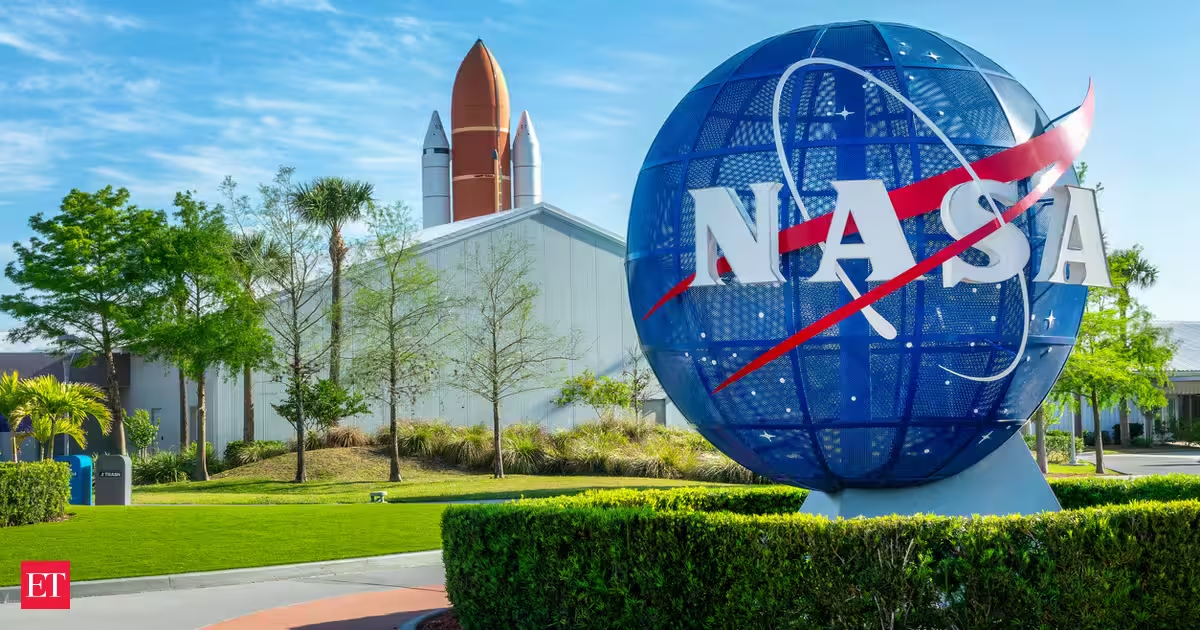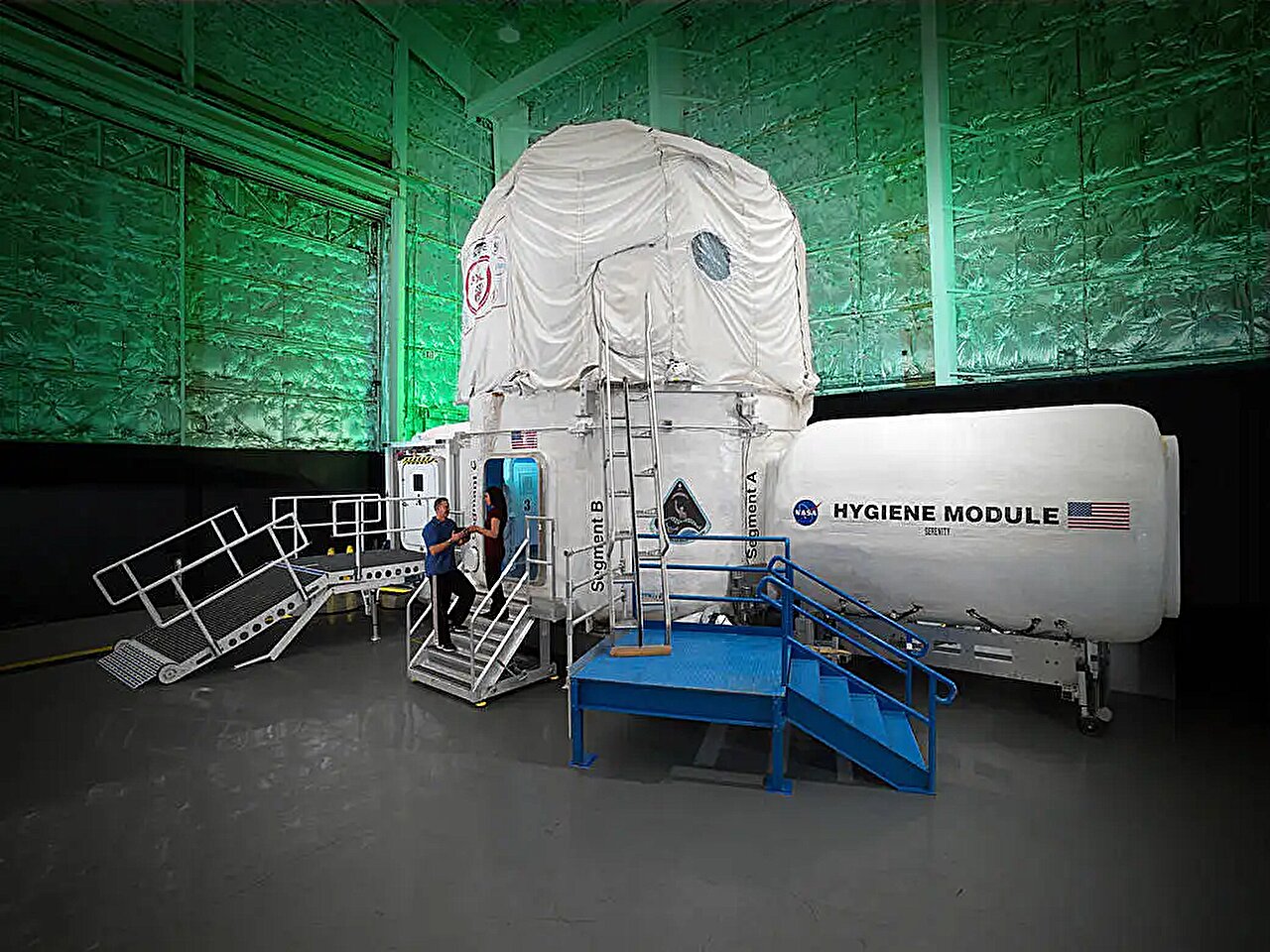
External view of the NASA Human Exploration Research Analog. The Human Exploration Research Analog (HERA) is a modular structure consisting of a central core laboratory segment with an adjoining second and third story devoted to living quarters. It is used as an analog for future exploration-class missions. Credit: NASA
Whether it's to the moon or Mars, a NASA mission requires some essential preparations: designing and developing the spacecraft, astronaut training and safety checks, clear goals, and strategies and procedures for maintaining communication between crews on Earth and in space.
Dorothy R. Carter, associate professor of management in the Michigan State University Eli Broad College of Business, studies leadership and teamwork within organizations. She received support from NASA for a collaborative project called Project FUSION, or Facilitating Unified Systems of Interdependent Organizational Networks, analyzing how to understand and mitigate communication delays between Mission Control on Earth and a crew of astronauts on a mission to Mars.
"NASA realized the collaboration that a long-duration mission, like sending a team of humans to Mars, goes far beyond just the members of the crew on the spacecraft. The astronauts have to continue to collaborate with many people on Earth," Carter said. "To do that effectively requires a large, collaborative—or 'multiteam'—system."