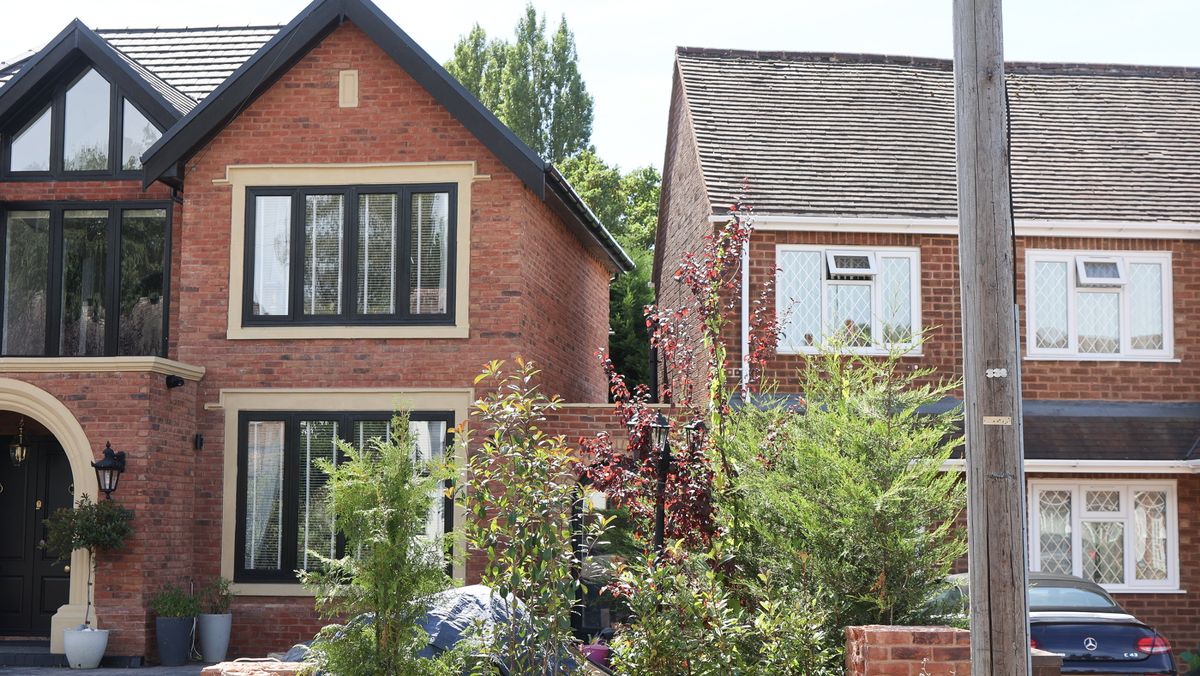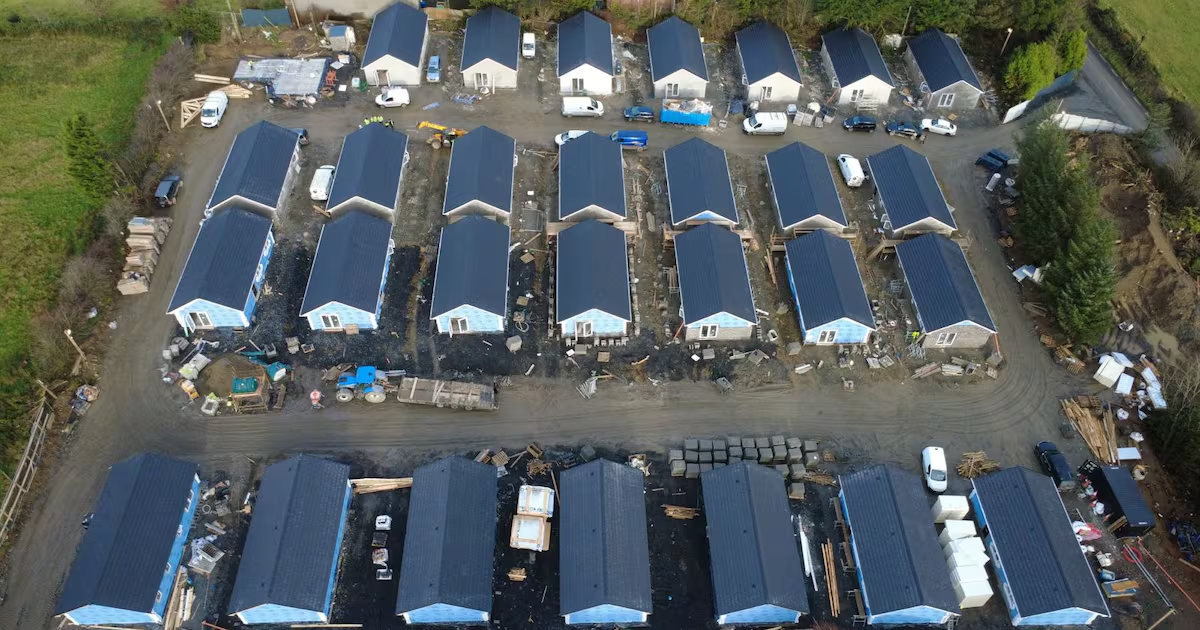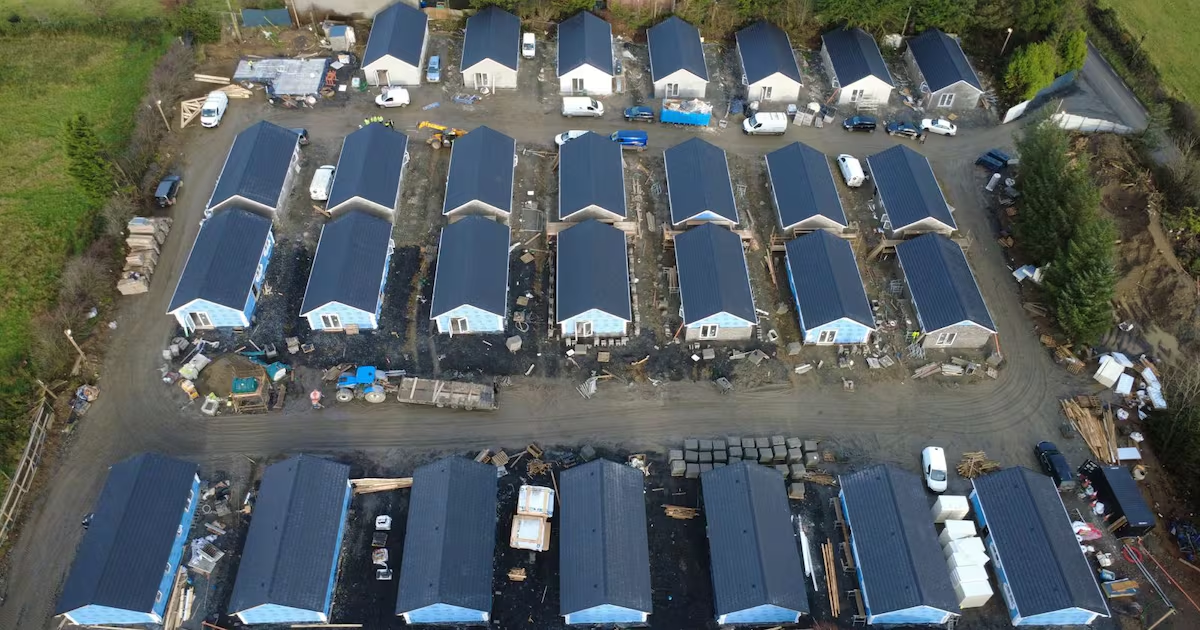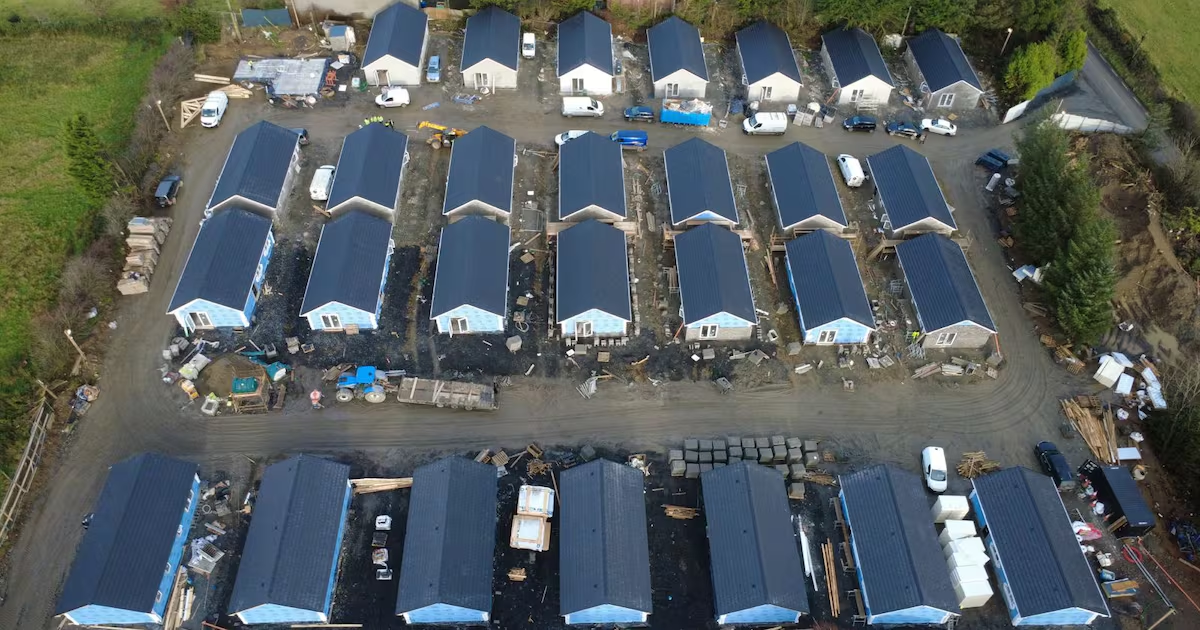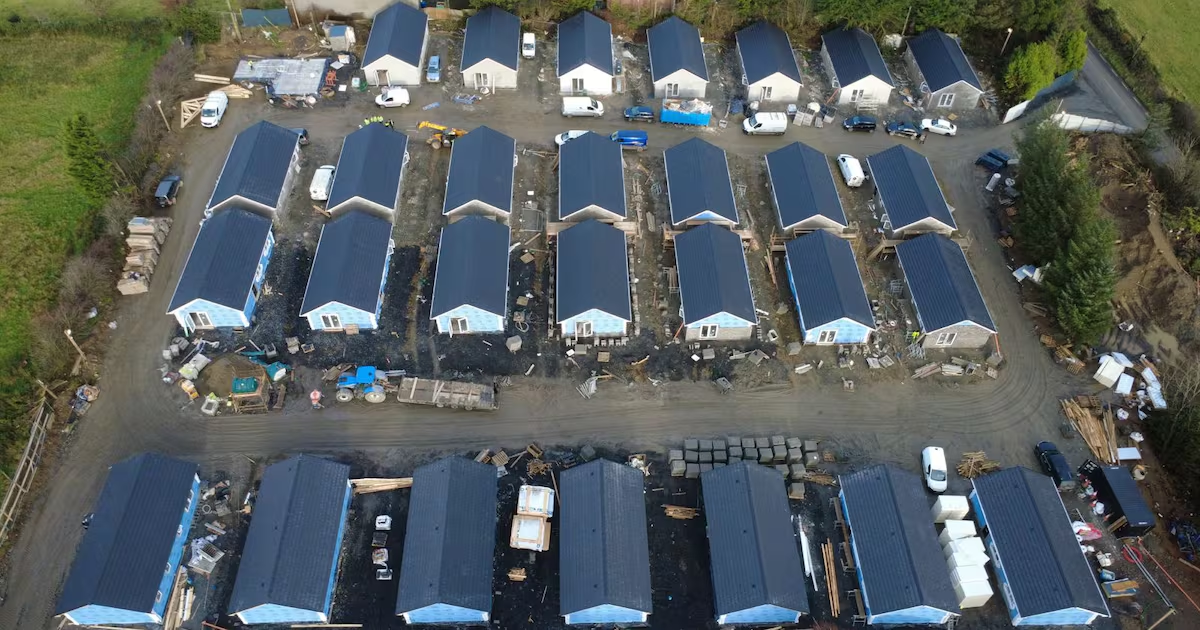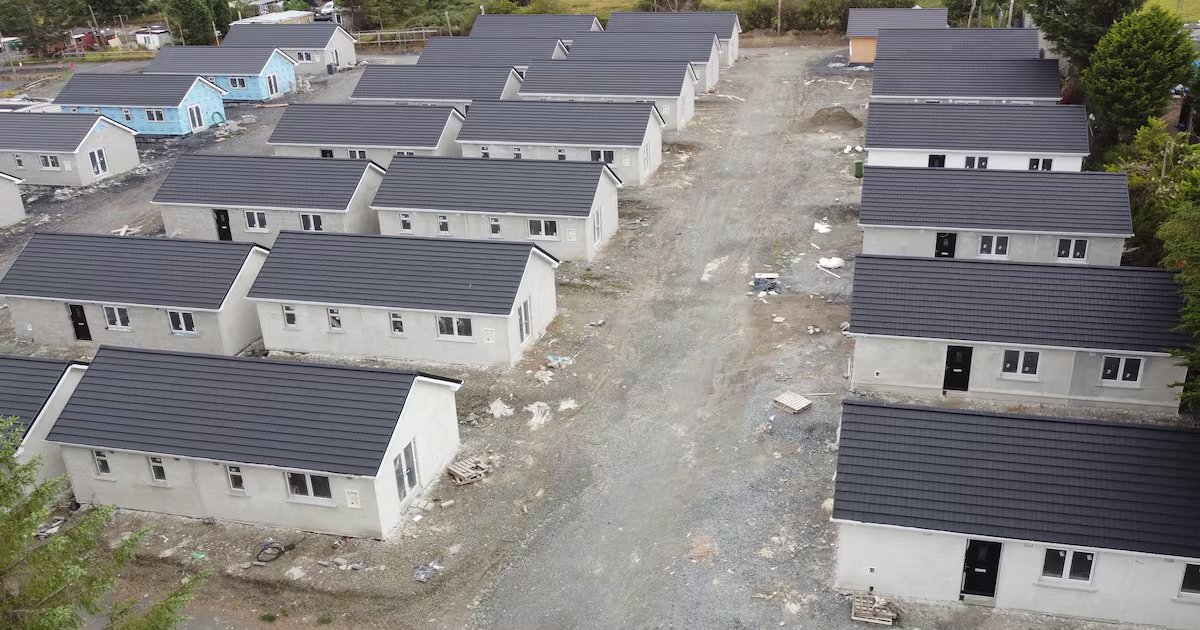
The demolition of 29 modular homes built without planning permission near the Dublin-Wicklow border is set to begin on Monday. It follows a High Court ruling in June by Judge Richard Humphreys, who said the development at Chianti Park, Raheen, was a “particularly egregious case” of the disregard of planning law. Situated on Mount Seskin Road and close to Brittas and the Co Wicklow border, Chianti Park was built in the late 1960s and acted as a trailer park site alongside an adjoining site, Hillsbrook. Around 10 residents are understood to be continuing to live at the back of both sites in mobile homes, chalets and trailers. South Dublin County Council and local resident John O’Neill brought applications in the Circuit Civil Court last year, claiming the development was unauthorised and that all units should be removed and the site restored.Their applications were opposed by the developer, Branach Developments Limited, and the site owners, Mullnassa Limited and Threshford Limited. The court found in favour of the council and O’Neill, but the developer and site owners appealed this ruling to the High Court.The developers and site owners told the High Court the development was exempted under planning law, but their argument was rejected. Photograph: Nick Bradshaw In court submissions, the developer and site owners argued it was an exempted development under the Planning and Development Act. Michael O’Donnell, for the respondents, said the development fell within the exemption as it was consistent with the character and nature of the structures that were already on the site.The established use of the previous structures was residential use and the disputed works have not altered that use, he said.If the works were not consistent with the character of the existing development then that was “a genuine mistake”. It would be disproportionate to order their removal, he said.The High Court’s ruling, published in June, showed two photographs: one showing a mobile home on the site, when it was previously used for mobile homes and chalets, and the second showing “a completely different structure, a dwelling house”.Any reasonable person “would plainly see that they are different structures”, but the developer and owners adopted a “nonsensical” approach in arguing they were in essence the same structure and representing the 29 dwelling houses as “maintenance/improvement/alteration” of the mobile homes, the judge said.On top of the “nonsensical” approach adopted, Humphreys said matters were not improved by the fact the unauthorised works occurred in a “highly sensitive setting”, zoned “high-amenity Dublin mountains” in the South Dublin County Development Plan 2022-2028.Nor was the situation made better by the “almost unbelievable chutzpah” of the developers who even now claimed “innocent mistake” even though they ignored or deflected warning letters and had intensified construction of the unauthorised development “in the teeth of interventions” from the council and residents and during the Circuit Court proceedings, he said.Developer Paddy Byrne, of Branach Developments, told The Irish Times his company was “solely a contractor” and had no involvement in the “ownership, legal status, proposed demolition or any related decisions concerning Chianti Park”.Byrne said he was aware of Humphrey’s judgment, but unaware of what the site owners intended to do. Branach Developments wrote to South Dublin county councillors last October, stating the site had suffered “serious and deliberate attacks” including four partly constructed homes subjected to attempted arson. “We are extremely concerned that these incidents coincide with the circulation of false and malicious rumours suggesting that Chianti Park is being developed as an IPAS centre,” the letter said. “This is entirely false.” The company said the works were “fully in line” with the Minister for Housing’s objectives under section 28 of the Planning and Development Act 2000, which “direct planning authorities to facilitate the renewal, upgrading, and replacement of existing residential units”.The site owners, Richie and David McDermott of Mullnassa Limited and Threshford Limited, said they would be complying with the order from the courts. “We’re going to do exactly what the courts asked us to do. The demolition starts next Monday [August 17th]. There will have to be preliminary work before the actual knocking down stage starts,” they said. The McDermotts said they had offered the units to South Dublin County Council free of charge following the court case. “We were led to believe that what we were doing would be acceptable to the council. As we got into it, we realised it wasn’t so,” they said. “We’re just disappointed that the houses couldn’t have been taken over, really disappointed. We’ve offered them free of charge to the State, to the council to take them. We accept we did something that was wrong, but it’s crazy that they should be knocked down. “We would walk away from them and leave them there and let the council take them on and give them to homeless people or families. We would be quite happy for that to happen. “We accept we were wrong. We realised after all the arguments in court that we were wrong. We were told because there was a judgment on it by the courts, they [the council] wouldn’t be interested in them. I just think it’s terrible. I think the Minister or someone should jump in and say. ‘Let’s take them. We can use them for someone’. They are two-bed A-rated houses.”The McDermotts said they do not know what they would do with the site following the demolition of the modular units. The council said as it was an active case “we are unable to provide any comment at this time”.Mayor of South Dublin County Council, Francis Timmons, said he and local residents welcomed the court’s decision. “My own view is no unauthorised building should ever take place without the proper planning permission in place. No one should be above this,” he said.The Department of Housing said it did not comment on individual planning cases and it was a matter for the relevant planning authority to consider the merits of any application proposed for a particular site or if enforcement proceedings were required in any individual case. “This is a matter in which the minister under section 30 of the 2000 Act shall not exercise any power or control in relation to any particular case with which a planning authority or the commission is or may be concerned,” it said. Sinn Féin’s housing spokesman Eoin Ó Broin said the court’s decision was “absolutely right” and said people could not be allowed to build “without adequate zoning or planning permission”.“The planning rules have to apply to everybody or they don’t apply at all,” he said. “It needs to send out a signal to builders and developers across the board. “I think it’s a really good thing that South Dublin County Council moved to prosecute or to seek court action quickly because we’ve far too many cases where delays by local authorities who were reluctant to take enforcement action means that buildings are completed and then tenanted, which invariably creates huge problems from that point on. I think this is a good news story for our planning system, for our building control system.” O’Neill, who has lived across the road from Chianti Park for the last 35 years, said his family was also “happy” with the High Court judge’s decision. “I tried to secure planning permission on a six-acre site up the road for a house for my son, which was never granted, and they just came in here overnight and did what they want,” he said. “The council knew nothing about what was going on up here until we brought it to their attention. There isn’t the proper infrastructure up here to do that amount of homes; bus stops, sewage. It can’t be one rule for one and a different rule for another. I hope they come and knock it down now.”
‘We offered them free to the State’: 29 homes built without permission to be razed
But judge had criticised ‘unbelievable chutzpah’ of developers behind work at Chianti Park, South Dublin
1,297 words~6 min read