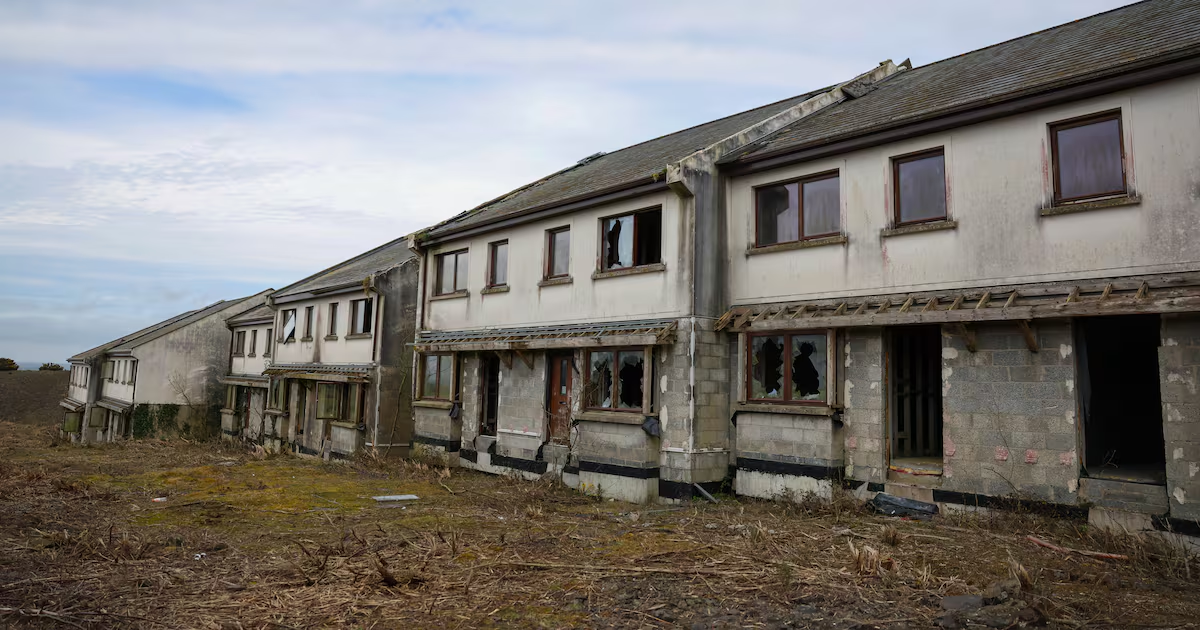
A proposed remediation plan for the removal of 29 modular homes built without planning permission near Brittas in Co Dublin, and for restoration of the site, is “completely inadequate”, the High Court was told. “It’s not even a remediation plan,” senior counsel Stephen Dodd, for South Dublin County Council, told Judge Richard Humphreys on Wednesday. This was for reasons including that it did not provide for the houses to be removed within six weeks, as the court had previously ordered, and “just stated generic principles”, with no analysis of matters such as waste removal, counsel said. The plan is “so sketchy” the council cannot take a view on it, he added.Dodd’s characterisation of the plan was rejected by senior counsel Michael O’Donnell, representing Branach Developments Ltd, the developer, with a registered address at Thomastown, Caragh, Kildare, and the site owners, Mullnassa Limited and Threshford Limited, with registered addresses at Rock Road, Blackrock, Dublin.The plan’s proposed removal of one house per week over the next 29 weeks would be more expensive for his clients but would mean less environmental damage because it proposed a systematic disassembly of each structure, rather than bulldozing them, he said. His clients are not trying to avoid their obligations, they are doing “the very opposite”, said counsel.The judge said he would hear further submissions concerning a remediation plan on Monday before making orders about the plan. The matter was mentioned before him on Wednesday on foot of his judgment earlier this month rejecting an appeal over findings the 29 houses were built without planning permission and must be removed, and the “highly sensitive site” remediated. He had directed a detailed remediation plan be provided. In his judgment, Humphreys said it was a “particularly egregious case” of disregard of planning law “not made any better” by “non-reality based” sworn evidence that, as with George Orwell’s novel Nineteen Eighty-Four, asked him “to reject the evidence of your eyes”.His judgment displayed two photographs, one showing a mobile home on the site at Chianti Park, Mount Seskin Road, previously used for mobile homes and chalets, and the second showing “a completely different structure, a dwelling house”.Any reasonable person “would plainly see that they are different structures”, but the developer and owners adopted a “nonsensical” approach arguing they were in essence the same structures, and representing the 29 dwelling houses as “maintenance/improvement/alteration” of the mobile homes, he said. As the council had submitted, this was “gaslighting on a monumental scale”, said the judge. In separate proceedings heard together, the council and a local resident, John O’Neill, who lives about 200m from the development, had claimed it was unauthorised and wanted all units to be removed, with the sites restored.It was alleged the 29 units appeared to be phase one of an intended development of 71 residential units at Chianti Park and an adjoining site.The applications for their removal were unsuccessfully opposed in Dublin Circuit Civil Court by the developer and site owners. In his December Circuit Court decision, Judge O’Connor found the developments consisted entirely of new structures and there was “very serious redevelopment and transformation of the site without planning permission”.
Plan to remove 29 Brittas dwellings without permission ‘completely inadequate’, court told
Proposed removal of one house per week more expensive but less environmentally damaging, developer argues
521 words~2 min read