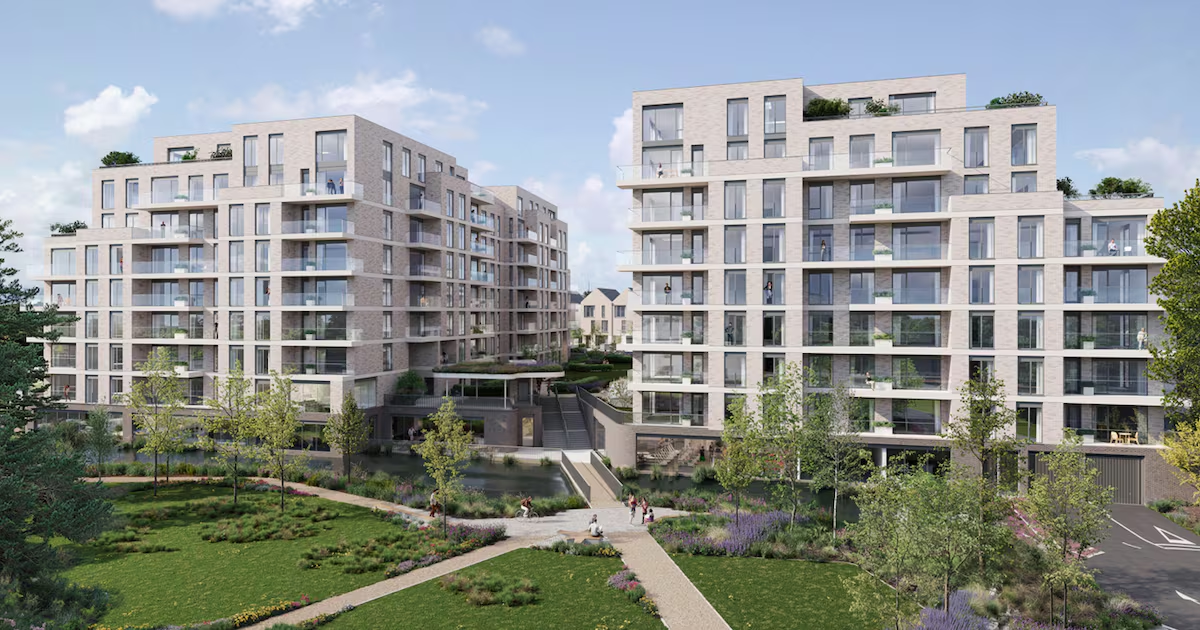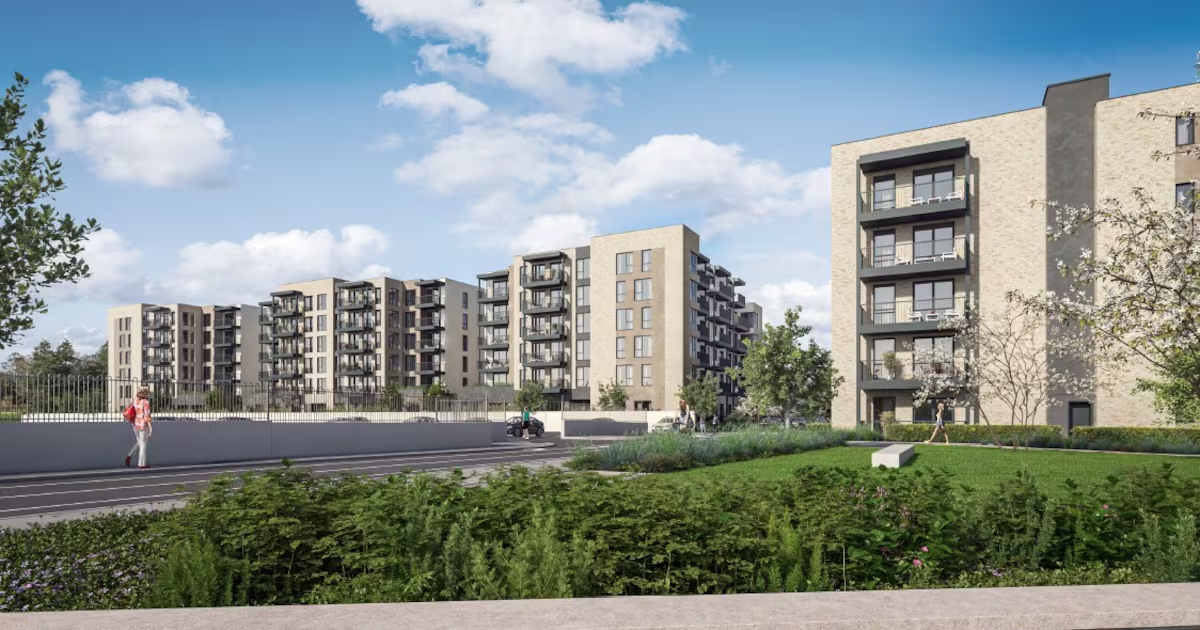
After twice overturning permission for more than 200 social and affordable homes on a site in Kimmage, southwest Dublin, the High Court has dismissed a third local challenge to the proposed development.Judge Richard Humphreys on Friday upheld permission for developer 1 Terenure Land Limited, a subsidiary of Lioncor Developments, to build 208 apartments over five blocks of up to six storeys on an L-shaped site next to a gym off Kimmage Road West. The developer has separate, alternative approval for a smaller project of 145 apartments on the same site, up to 20 per cent of which would be social or affordable housing. It secured this fourth planning permission earlier this year, while its third approval for 208 homes was held up in the High Court.The judicial review challenge was taken by local residents’ group Kimmage Dublin Residents Alliance CLG, which previously took two successful cases over the developer’s plan for 208 homes on the lands. The planning authority conceded in those two challenges that its consideration of the planning applications was flawed. The High Court then overturned these permissions, granted in 2022 and 2023, and remitted the later application for the 208-home scheme for An Coimisiún Pleanála to consider afresh.Reconsidering the application, the commission once again approved the project. This fresh decision, made in October 2025, was challenged in court by the Kimmage residents’ group. Ruling on that case last Friday, Humphreys said the group’s primary grounds of challenge related to the application of European Union environmental laws and a claim that there needed to be “very significant reasons” for allowing a development to materially contravene rules set out in the relevant local development plan. The judge said these two points, to succeed, required interpolating into legislation words that “are not there and that do not require to be read in”. He said the legal text is the “first port of call”, and a party seeking a different interpretation from the “plain meaning” of the words bears the onus of demonstrating why this should be so.Unconvinced by the resident group’s interpretation of the relevant domestic and EU laws, Humphreys dismissed the case.
High Court dismisses third challenge to plan for 208 homes in Kimmage, southwest Dublin
Planning authority twice conceded there were flaws in its approval of development
353 words~2 min read