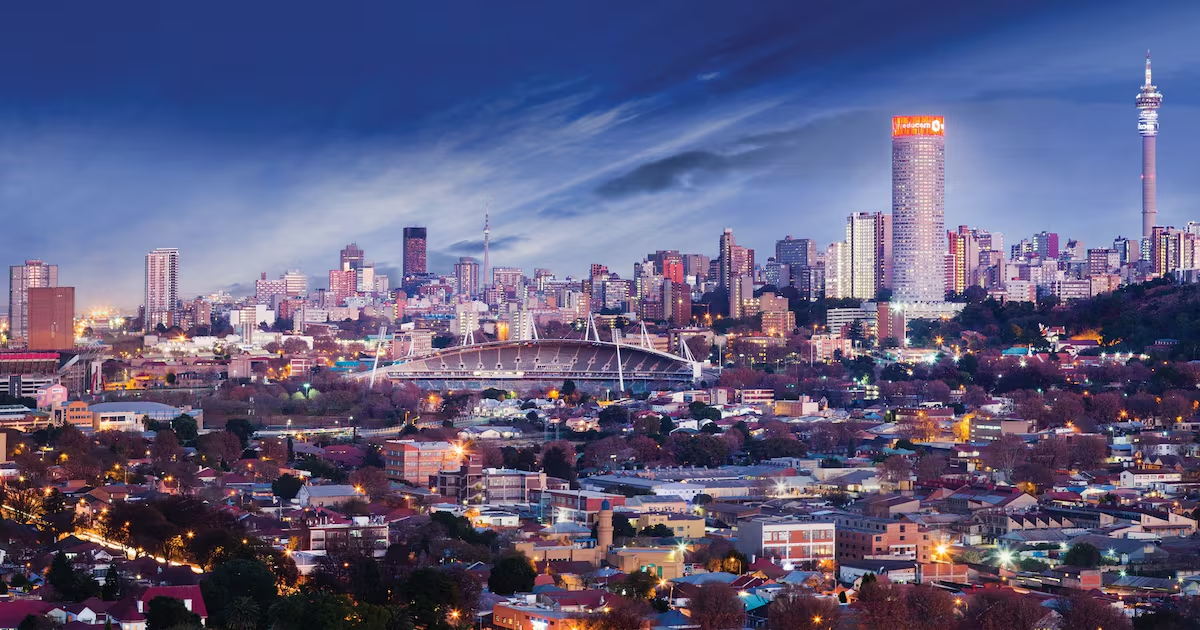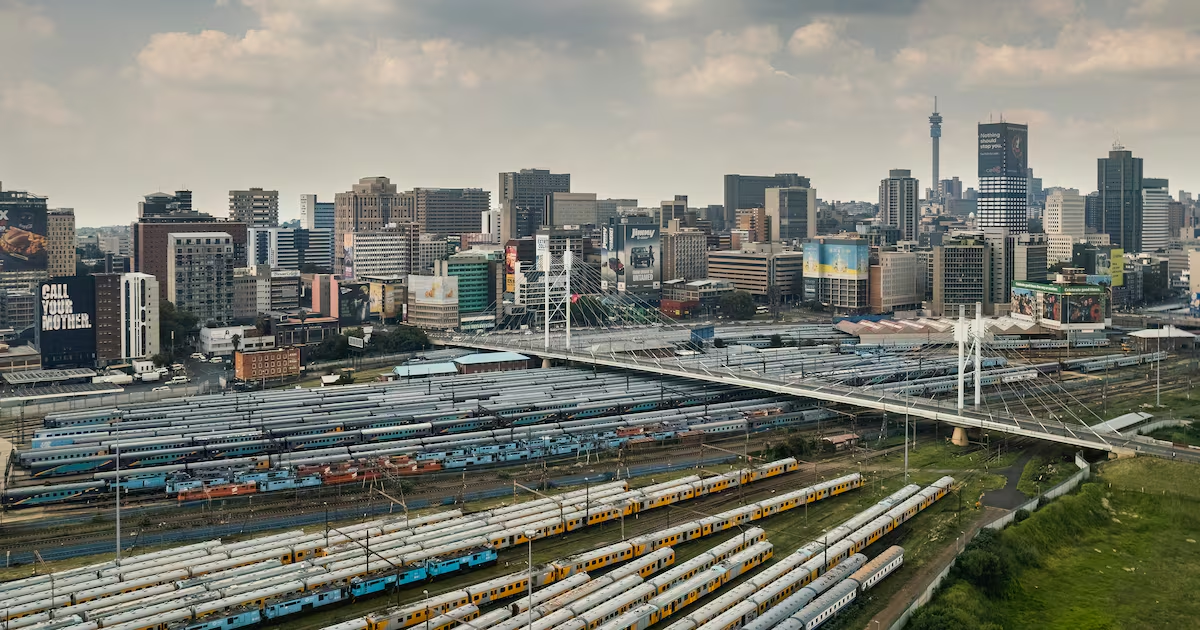
There is no doubt that the City of Johannesburg ― as a municipal entity ― is falling apart. The political and administrative leaders of the city have abused their powers, extracting ever-increasing rates and charges to spend on salaries and unauthorised expenditure while neglecting infrastructure and service delivery. But a city is not made up solely of its government. It is also a reflection of its people and its culture. The people of Johannesburg are showing what it means to build a city despite poor leadership. While the administration teeters on the brink of bankruptcy, civil society is stepping in. The arts are at the centre of these efforts. Three events have taken place in Johannesburg over the past month that have demonstrated the city’s resilience, creativity and generosity.The first is the extraordinary production of The Bacchae: An African Choral Ballet staged by Joburg Ballet for its 25th anniversary. This was ballet as you have never seen it. The classical Greek tale was staged as an African choral ballet, drawing on the rich dance and musical traditions of Southern Africa. It was directed by Jay Pather, choreographed by Mthuthuzeli November and composed by Neo Muyanga. The dancers were mesmerising, carrying the story into the hearts of the audience with a graceful and seamless performance. Their brilliance and deep commitment to their art was matched by the University of Johannesburg choir, which gave new life to this ancient story of anarchy and rebirth. This must be one of the most ambitious and innovative ballets anywhere in the world, and it is produced right here in Braamfontein. Down the road from the Joburg Theatre, a second extraordinary event unfolded at the Wits Art Musuem, one of Johannesburg’s great treasures. What We Do Not See presents the work of David Goldblatt and nine contemporary photographers and shines a new light on the city. Celebrating the rich legacy of Goldblatt and the Market Photo Workshop, the work opens our eyes in ways that are both disturbing and exhilarating. The photographers reveal the city that is all around us and yet is hidden from our sight. It offers a deep critique of the city we have collectively built while celebrating the resilient humanity that is the hallmark of Johannesburg. This is a landmark exhibition showcasing the brilliant work of South Africa’s leading photographers and is open until late October. It’s a must-see. This same spirit was on display at a third event, the 702 Walk the Talk, which took place this year in the CBD. It was a brave decision to take the Walk to the city centre, and one that paid off magnificently. Tens of thousands of Joburg residents walked from Ellis Park through the city centre, witnessing both terrible decline and defiant regeneration. We saw the extraordinary affordable housing development at Jewel City, the brilliant new sports and education precinct led by the Maharishi Institute, the outstanding remaking of Main Street by Jozi My Jozi, and the newly reopened Barbican building. We were treated to public transport that worked, and the beautifully revamped Park Station. These forces of hope are battling decay and mismanagement, but they are beginning to turn the tide. Johannesburg is a great city, home to brilliant artistic and community initiatives. The people of Johannesburg are striving for a better life. They are joining hands to contribute and create. Johannesburg faces tremendous difficulties but it has the talent, goodwill and energy to overcome its problems and take its place as one of the world’s great cities. Imagine what Johannesburg could become if the brilliance of our people was matched by an outstanding city administration. • Bethlehem is an economic development specialist and partner at Genesis Analytics. She has worked in the forestry, renewable energy, housing and property sectors as well as in local and national government. She writes in her personal capacity.
LAEL BETHLEHEM | Residents and artists lead Joburg’s fight for renewal
‘The Bacchae’ staged by Joburg Ballet and the 702 Walk the Talk are among many intitiatives showing Johannesburg’s excellence amid decay
642 words~3 min read