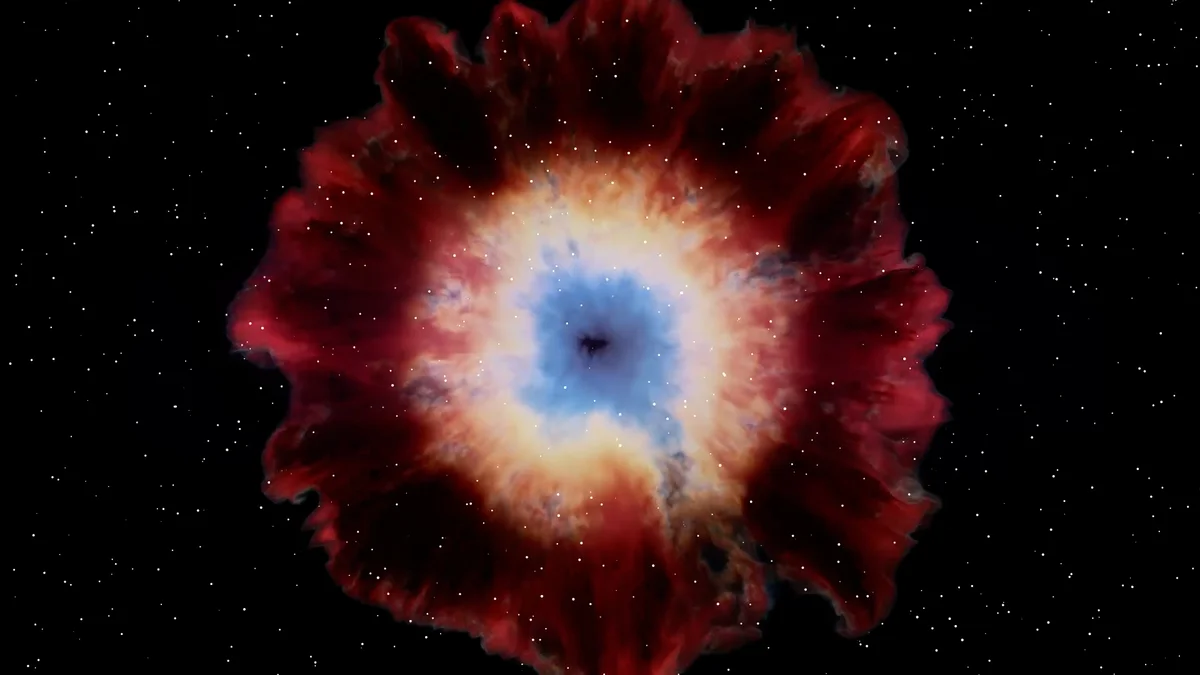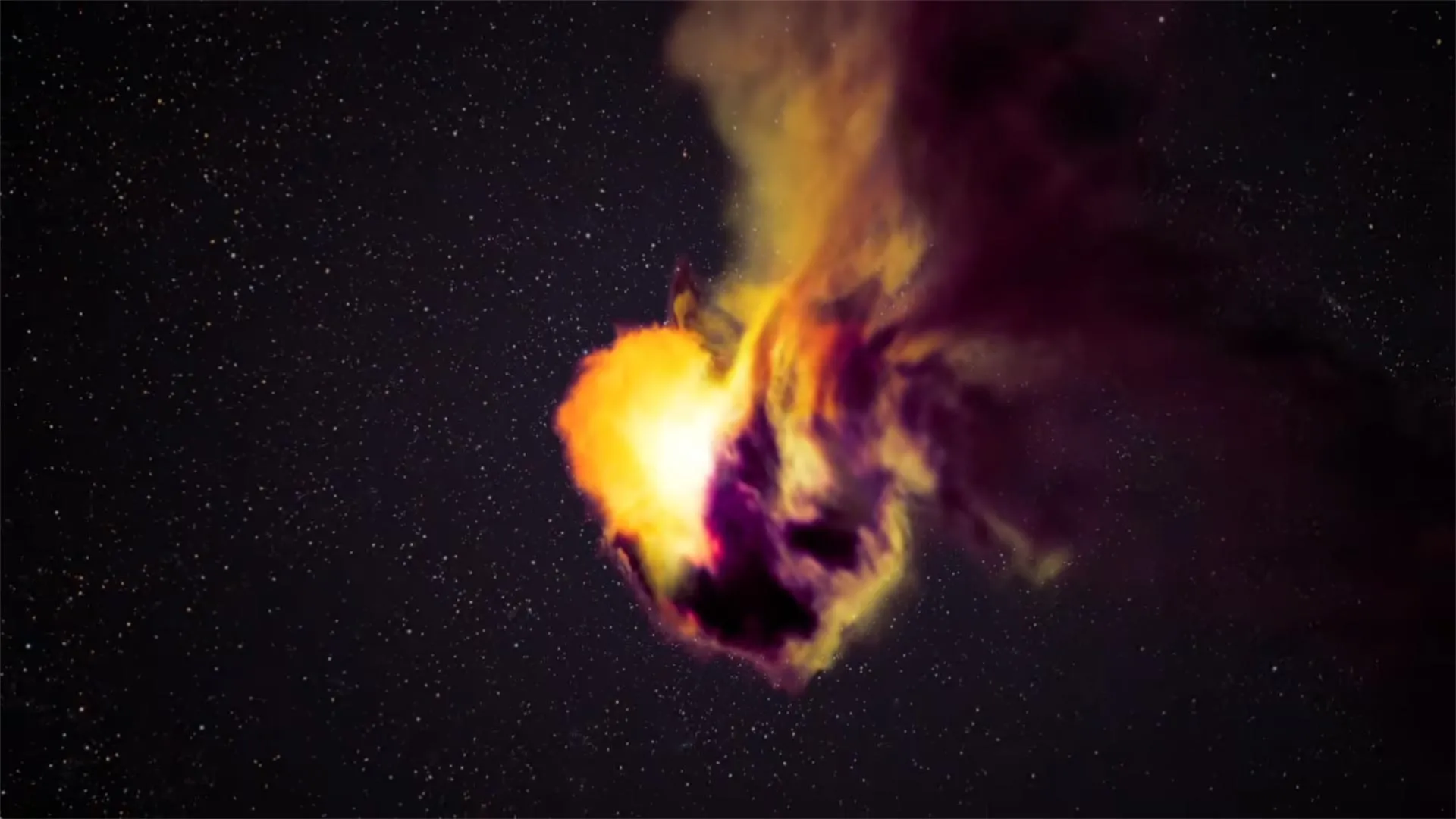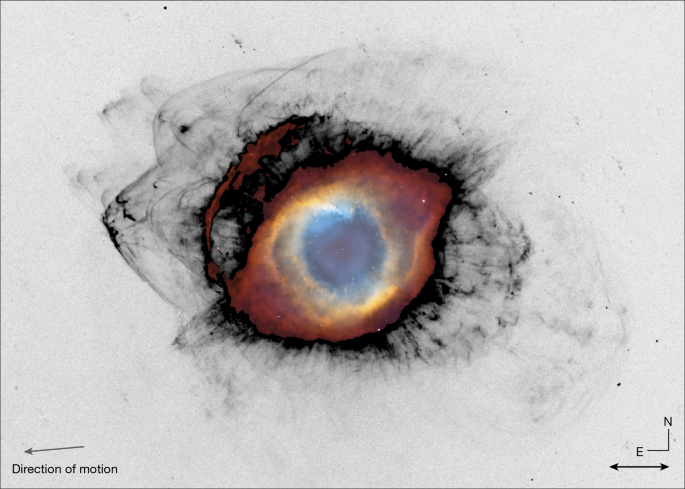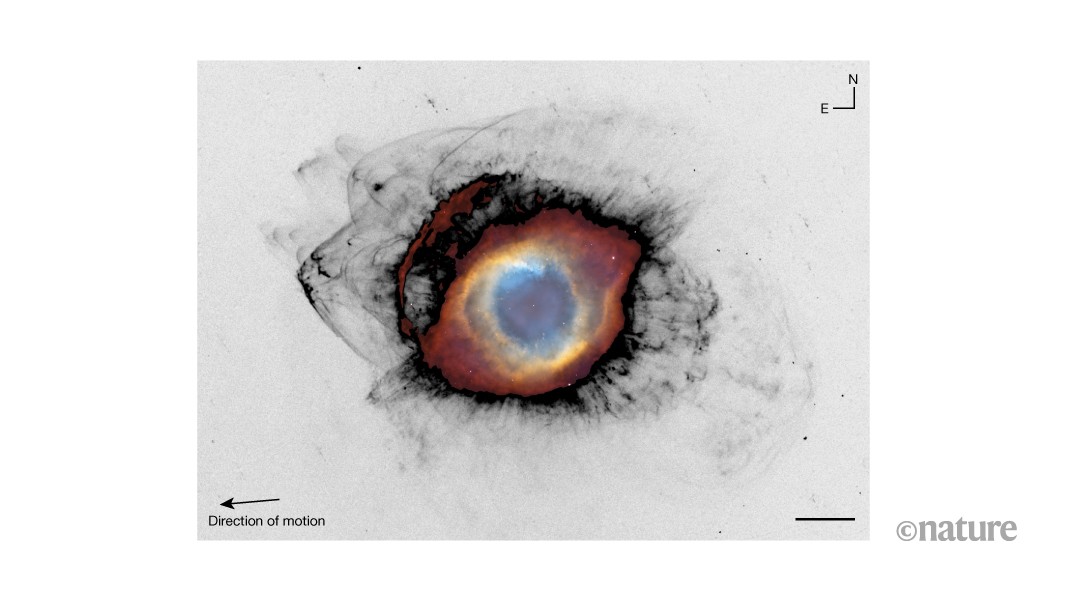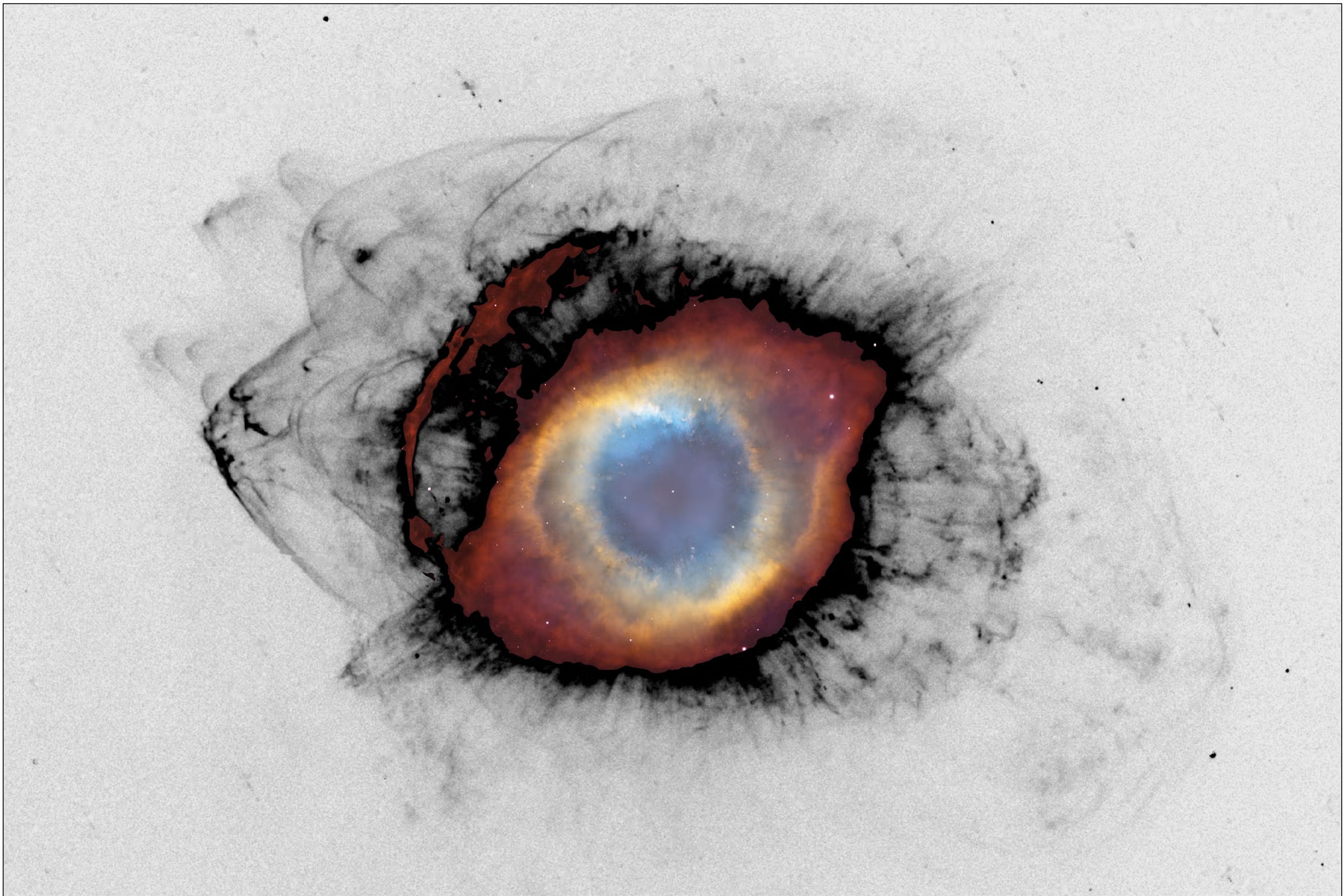
Astronomers have captured an unprecedented image of a cosmic recycling project in progress — fragments of a dying star being busted up, stripped, and absorbed into interstellar space.
What is the Helix Nebula?The Helix Nebula, also known as Caldwell 63, is a planetary nebula located 650 light-years from Earth, in the constellation of Aquarius. It is one of the closest planetary nebulae and has about the same apparent size as the full moon in the sky. What is the MOTHRA Telescope? MOTHRA (the Modular Optical Telephoto Hyperspectral Robotic Array) combines images from hundreds of telephoto lenses to detect and study diffuse ionized gas located in-between galaxies. It is being constructed at the El Sauce Observatory in Chile’s Rio Hurtado Valley and will have an array of 1,140 telephoto lenses when completed.
A research team led by Yale astronomer Pieter van Dokkum made the discovery while taking images of the Helix Nebula, a much-studied planetary nebulae located about 650 light-years from Earth. The researchers presented their findings in a new study published Aug. 12 in the journal Nature.“We are seeing material shed near the end of a star’s life being broken apart and returned to the galaxy,” said Pieter van Dokkum, the Sol Goldman Family Professor of Astronomy and professor of physics in Yale’s Faculty of Arts and Sciences and lead author of the study. He is also a member of the Dragonfly Focused Research Organization, a new type of nonprofit group that aims to build high-impact scientific infrastructure at the pace of a tech startup.“That handoff — from recognizable stellar debris to the diffuse gas between the stars — has been very difficult to observe,” van Dokkum said. “Far in the future, the Sun will go through a similar process, and its material will enter the same cycle.”