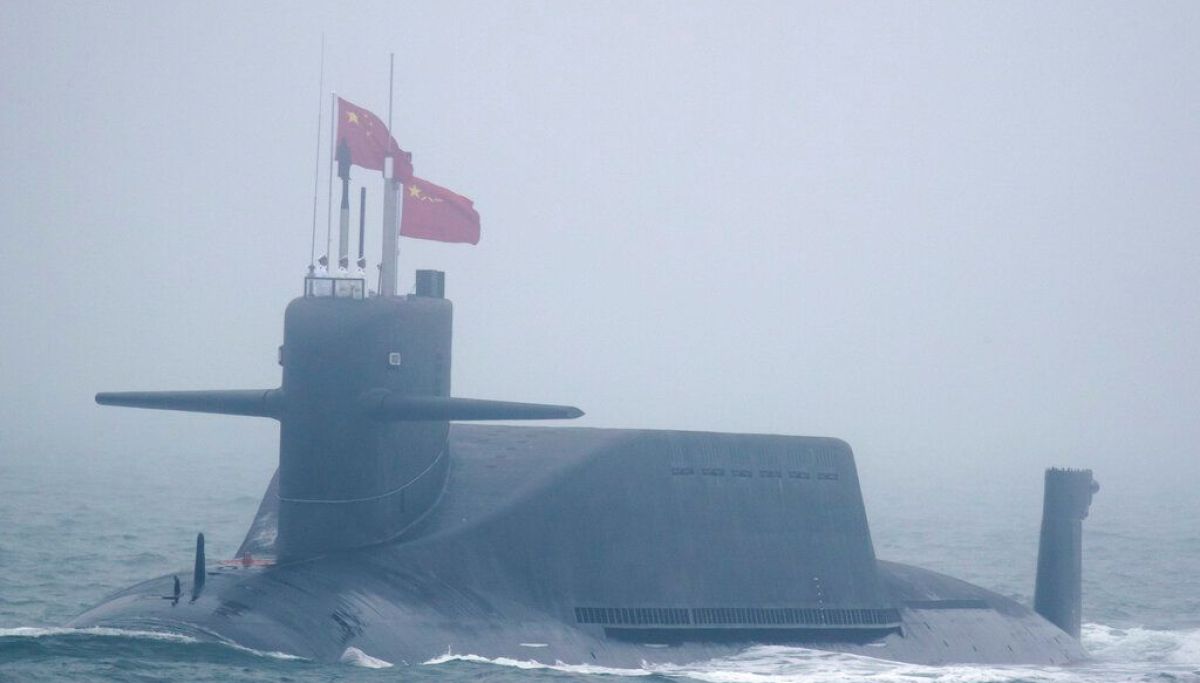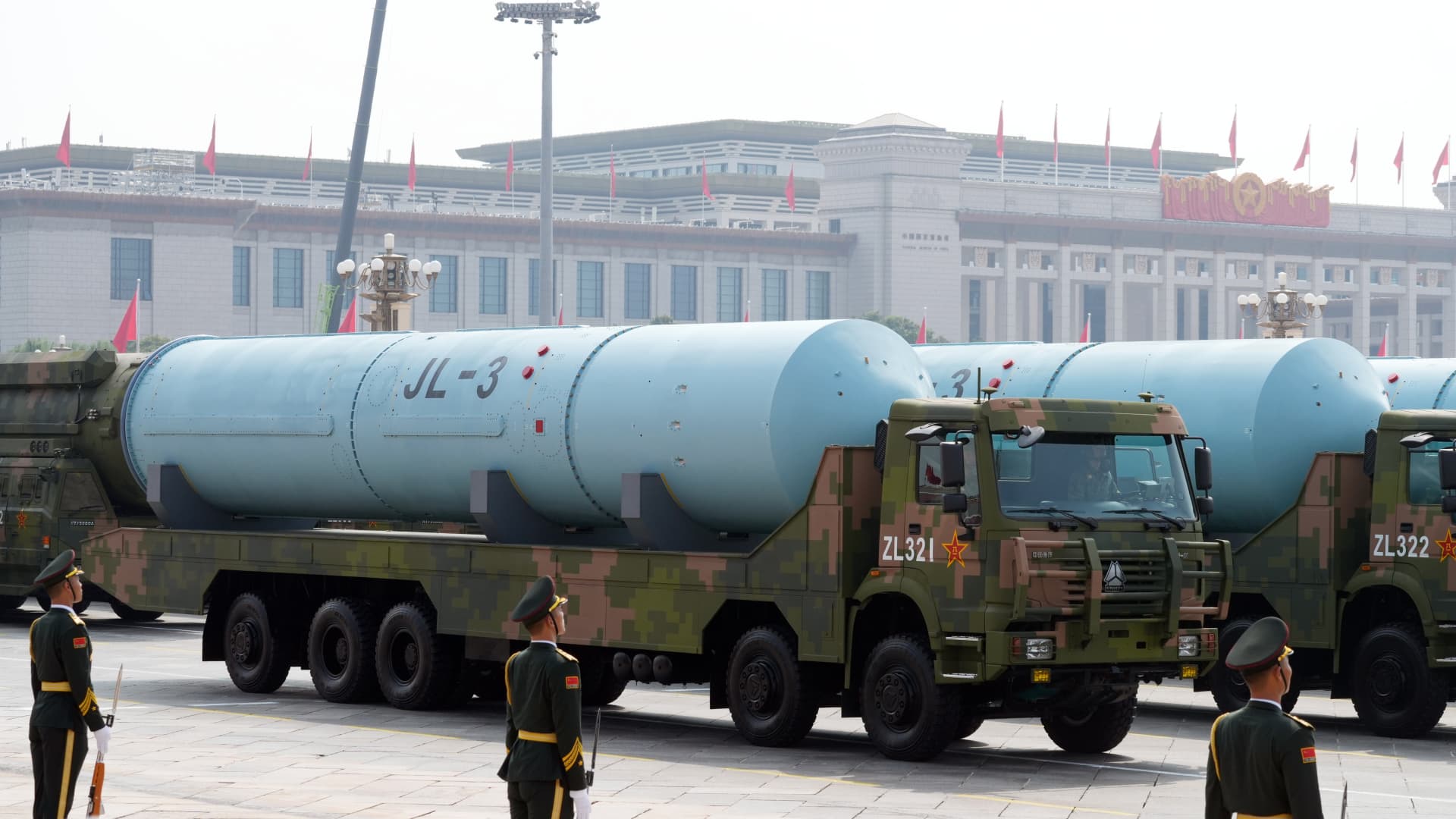
In Focus delivers deeper coverage of the political, cultural, and ideological issues shaping America. Published daily by senior writers and experts, these in-depth pieces go beyond the headlines to give readers the full picture. You can find our full list of In Focus pieces here.China is rapidly strengthening its ability to project military power far across the Pacific Ocean. In doing so, the People’s Liberation Army is gutting a long-held Pentagon belief that its threat was limited to the Second Island Chain linking Japan to Guam. The development reflects Chinese Communist Party Chairman Xi Jinping’s ambition for global hegemony.Unlike Mao Zedong’s disastrous Great Leap Forward, Xi’s military leap forward is both logical and realistic.
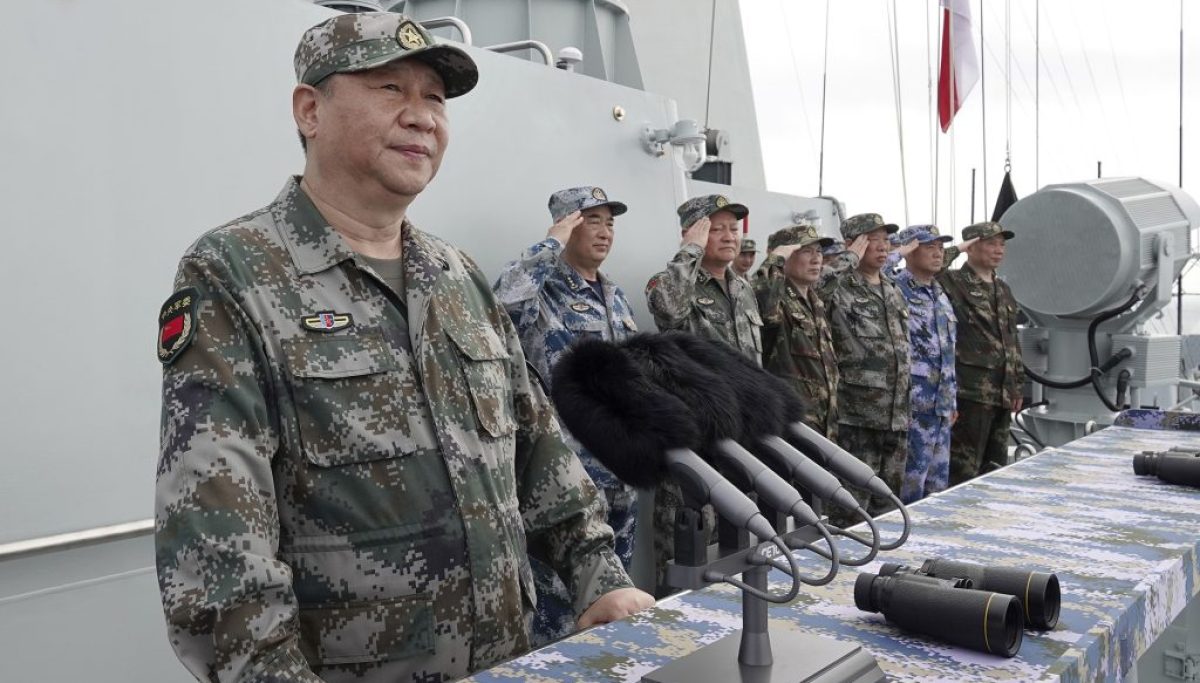
The United States has invited this grave challenge. Stockpiles of Patriot and THAAD air defense munitions have been severely depleted in the war with Iran, as predicted. And while they’ve proven very impressive, some missiles have gotten through. If Iranian missiles can penetrate and deplete U.S. air defense networks, China can sow a devastating whirlwind against the forces these networks defend.WILL UKRAINE RETALIATE AGAINST NORTH KOREA OUTSIDE OF THE WAR ZONE?Some say that the U.S. can mitigate China’s threat by avoiding it altogether. That is to say, by accepting that Taiwan is essentially Beijing’s business and not ours. But these commentators fail to recognize that China doesn’t want just Taiwan, it wants to own U.S. allies in the Pacific at large. That means Australia, Japan, the Philippines, and South Korea.Moreover, Taiwan’s fall, or Beijing’s enforced seizure of the South China Sea, would be far more damaging to U.S. interests than the survival of the Iranian regime. These outcomes would entail the seizure or destruction of Taiwan’s priceless semiconductor chip manufacturing industry. They would enable Beijing to extract political loyalty in return for nations gaining necessary access to trade routes worth trillions of dollars annually. They would crown China as the ascendant global power, fostering deference to Beijing at the explicit expense of Washington. Indeed, we already see this dynamic with some of America’s closest allies.Nor is time on America’s side. The commander of U.S. forces in the Pacific, Adm. Sam Paparo, warned last year that the PLA’s “aggressive maneuvers around Taiwan are not just exercises — they are dress rehearsals for forced unification. [China’s] escalated military pressure against Taiwan by 300% in 2024.” 2025 saw further PLA escalations against Taiwan compared to 2024. Xi has told the PLA to be ready to seize Taiwan by 2027.A good starting point to understand the danger of the PLA’s extended dagger is China’s YJ-20 hypersonic anti-ship ballistic missile. It effectively triples the range of Chinese sea-launched anti-ship missiles to 700-900 miles. During a Taiwan crisis, this range would enable the PLA to target U.S. aircraft carriers in their probable Philippine Sea maneuvering areas.There’s another problem. As the U.S. Naval Institute noted recently, “With the ability to launch the YJ-20 from the Type 052D [class of warship], and when combined with the existing Type 055 destroyers [class of warship], Beijing can field a hypersonic maritime strike capability from at least 45 warships.” The extraordinary speed and scale of Chinese ship construction mean that more than 70 YJ-20 deployable warships could be operational by 2030. And that’s only the YJ-20 embarked ships.It gets worse.China also has the YJ-21, an air-launched companion to the YJ-20. Carried on H-6 bomber aircraft, these weapons threaten the U.S. Navy with simultaneous hypersonic swarm attacks from land, air, and sea. Traveling at more than 4,500 miles per hour and reaching significantly higher speeds in their final movements, these missiles leave very little time for U.S. forces to evade or destroy them. Because of their speed and associated kinetic force, even one missile impact would likely sink a U.S. destroyer or cruiser. It would cause catastrophic damage to an aircraft carrier. As with U.S. THAAD munitions, these weapons require scarce spare parts and time-consuming construction.In this April 12, 2018, file photo released by Xinhua News Agency, Chinese President Xi Jinping speaks after reviewing the Chinese People’s Liberation Army (PLA) Navy fleet in the South China Sea. A new Pentagon report lays out U.S. concerns about China’s growing military might, underscoring worries about a possible attack against Taiwan. The report’s release on Jan. 15, 2019 came just a week after Chinese President Xi Jinping called on his People’s Liberation Army to better prepare for combat. | (Li Gang/Xinhua via AP, File)