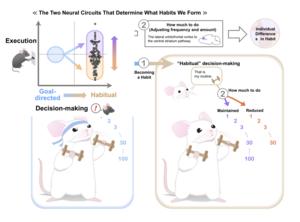
A recent study from TUD Dresden University of Technology suggests that what people have done before can shape their current decisions more strongly than researchers previously believed. The findings offer new insight into how people make everyday choices and develop habits. The results were published in the journal Communications Psychology.
Why Familiar Choices Keep Winning
Why do people so often return to familiar choices, even when seemingly better alternatives are available? A research team led by Stefan Kiebel, Professor of Cognitive Computational Neuroscience at TUD, set out to examine that question in a large-scale study.
The researchers analyzed nine newly collected decision-making tasks along with six previously published data sets involving more than 700 participants. Their goal was to understand how people first learn the value of different options in clearly defined situations and which options they later favor when those choices are presented in new combinations.
"Our study shows that many 'irrational' preferences do not necessarily arise primarily from people storing values relative to other values, but rather from the fact that people tend to repeat actions they once preferred in a particular context. This pure repetition can later lead to a particular option still being preferred in new contexts or environments, even if there are equivalent or even better alternatives," explains lead author Dr. Ben Wagner.