Kyoto, Japan -- Habit formation describes the repeated performance of a behavior until it becomes routine: in other words, the shift from deliberate to automatic decision-making. This concept is often invoked as a way to improve one's life by making a routine of beneficial activities that can otherwise feel tedious, such as cleaning, studying, and regular exercise.
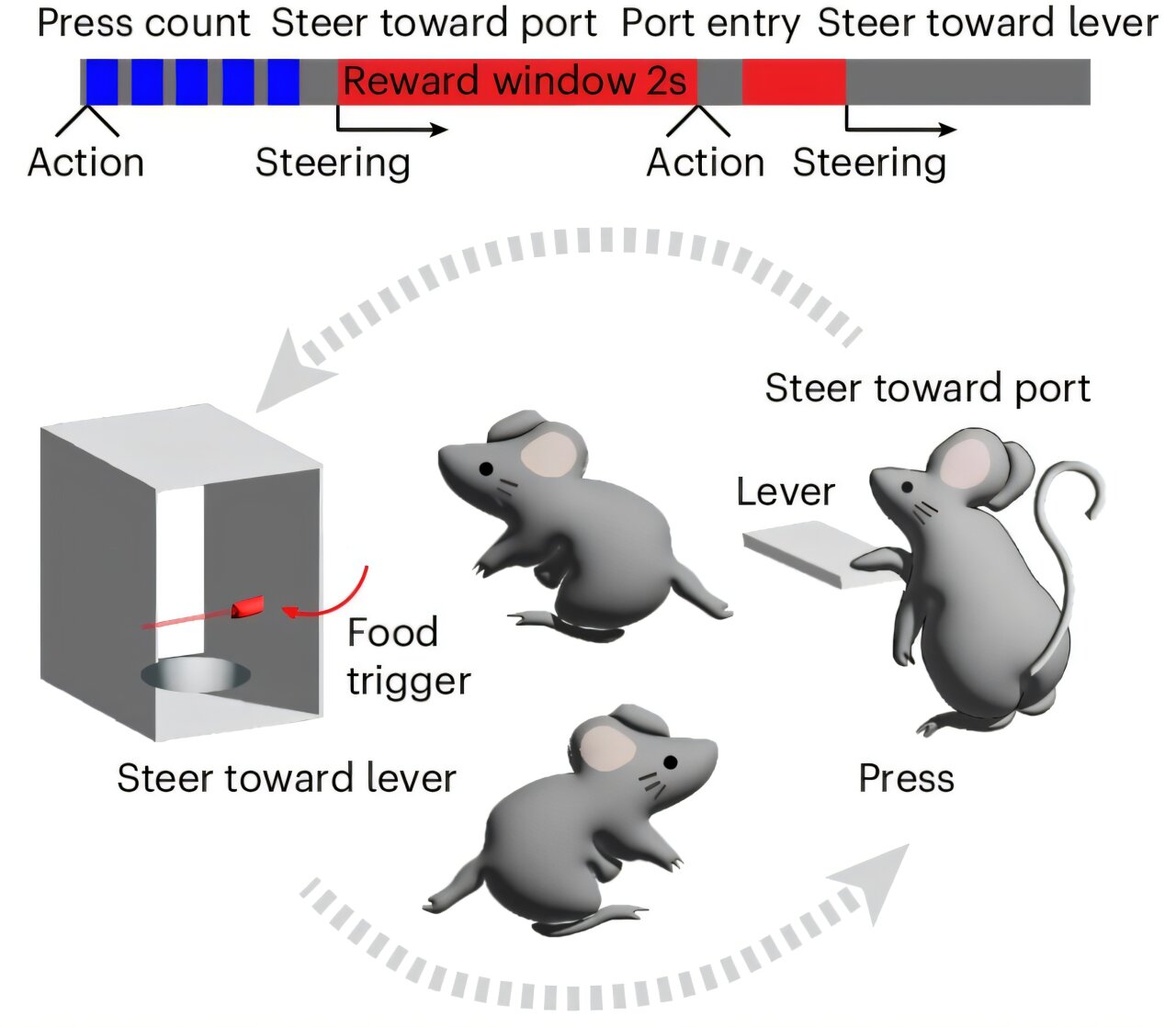
That repeating the same behavior is essential for forming a habit has become well-established, but whether a habit develops as an exact replication of the original behavior, or if the behavior itself gradually changes as it becomes a habit, remains unclear. Because habit formation takes a long time, comparing behavioral and neural changes within the same subject before and after a habit develops has been difficult. To overcome this challenge, a team of researchers at Kyoto University developed a new training method that achieves rapid habit formation in mice, allowing them to track these transitions directly.
"Habits are one of the brain's most mysterious functions, and we often struggle to control them even though they are our own actions," says co-corresponding author Nozomi Asaoka. "By uncovering how habits work, we may eventually find ways to take control of them rather than letting them control us."
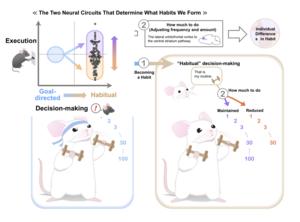
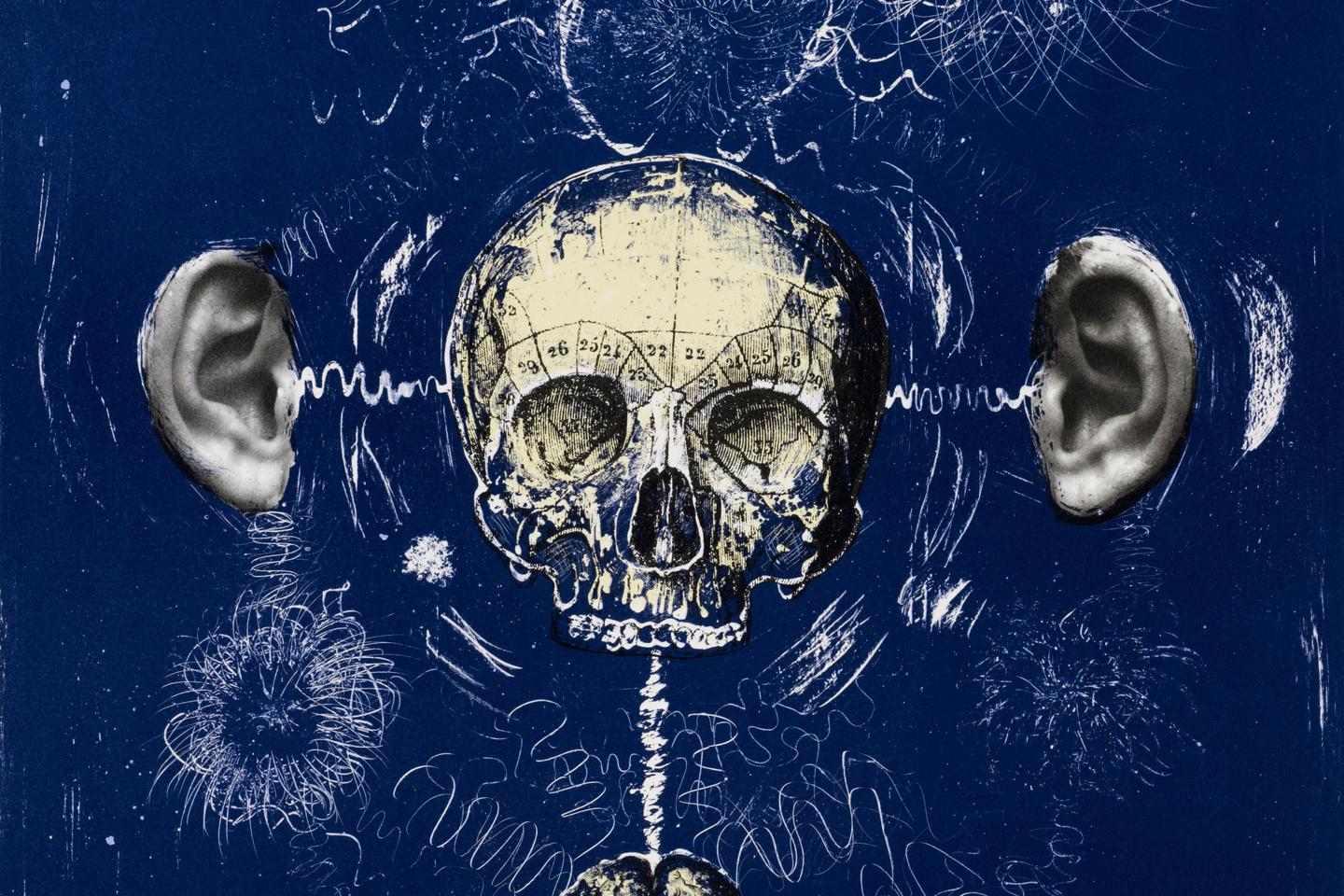
Using the “two-stage training” method to shift the decision-making strategy of mice from goal-directed to habitual (left ⇒ right), a variety of changes (individual differences) were observed, ranging from individuals that maintained their frequency of behavior to those whose level decreased (top ⇔ bottom).
view more
Kyoto, Japan -- Habit formation describes the repeated performance of a behavior until it becomes routine: in other words, the shift from deliberate to automatic decision-making. This concept is often invoked as a way to improve one's life by making a routine of beneficial activities that can otherwise feel tedious, such as cleaning, studying, and regular exercise.
That repeating the same behavior is essential for forming a habit has become well-established, but whether a habit develops as an exact replication of the original behavior, or if the behavior itself gradually changes as it becomes a habit, remains unclear. Because habit formation takes a long time, comparing behavioral and neural changes within the same subject before and after a habit develops has been difficult. To overcome this challenge, a team of researchers at Kyoto University developed a new training method that achieves rapid habit formation in mice, allowing them to track these transitions directly.