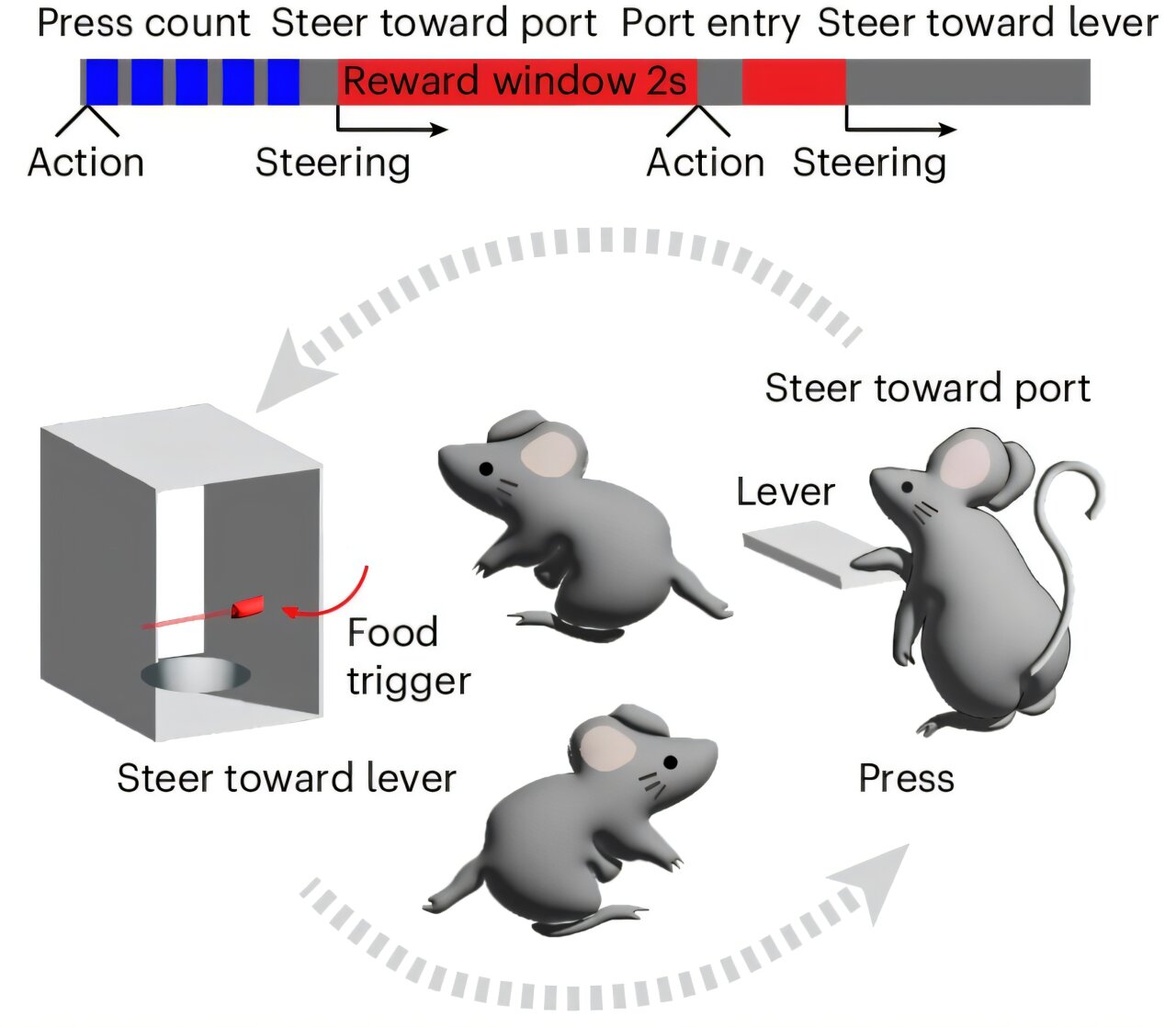
An operant counting task to allow simultaneous measurement of discrete action selection and continuous kinematics. Credit: Nature Neuroscience (2026). DOI: 10.1038/s41593-026-02330-z
Most of the tasks that humans complete daily entail carefully coordinating movements and tracking progress made toward a desired goal. Past studies have highlighted the role of the basal ganglia (BG), a set of interconnected structures deep within the brain, in the selection, control and initiation of voluntary movements.
While the contribution of the BG in voluntary actions is now well documented, the processes by which it organizes goal-directed behavioral sequences have not yet been clearly elucidated. Better understanding these processes could be highly valuable, as it could also shed light on the neural signatures of specific neurological or motor disorders associated with difficulties in planning complex goal-directed actions.
Researchers at Duke University School of Medicine and Duke University recently set out to further investigate how the BG allows mice to steer their actions when trying to achieve a specific goal. Their findings, published in Nature Neuroscience, led to the identification of specific neuron populations in the BG that appear to work together to guide behavior and track progress made toward a goal, both in terms of the movements that need to be performed and how many actions are required.