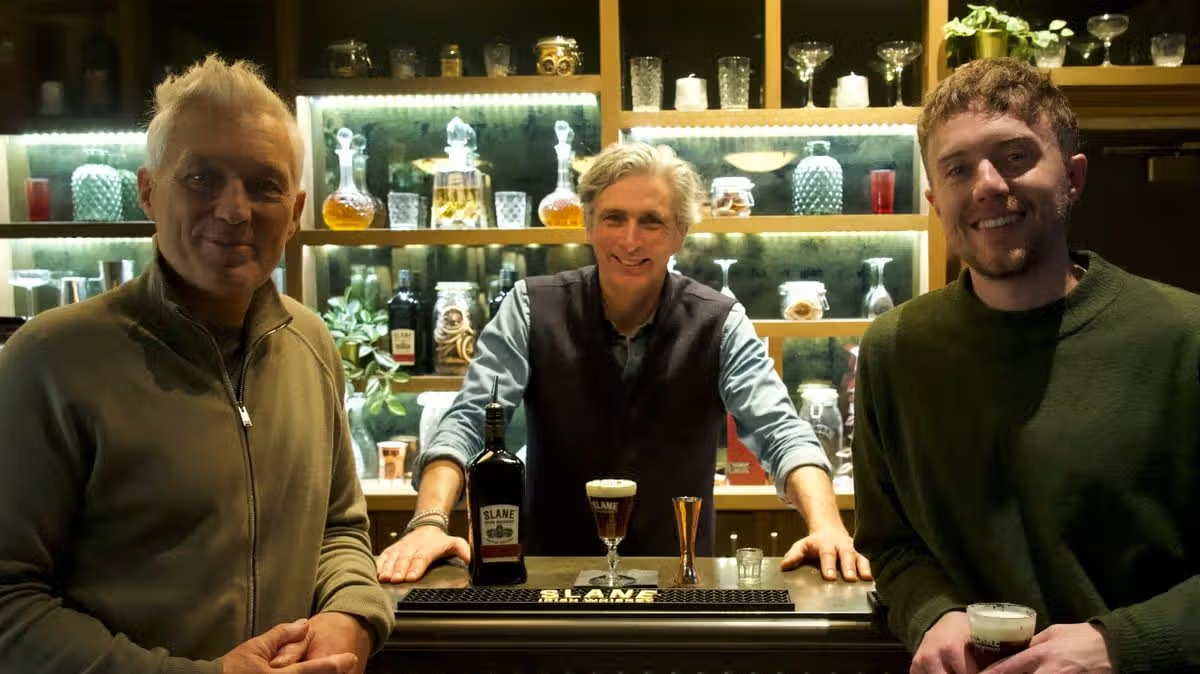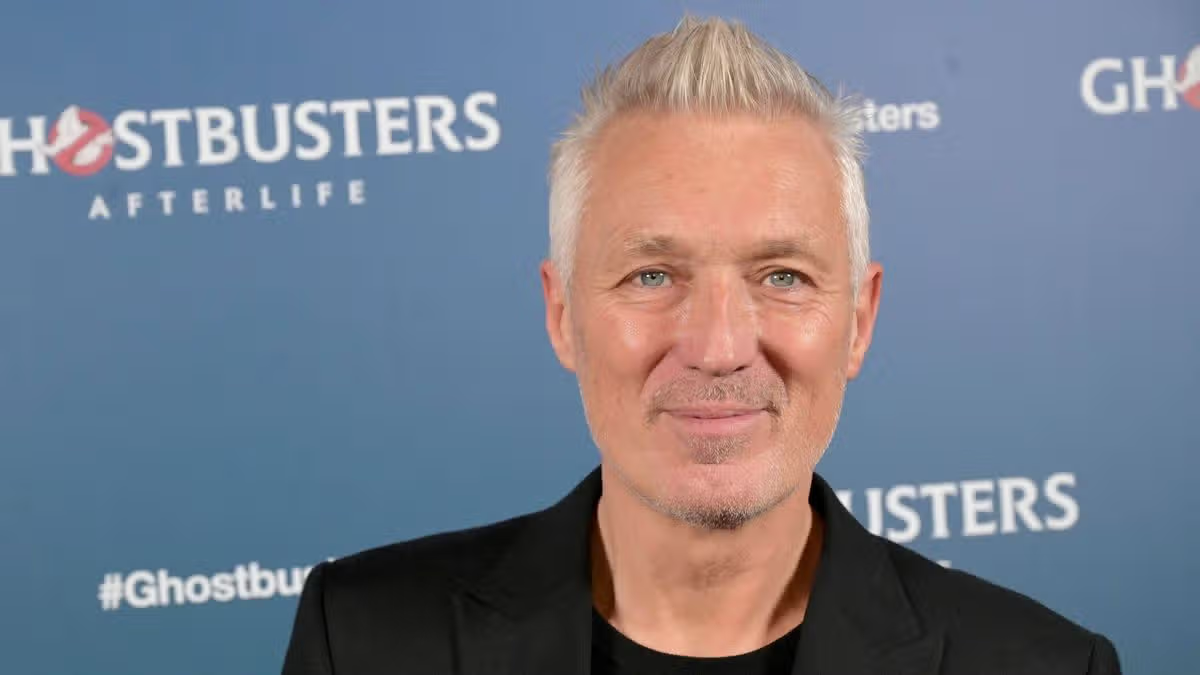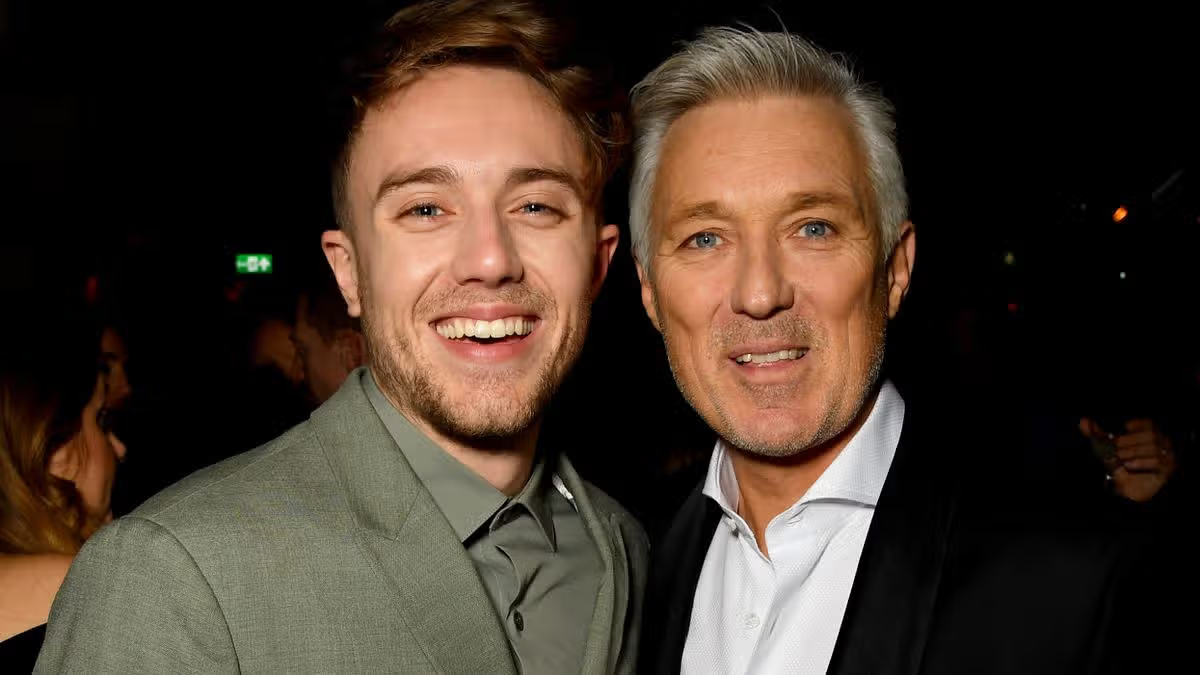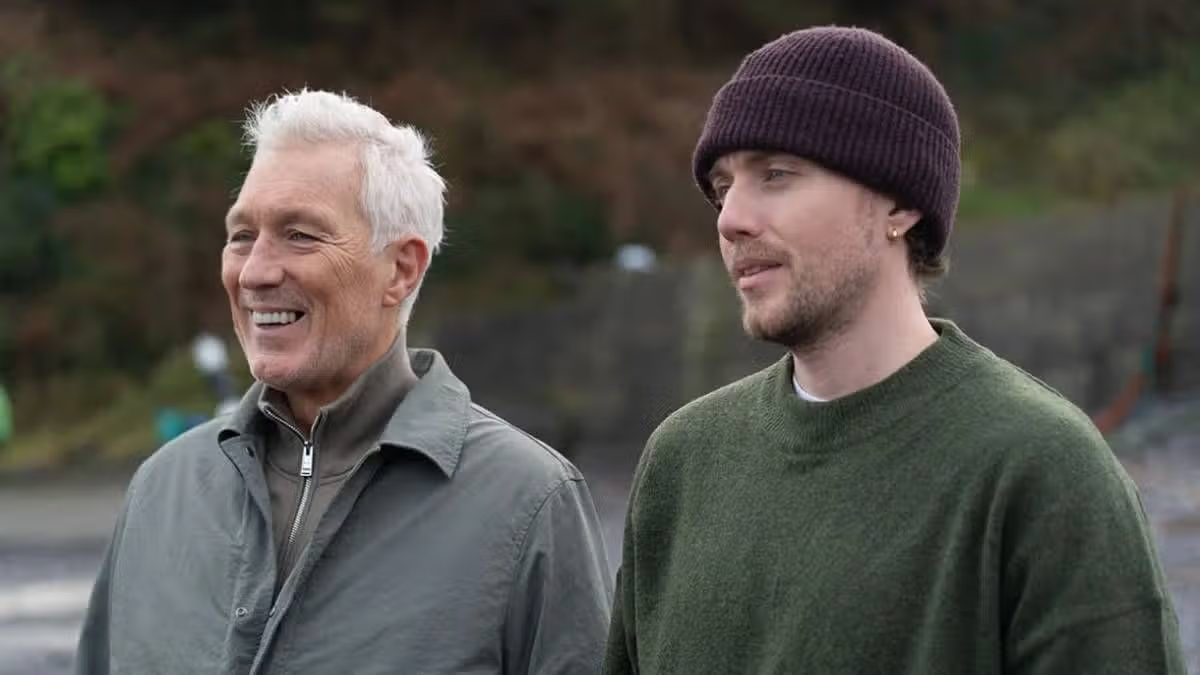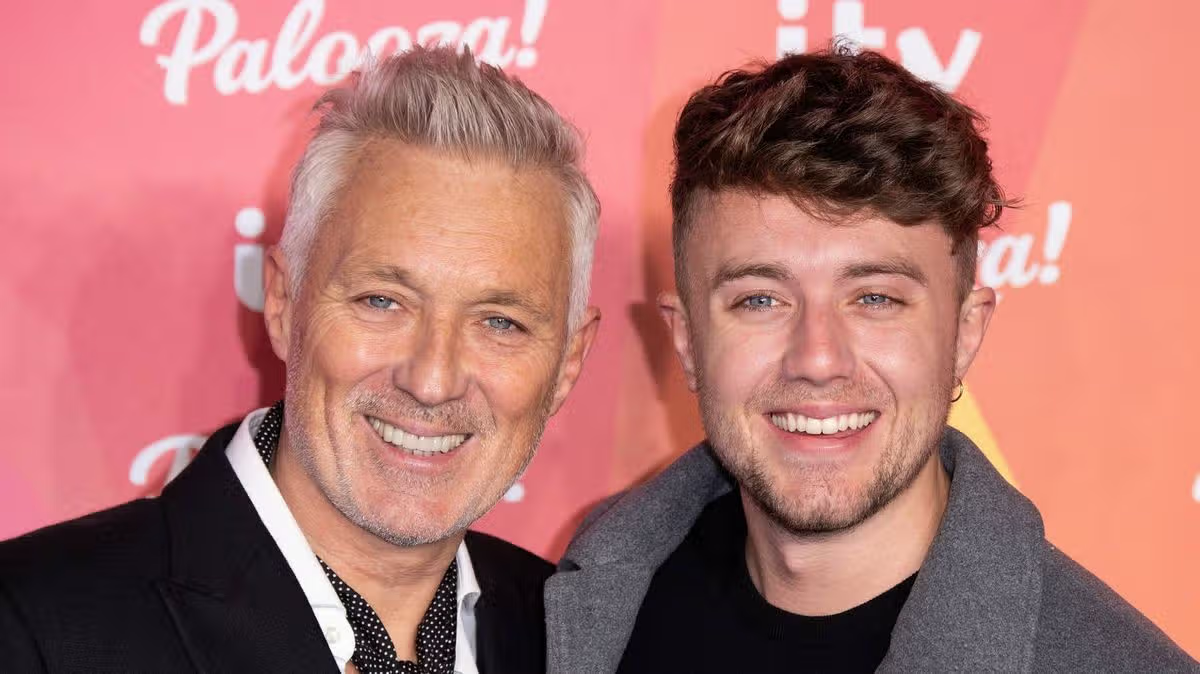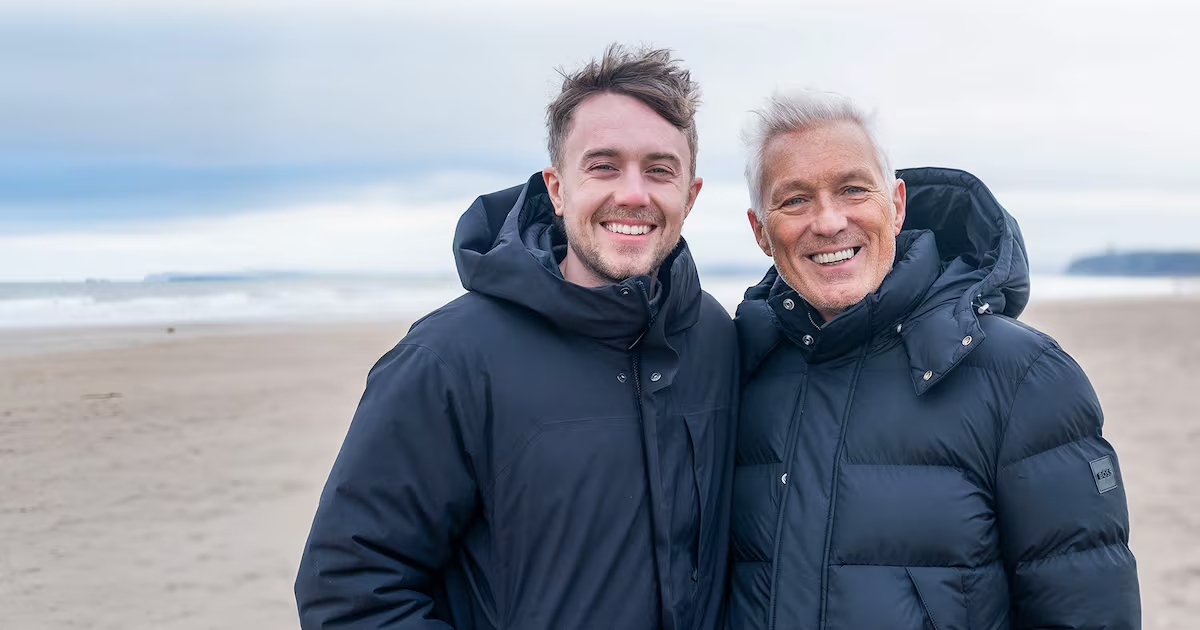
Hello comrades. I’m pleased to see that another English celebrity has fallen into our devious tourist trap. Martin Kemp, formerly a purveyor of new romantic bass grooves with sexy troll dolls Spandau Ballet, is driving the smallest roads of Ireland, apparently under the impression we are a nation of storytelling mystics and not a nation of overeducated narcs in hoc to the Yankee dollar. Don’t tell him about the motorways. It would ruin the vibe and shorten the episode. Martin is the husband of Pepsi and/or Shirlie of the paramilitary organisation Pepsi and Shirlie. In an attempt to recreate the perfect person, this regal pop duo have bred “Roman”, their imperial, hunky offspring. He is, like so many nepo-hunks who came before, born to rule and, also, born to host light entertainment television. Hence, he is now co-hosting Martin and Roman’s Irish Road Trip (Channel 4) with his chortling Cockney progenitor at his side, a silvery haired Pearly King of a man. While the Romans never made it to Ireland, the Roman (singular) is now here, but instead of bringing aqueducts and literacy he has brought us halfhearted comic bickering with his dear old dad. “This is a chance to slow down and explore some of the things Ireland does best,” says Martin Kemp and I slap my hands together in anticipation because I love the things Ireland does best: sarcasm; offshoring multinational profits; lilting; getting international celebrities to use local brands and then turning that into a meme; begrudgery; saying “what’s that eejit on about now?” when Bono is on telly; wanting Scandinavian public services but American taxes; shame; high rates of asthma; sneering; drinking Buckfast in a neighbour’s hedge while moaning; taking our shirts off when the weather is merely mild; sunburn; heavy metal; simmering rage masquerading as humour; wondering vaguely what’s in the will; singing softly to ourselves on the bus; breakfast.Sadly, this programme deals with none of those things. The dynastic duo start off their journey at “the boundary between life and death” – by which they mean Cork, obviously. Some locals take them out in boats, not to dispose of their bodies (that’s what instantly came to mind; “classic Cork,” I said) but to show them the aquatic realm of Clíodhna, the ancient goddess and, also, your ex. This is the repeated template of the show because Martin’s interest is in myth and story. So Martin and Roman go to one beautiful ancient place after another where an eloquent and well-informed tour-guide/academic/folklorist tells them a spooky tale. We Gaels are, after all, a spiritual and superstitious lot. Ignore the pharmaceutical conglomerate/social media company/technical university that’s no doubt just out of shot. Kemp and son go to Drombeg Stone Circle and Spike Island and they visit a storytelling group in Cork and a herbalist who puts a poultice on their wounds. They do not stop at a Circle K. They do not filter their profits through a PO box down on the docks. They do not buy an investment property off the plans.It’s often good fun. Though it sometimes feels like the programme makers are going easy on the nerves of the British public, who have lost confidence recently thanks to being drunk on power for most of the 18th, 19th and 20th centuries. They don’t want to overburden them with knowledge. When the Irish Famine comes up, for example, it’s presented as something that happened for “reasons”. Nobody was particularly to blame for it. This is a lovely, fatalistic way to view both history and everything I do from now on. I imagine the producers looked at the state of the British public, on the cusp of protest voting for more lunacy at the smallest perceived slight, and made a call: “Let’s not get into the ins and outs of who was murdering who.”That’s fair enough. At some point in the past decade making fun of Britain has begun to feel a little like punching down. Let them have their elevated self-image and soothing myths. The real problem with the programme is format overexposure. I tire of watching celebrities drive hire cars while experiencing mild wonder and gentle, sneeze-like epiphanies. There is clearly a law that says if a celebrity asks to do something they should be allowed do it. For the most part, they have used this power to host the sort of travel documentaries that were once hosted by Alan Whicker. But mark my words, in time they will surely also ask to fly the plane you’re travelling on or insist on operating on your inflamed appendix (as the anaesthesia takes hold, you have time for one murmured question: “Why are Rod Hull and Emu here?”*)(*I would watch this show) [ Patrick Freyne: Cagney, Lacey, Velma, Daphne – here are my favourite female TV detectivesOpens in new window ]Seventy per cent of greenhouse emissions are caused by celebrities making travel documentaries. That’s the sort of statistic I would read aloud if I was a celebrity hosting a travel documentary. The celebrity-fronted format sometimes works but that’s just because there are so many of them. Daniel and Majella’s B&B Road Trip was the best thing that Irish civilisation has created since The Táin. I think of it often. And then there’s Michael Palin, who simply stopped being a comedian after doing a bit of wandering and became a skilled travel documentarian instead. Martin and Roman Kemp, in contrast, sometimes struggle to talk each other, never mind to an audience of possibly hundreds of people. This is not to say that I wouldn’t helm a travel show myself if given the chance, but my suggestion for it would be that I trail all the celebrities who are making travel documentaries and make a documentary about that. Ricky Gervais with Gus, the cartoon cat he voices in Alley Cats. Photograph: Netflix Alley Cats, the new adult animated show on Netflix, answers a question philosophers have asked for millenniums: “What if Ricky Gervais was a cat?” It’s a programme about a cat who lives in a derelict house with some other cats. The main cat has Ricky Gervais’s voice. He is, it seems, a cynical cat at a crossroads. The show veers from scatological jokes to mawkish musings about the mistreatment of animals and the inevitability of death. The amount of empathy Gervais can muster up for marginalised cartoon cats truly is remarkable really, given how hilarious he often finds the suffering of marginalised humans. Look, that’s his prerogative. Alley Cats also defiantly dares us to take offence at some slightly offensive jokes before suddenly wallowing in self-pity about the injustices of life. Otherwise very little happens. I think Gervais thinks there’s a central core to this but I’m not sure where it is. It’s mainly evidence of the writer having a crisis about the nature of his own existence and, also, the budget to animate it all because he is Ricky Gervais. I’m not completely surprised the streaming revolution ended up this way.
Martin and Roman Kemp explore what Ireland does best: Sarcasm, breakfast, wondering what’s in the will
Martin and Roman’s Irish Road Trip is often good fun but does not overburden British viewers with knowledge, while a new Netflix show asks: ‘What if Ricky Gervais was a cat?’
1,167 words~5 min read