During deep sleep, a water-like fluid moves around the brain and helps remove metabolic waste associated with diseases such as Alzheimer's. This cleanup process is part of the glymphatic system, which was first described in 2012 by Maiken Nedergaard -- a pioneering neuroscientist and co-director of the University of RochesterCenter for Translational Neuromedicine.
Scientists still do not fully understand how this system works, including one important detail: how quickly the fluid moves around and through the brain. Measuring such slow circulation inside a living brain is especially challenging because researchers need methods that can observe the process without causing permanent damage.
The Challenge of Measuring Brain Fluid Flow
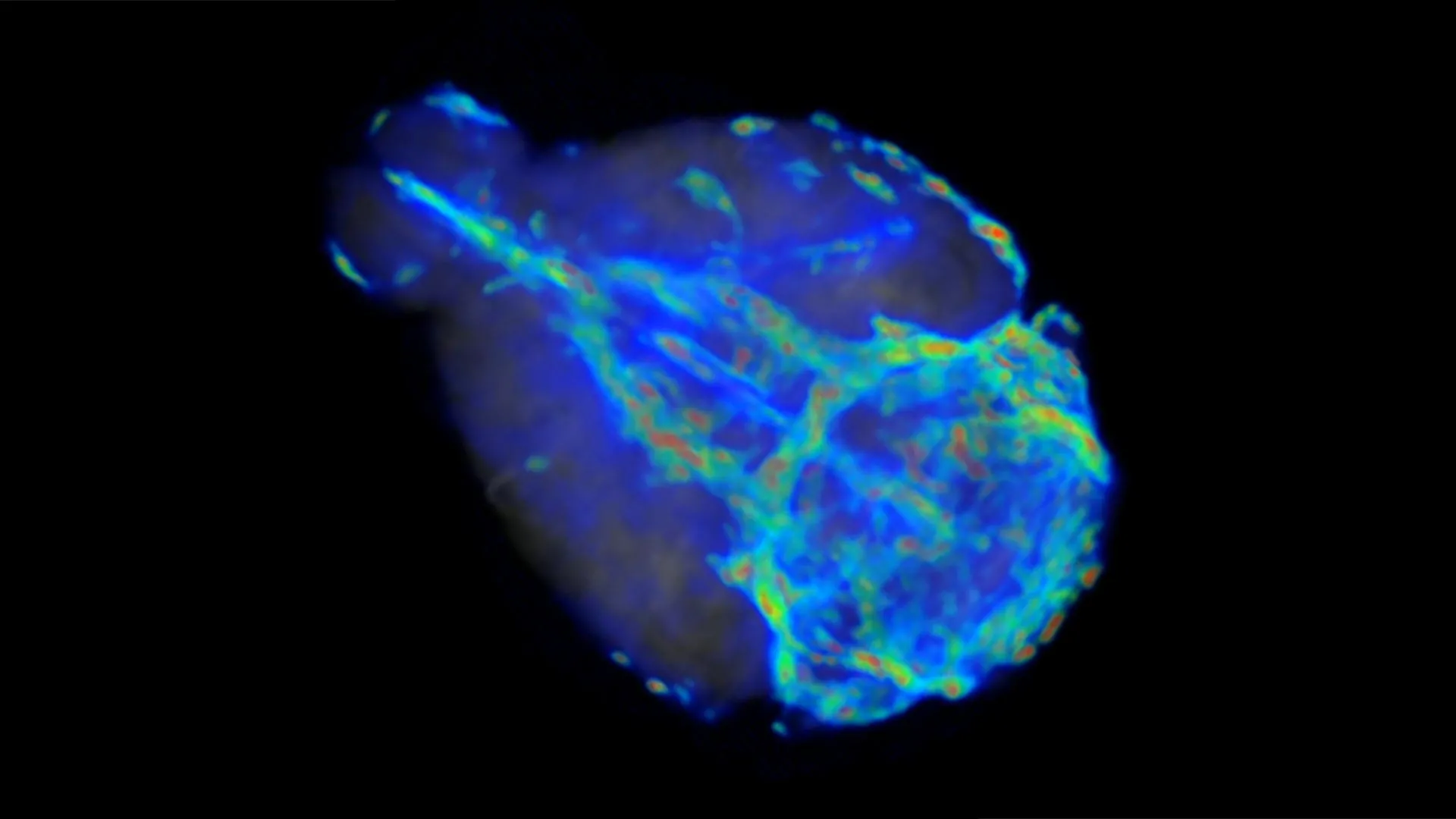
"You can put a microscope on a small patch of the brain and watch what's happening there with a lot of detail, and we've worked with that type of data in the past, but it's only a tiny view of the overall process," says Professor Douglas Kelley from URochester's Department of Mechanical Engineering. "If you want to image whole brains, an MRI is a great approach because it gives you a three-dimensional view. But an MRI has serious limitations too, the biggest of which is that it does not capture the fluid flow velocity, at least not for flows this slow."