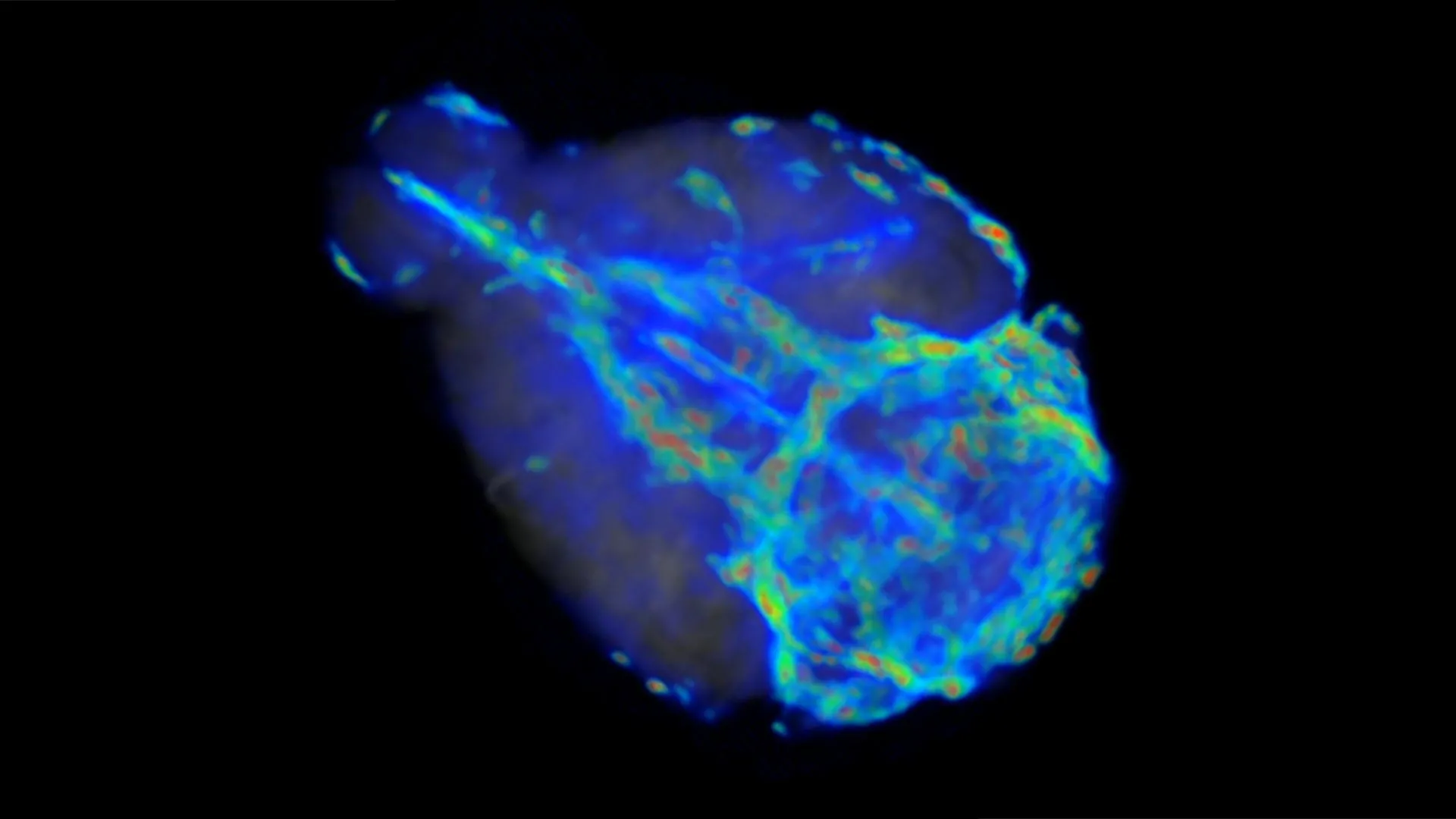
Study traces how cerebrospinal fluid exits nasal lymphatics, reaching neck lymph nodes An illustration depicting Alzheimer’s disease (123rf) South Korean researchers have identified a previously unclear pathway through which cerebrospinal fluid drains from the brain and demonstrated that age-related impairment incurred in the process can be reversed in mice.A team at the Institute for Basic Science found that cerebrospinal fluid, or CSF, passes through small openings in the membrane surrounding the olfactory bulbs before entering lymphatic vessels and draining into lymph nodes in the neck.CSF is a clear fluid surrounding the brain and spinal cord that helps remove metabolic waste from the central nervous system. Reduced drainage has been linked to aging-related cognitive decline and neurodegenerative conditions including Alzheimer’s disease.Previous research had established that meningeal lymphatic vessels play an important role in CSF clearance, but the precise route remained uncertain.Using fluorescent tracers in mice, the researchers found that CSF traveled through openings in the arachnoid membrane into lymphatic vessels in the dura mater. It then passed through openings in the cribriform plate at the roof of the nasal cavity, joined lymphatic vessels in the nasal region and drained into cervical lymph nodes.The arachnoid is the middle of the three membrane layers that protect the brain and spinal cord.“A deeper understanding of CSF drainage routes and their relative contributions to waste clearance in the central nervous system will advance the understanding of brain health and neurological diseases,” the research team, led by Ko Gyu-young of the IBS Vascular Research Center, wrote in the study.Reversing age-related declineThe researchers compared young adult mice with older mice and found that aging caused deterioration and atrophy in lymphatic vessels near the olfactory region, reducing CSF drainage to the cervical lymph nodes.They then treated older mice with vascular endothelial growth factor C, or VEGF-C, which promotes the growth and maintenance of lymphatic vessels.The treatment reversed lymphatic atrophy and restored impaired CSF drainage in the aged mice, the study found.Researchers also identified similar openings in the arachnoid membrane of cynomolgus monkeys, suggesting that the pathway may exist in primates as well.Although further research is needed, the team said the findings could open the way to treatments targeting brain waste clearance, potentially through drugs administered through the nose.
Restoring brain waste clearance may offer clues to cognitive aging
South Korean researchers have identified a previously unclear pathway through which cerebrospinal fluid drains from the brain and demonstrated that age-related
371 words~2 min read