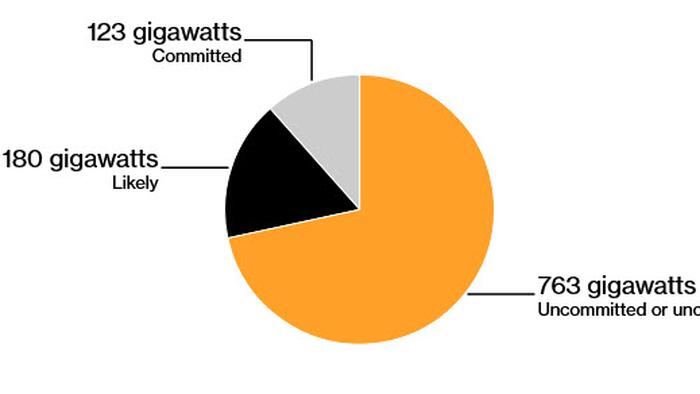
Skip to Content News Archives Economy Energy Oil & Gas Renewables Electric Vehicles Mining Commodities Agriculture Real Estate Mortgages Mortgage Rates Finance Banking Insurance Fintech Cryptocurrency Work Wealth Smart Money Wealth Management Investor Personal Finance Family Finance Retirement Taxes High Net Worth FP Comment Executive Women Puzzmo Newsletters Financial Times Business Essentials More Innovation Information Technology FP500 Podcasts Small Business Lives Told Tails Told Shopping Financial Post Store Obituaries Place a Notice Advertising Advertising With Us Advertising Solutions Postmedia Ad Manager Sponsorship Requests Classifieds Place a Classifieds ad Working Profile Settings My Subscriptions Saved Articles My Offers Newsletters Customer Service FAQ News Economy Energy Mining Real Estate Finance Work Wealth Investor FP Comment Executive Women Puzzmo Newsletters Financial Times Business Essentials HomeEnergyNewsMost power sought for U.S. data centres will never materializeMany applications are from firms with no prior experience building facilities with energy needs that can rival mid-sized citiesAuthor of the article:Last updated 0 minutes ago You can save this article by registering for free here. Or sign-in if you have an account.Developers have been taking a shotgun approach to pitching projects to utilities, seeking to get ahead in the AI build-out. Photo by Paul Weaver/SOPA Images/LightRocket via Getty ImagesMore than two-thirds of the electricity sought for the artificial intelligence boom in the United States isn’t likely to materialize due to “phantom” projects and long-shot pitches.Subscribe now to read the latest news in your city and across Canada.Exclusive articles from Barbara Shecter, Joe O'Connor, Gabriel Friedman, and others.Daily content from Financial Times, the world's leading global business publication.Unlimited online access to read articles from Financial Post, National Post and 15 news sites across Canada with one account.National Post ePaper, an electronic replica of the print edition to view on any device, share and comment on.Daily puzzles, including the New York Times Crossword.Subscribe now to read the latest news in your city and across Canada.Exclusive articles from Barbara Shecter, Joe O'Connor, Gabriel Friedman and others.Daily content from Financial Times, the world's leading global business publication.Unlimited online access to read articles from Financial Post, National Post and 15 news sites across Canada with one account.National Post ePaper, an electronic replica of the print edition to view on any device, share and comment on.Daily puzzles, including the New York Times Crossword.Create an account or sign in to continue with your reading experience.Access articles from across Canada with one account.Share your thoughts and join the conversation in the comments.Enjoy additional articles per month.Get email updates from your favourite authors.Create an account or sign in to continue with your reading experience.Access articles from across Canada with one accountShare your thoughts and join the conversation in the commentsEnjoy additional articles per monthGet email updates from your favourite authorsSign In or Create an AccountorThat’s based on new projections from Wood Mackenzie, which sees U.S. grid operators and utilities likely committing to about 28 per cent of the 1,066 gigawatts requested for data centre projects. A gigawatt is the equivalent generating capacity of a traditional nuclear reactor.While no one expects every proposed project to be built, the data reveals how inflated projections of future power demand complicate planning and budgeting by utilities and grid operators. That can translate into higher utility bills, since capital costs for upgrading infrastructure are typically covered through rate hikes.Breaking business news, incisive views, must-reads and market signals. Weekdays by 9 a.m.By signing up you consent to receive the above newsletter from Postmedia Network Inc.A welcome email is on its way. If you don't see it, please check your junk folder.The next issue of Posthaste will soon be in your inbox.We encountered an issue signing you up. Please try again“Everyone’s trying to figure out the rules of the road in order to make this the most efficient process without increasing grid prices,” said Alex Klaessig, co-founder of energy market intelligence firm Halcyon.Developers have been taking a shotgun approach to pitching projects to utilities, seeking to get ahead in the AI build-out. That’s overwhelming U.S. grids and creating even more data centre bottlenecks. The explosion of requests is stretching approval timelines, forcing more applications to be vetted than ever before, and threatening to undermine U.S. efforts to compete in the global AI race.“If we don’t allow these data centres to come online as fast as we can, then we might lose the future benefits of AI,” Klaessig said.Some developers are pitching the same project to multiple utilities, with plans to push ahead with the application that lands the best deal and speediest approval. That creates what the industry calls “phantom” applications, complicating efforts to accurately forecast true power demand.“Grid operators don’t know which ones are real and which ones aren’t,” said Glenn Schwartz, who heads energy policy at consulting firm Rapidan Energy Group. He estimates that only 20 per cent to 30 per cent of the power that developers are seeking will go toward projects that get built, due in part to phantom requests.Flooded grid queues aren’t specific to data centres: renewables projects are regularly hampered by long wait times to connect to electrical networks across the world.While it’s impossible to determine how many requests are duplicates, Reid Ramdathsingh of Rystad Energy estimates about half of the applications are credible on the biggest U.S. grid, operated by PJM Interconnection LLC, which serves 67 million Americans from Illinois to Virginia. He sees 14 per cent of applications as legitimate on the main grid in Texas, a state that has seen the fastest data centre growth.PJM said in a statement that it has taken steps to improve the forecasting of large loads.Of course, the 1,066 gigawatts of applications cited by Wood Mackenzie would require a staggering jump in U.S. electric capacity. The amount represents 83 per cent of the nation’s total utility-scale generation capacity at the end of last year, according to the U.S. Energy Information Administration.Many applications are from firms with no prior experience building facilities with energy needs that can rival mid-sized cities. The projects of those first-time developers are often disproportionately large, though generally less likely to come to fruition than those from well-established big technology firms, said Wood Mackenzie analyst Caitlin Connelly.To crack down on the barrage of requests, many utilities have introduced steep upfront application costs, demanding big-money collateral and near-perfect credit ratings. Such requirements are squeezing small to mid-sized developers that often pay project costs up front and then sell completed facilities to well-capitalized AI companies.Getting through a queue used to be straightforward with utilities offering up electricity to developers, according to Brad Richter, senior vice president of energy at Hut 8 Corp., which manages 11 data centres. Now, for the most part, utilities are saying, ‘I don’t have it anymore,’” Richter said, noting that those power providers are increasingly “closed for business.”In Texas, Governor Greg Abbott ordered regulators on Aug. 3 to audit every data centre seeking access to the state’s main grid, effectively pausing those projects’ approvals until reviews are complete. His surprise call puts US$13 billion in industry revenues at risk and threatens to delay almost a fifth of America’s data centre pipeline in the medium term, according to BloombergNEF.The Electric Reliability Council of Texas is tracking about 474 gigawatts of connection requests, with around 90 per cent of those from data centres, according to Abbott. That total is more than five times the system’s record peak demand.Ercot uses multiple screening stages to distinguish between speculative and credible projects, a spokesperson said.Exelon Corp., a utility owner serving customers from Illinois to Delaware, in July slashed its pipeline of energy demands from data centres by nearly 40 per cent, leaving a queue of about 11 gigawatts. Exelon is prioritizing connection requests that are likely to come to fruition.“Utilities are using what they’ll refer to as a ‘first-ready, first-served’ model, as opposed to a ‘first-come, first-served’ model, to weed out folks that really don’t have the capability to deliver,” said Brian Janous of Cloverleaf Infrastructure LLC, which works with utilities to develop ready-to-build sites for data centre users and providers.—With assistance from Dina Bass. Join the Conversation This website uses cookies to personalize your content (including ads), and allows us to analyze our traffic. Read more about cookies here. By continuing to use our site, you agree to our Terms of Use and Privacy Policy.
Most power sought for U.S. data centres will never materialize
More than two-thirds of the electricity sought for the AI boom in the U.S. isn’t likely to materialize due to “phantom” projects. Read on
TL;DRAI
Wood Mackenzie stima che le utility USA committeranno solo il 28% dei 1.066 GW richiesti per data center AI; molti progetti sono "fantasma" mandati a più operatori contemporaneamente. L'inflazione artificiale della domanda di potenza intasa le grid queue, allunga i tempi di connessione e minaccia la competitività USA nella corsa globale all'AI.
1,375 words~6 min read