Free daily briefing on global business news.
The agency now sees a 1.8 million barrel-per-day deficit in the third quarter, more than double its prior estimate, as Gulf output remains 8.3 mb/d below pre-war levels
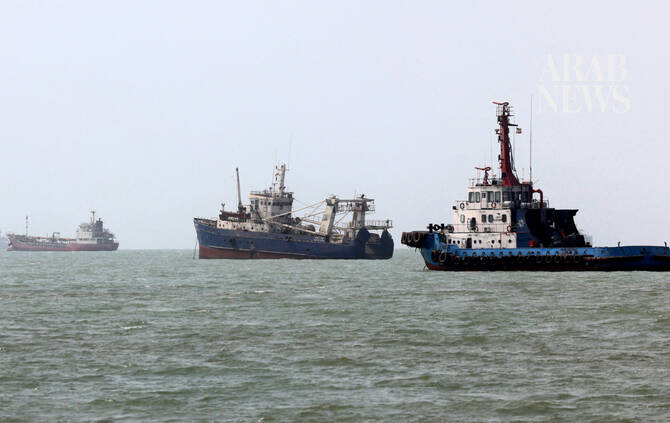
Vessels passing through the Strait of Hormuz following a ceasefire deal reached between the U.S. and Iran. (Shady Alassar/Anadolu via Getty Images)
The International Energy Agency cut its 2026 global oil supply forecast on Wednesday to 102 million barrels per day, a decline of 4.3 mb/d on the year, as the breakdown of the U.S.-Iran ceasefire reverses a nascent recovery in Gulf output and drives the world deeper into an oil market deficit.
The revision marks a significant deterioration from the 3.7 mb/d supply drop the IEA projected in its July report. Gulf production had been climbing through June and into early July, with Middle East loadings touching 20 mb/d at the month's outset, only to retreat to roughly 12 mb/d as the Hormuz waterway effectively closed again and attacks on tankers and energy infrastructure resumed, the IEA said. The region's output was still 8.3 mb/d short of where it stood before the war in July, though that gap had narrowed from a peak shortfall of 14 mb/d at the height of the fighting.