Very few businesses remain under the control of the founding family for more than a century. The successful ones generally become public companies, either because they need to fund expansion or because later generations want to cash out. Wine growing is something of an exception — partly because, at least until the past 100 years brought a greater understanding of the science of agriculture, the heirs received from their parents not only the land but the skills that made their enterprise profitable. This is why, until well into the 20th century, the Champagne region of France could lay claim to a number of family-owned brands of considerable longevity. But then inheritance taxes and the French laws of succession wrought an inexorable attrition. Now only two “Grandes Marques” (the region’s recognised great brands) are still owned and controlled by members of the founding families. Of these, the oldest is Champagne Louis Roederer. Established in 1776 and still in the hands of the family that launched the enterprise in the same year as the American Revolution, the house has defied the seemingly inevitable process that sees control shifting away from the keepers of the culture to outside investors. This is all the more remarkable in France: the French Revolution saw off many of the property owners of the ancien regime. Then the Code Napoleon abolished primogeniture: all children must inherit equally, as must their descendants. When Bernard Arnault set out to acquire Chateau d’Yquem, which had been in the Lur Saluces family since the 18th century, there were more than 1,000 family shareholders. Without unity and unanimity of purpose, such an enterprise, which depends as much on culture as on commercial aptitude, is doomed to become just another intergenerational asset.The control of Champagne Louis Roederer now rests with Frédéric Rouzaud, seventh-generation descendant of the founder. His father, Jean-Claude Rouzaud, took over the business from his grandmother, Camille Orly-Roederer, who had managed the house for 43 years after the death of her husband, Leon Orly-Roederer. She directed the business through its most difficult era: hugely dependent on Russian business, it had suffered a near-fatal setback with the fall of the tsar in 1917. Then she had to hold it together through the Great Depression, World War 2 and the German occupation.Jean-Claude began his career on the grape-growing side under the direct authority of one of the house’s veteran vineyard managers. There he flourished and his success partly explains why Roederer now is the only Grande Marque that obtains most of its fruit from its own properties and not from contract suppliers. He went from managing the vineyards to managing a huge technical crisis in the winery in the early 1970s, a period he describes as “the worst two working years of my life”. By the time he assumed full control in 1979 he was suitably battle-hardened.In the years that followed, he introduced major changes, in Champagne and in the wider fine wine world. He created and launched Cristal Rosé a century after his ancestor crafted Cristal, the region’s first cuvée prestige. He then bought up hundreds of hectares of Alexander Valley to create Roederer Estate in America. In 1990 he acquired Port producer Ramos Pinto and almost immediately launched the innovation that has become the defining feature of the modern Port region — unfortified dry wines from the Douro. In the 1990s he acquired two estates in St Estephe, as well as Delas Frères in the Northern Rhone. His son Frédéric, who took over from him 20 years ago, added Pauillac “supersecond” Chateau Pichon Lalande, one of the top-10 estates in the Medoc, to the portfolio. Then, only a month ago, he purchased Pierre Damoy in Gevrey Chambertin, a great Burgundy domaine with several hectares of Grand Cru vineyard, much of it more than 60 years old.Early on Frédéric decided to elevate Jean-Baptiste Lecaillon, chef de cave of the champagne house, to the position of executive vice-president in charge of production at all the Roederer properties. Lecaillon, seen by many as the most visionary of the region’s chefs de cave, has come to redefine the way the best vineyards of Champagne are managed, and the best way to make wine in an era of climate change. Sustainability, which includes organic (and often biodynamic) practices, is not a marketing catchphrase but rather a viticultural method intended to help mitigate the increasingly extreme climatic conditions of the 21st century. It has been possible for him to operate in this way only because Roederer is not a public company and is not compelled to operate with short-term profit extraction as the guiding principle.The family has studiously avoided the traps that wiped out bigger, better-financed owners over the years. Unlike most of its competitors, it has spread its risk by expanding beyond the boundaries of the region, using the expertise that has served it well in Champagne. But at least some of its success rests on its guiding principle of independence because, in Rouzaud’s words, “independence allows us to move at the pace of the wine rather than that of the financial markets … to favour patience over speed, substance over visibility, and long-term investment over immediate results”.Roederer, especially at this point in its history, is all about focus. At the Champagne and Sparkling Wine World Championship it won the Supreme World Champion award three times in five years and was the World Champion Brut Champagne Producer three times in four years. In the past 10 years Chateau Pichon Lalande’s aggregated critics’ scores have never fallen below 94/100. In the past 10 years of the previous ownership 94/100 was the highest rating.But this doesn’t mean that the future is secure beyond the present generation. No matter how well planned and managed the succession may be, the outcome depends less on skills that can be outsourced and more on the transmission of a culture. Knowing what to abandon, what must be allowed to evolve, and what must be retained at any price is only partly science, partly intuition, partly genetics and partly luck. The past does not determine the future; it merely makes it possible.Business Day
MICHAEL FRIDJHON | Family-owned wine estates favour patience, substance and long-term investment
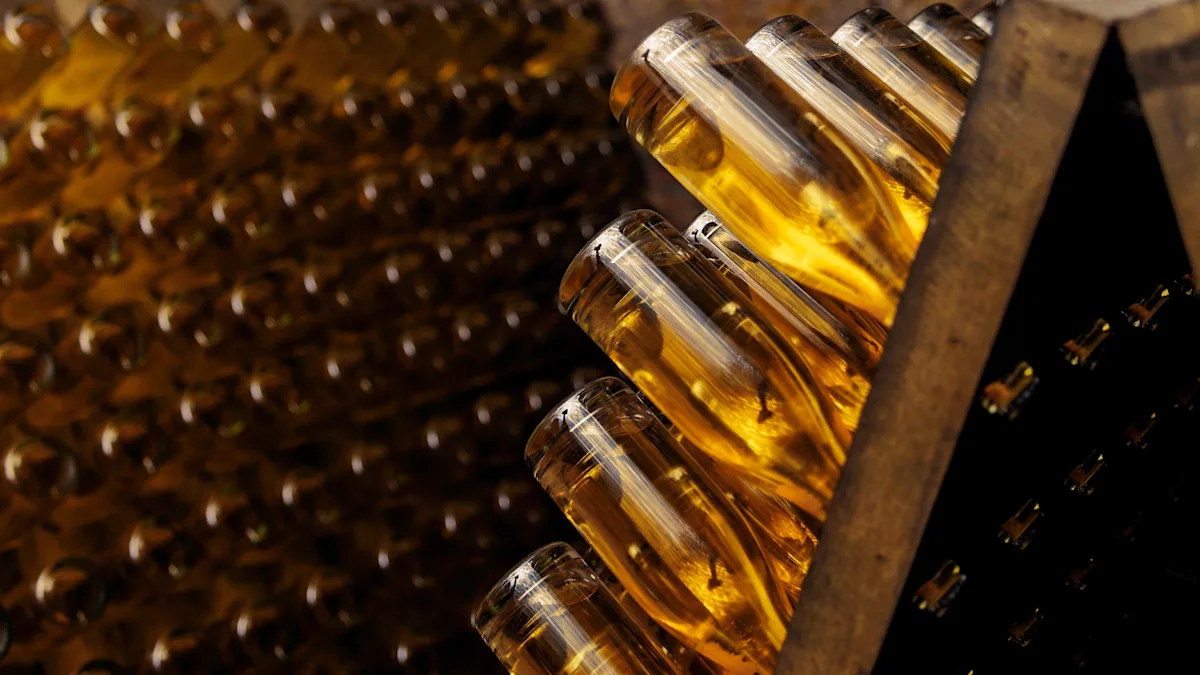
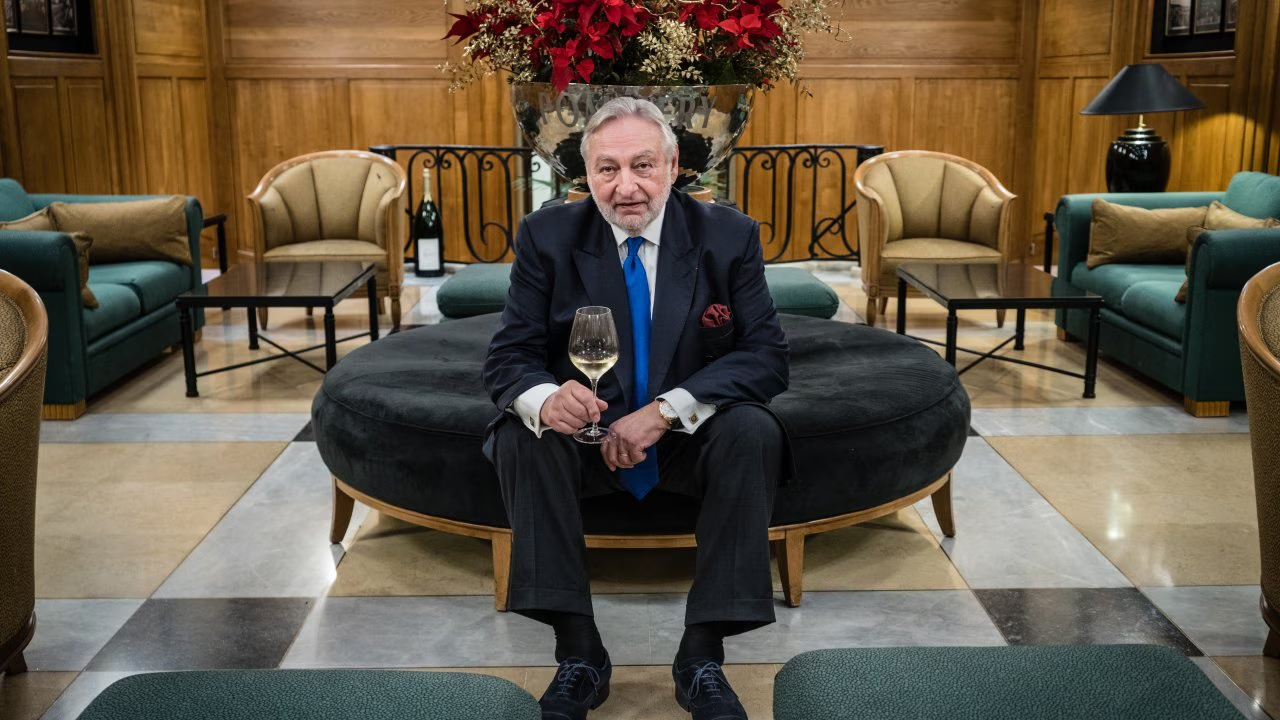
Champagne Louis Roederer, established in 1776, is still in the hands of the family
1,018 words~5 min read