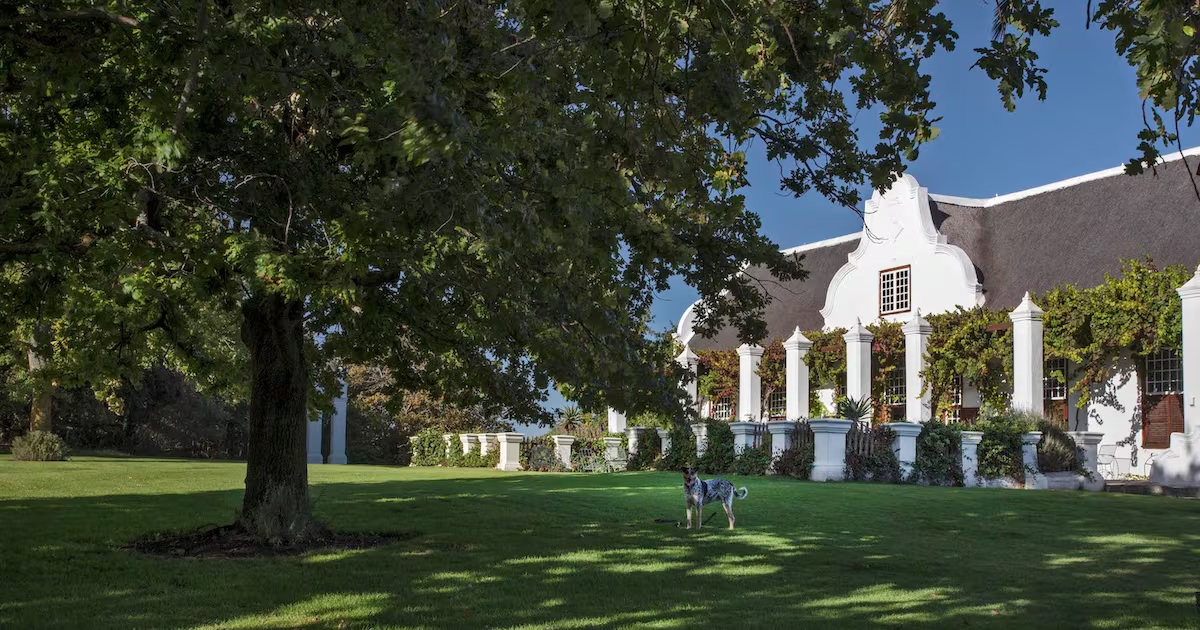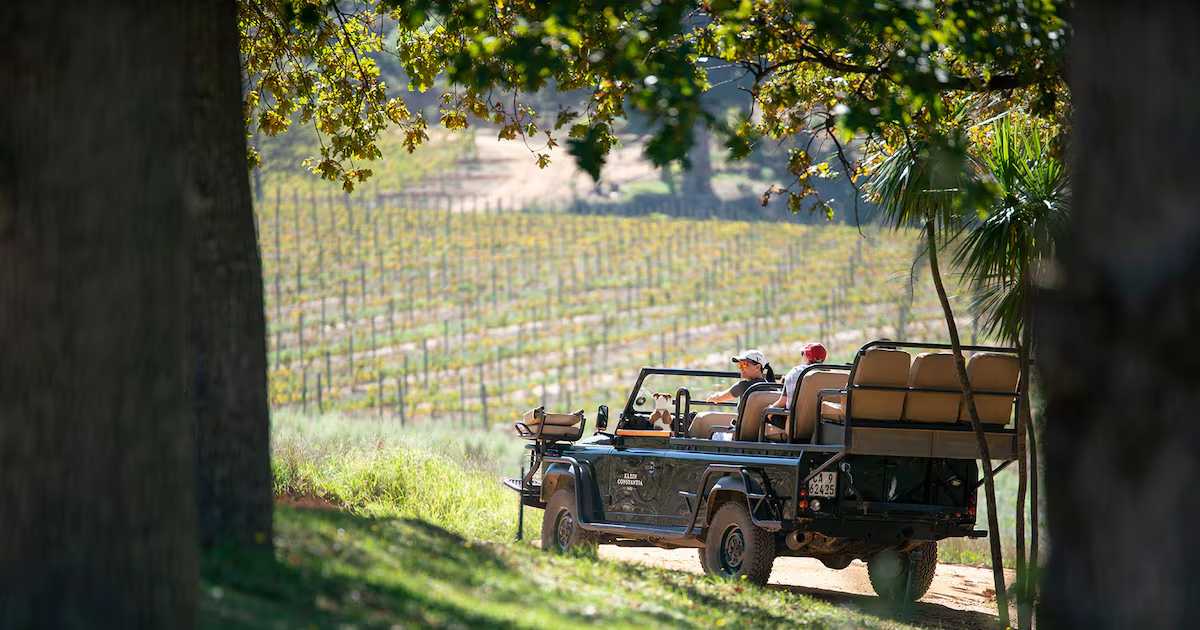
There’s a half-spoken assumption about which wine varieties are easy to make and which require consummate skill, understanding, insight and experience. It’s a league table where the presumed degree of difficulty associated with making decent wine is often used to justify higher price positioning. Pinot (“the heartbreak grape”), and not necessarily even good pinot, for example, sells for considerably more than most other mainstream cultivars.These assumptions are deeply etched into the bedrock of wine mythology. Yet most of the varieties associated with premium pricing are also linked to some of the world’s ghastliest wines — often the artefacts of poor winemaking or produced from vines planted in places so inappropriate that even skilled winemakers cannot make an acceptable beverage. You can conclude from this that the unspoken table of merit positions cultivars on the basis of the chic rather than shabby executions.We often fail to recognise the skill that goes into producing the very few exceptional wines made from the varieties that provide our everyday drinking wines. A few years ago I was sitting with Edouard Moueix at a harvest lunch at Chateau La Fleur Petrus in Pomerol. The grapes were healthy and ripe, still with good acidity. It seemed safe to assume a fine vintage. Moueix was less upbeat. He said that the conditions had merely ensured that the wine would be good. The factors that separate exceptional from good merlot were incalculably small and it was too soon to tell. He should know: his family owns more real estate — including the legendary Petrus — in the merlot-producing regions of Bordeaux than anyone else.His insider’s take on merlot was front of mind when I tasted with Matt Day, winemaker at Klein Constantia, reviewing his latest sauvignon blancs. In South Africa the variety is to white wine what merlot is to red — popular among consumers and at the same time excoriated by the commentariat. This is not as much of a paradox as it seems: it’s easy to make high-volume commercial wine but surprisingly difficult to produce something refined, nuanced and harmonious.The Constantia region has chosen to make sauvignon its calling card even though the cultivar is heat sensitive. Constantia is only cool “on average”. Until the sun vanishes over the mountain in the afternoon, many sites are surprisingly warm. For winemakers the difficulty is how to achieve fruit ripeness without excessive alcohol. Day has risen to the challenge: he’s been in charge of the cellar at the historical property since 2009. In that time he has studied every site and developed different strategies for east-facing blocks that take the morning sun full-on (ripening more than a month earlier than the more south-facing vineyards).He has overseen a huge change in viticulture: organic and biodynamic practices, a focus on regenerative soil management (the estate’s viticulturist was invited to address the in-house farming conference of the world’s most successful fine wine business). Regular replantings are also important. Younger vines (up to about 15 years old) perform better. Intensive manual labour in the vineyards is also essential to manage the canopy but also to organise the environment around the bunches.All this investment is evident in the wines: they are finer, “green” notes are almost absent without a commensurate tilt into hyper-tropical fruit. Alcohol levels hover around 13.8%. The 2025 estate sauvignon, a selection from 40 different blocks all vinified separately, and showing only the vaguest hint of oak, is all about harmony and balance. The single vineyard, “Clara”, from sandstone soils high up the mountain is more visibly oaked while the single site, “Perdeblokke”, is quite different: no obvious oak, unflamboyant. The “Rietbos” chardonnay is simply splendid: perfect wood integration together with great fruit intensity.Finally, the 2023 Vin de Constance is a wine for the ages: sumptuous, with notes of seville orange marmalade, the result of a rare botrytis occurrence in the vineyards. It’s a wine to compare with the legendary Constantias of the 18th century, some of which I have been fortunate to taste.Business Day
MICHAEL FRIDJHON | The expertise needed to make exceptional wines
It is surprisingly difficult to produce something refined, nuanced and harmonious
665 words~3 min read