Story audio is generated using AI
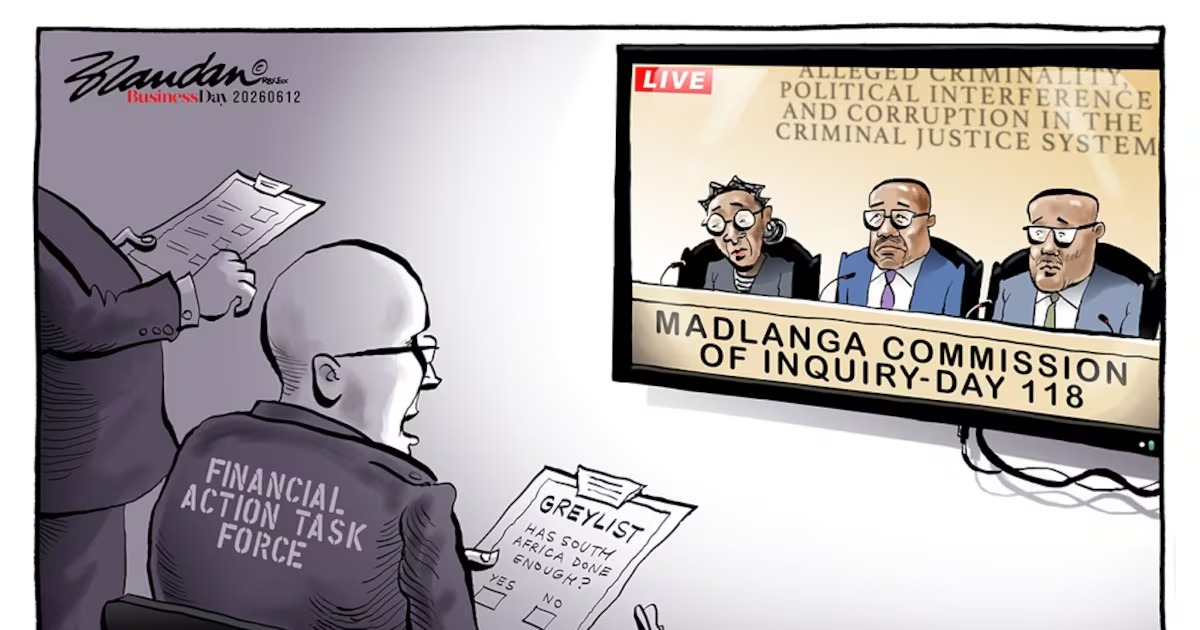
South Africa is tightening laws that saw it fall foul of the Financial Action Task Force (FATF), heightening scrutiny to smoke out trusts used as conduits for money-laundering and terror financing.Under the proposed changes to the laws governing locally registered trusts, the chief master of the high court must conduct a risk assessment to identify and assess the domestic and international money-laundering and terrorist-financing risks to which they are exposed.The proposed bill, which has been adopted by the cabinet, demands that the chief master ensure that the risk assessment is conducted every three years.“The chief master must ensure that the outcomes of the risk assessment … are recorded in a written report, and that the findings contained in that report are used to develop and record money-laundering and terrorist financing risk profiles for each category of trusts to which this act applies,” the bill reads.Under the proposed bill, trustees will be required to prepare annual financial statements of trusts and to keep documents related to trusts for the duration of their trusteeship and for five years from the date on which they ceased to be trustees.South Africa fell foul of the FATF rules on combating money-laundering and terror financing in 2023, leading to the country being placed on the grey list.FATF is a global intergovernmental body that promotes policies and sets international standards relating to the combating of money-laundering, terrorist financing and the financing of the proliferation of weapons of mass destruction.The agency last year removed South Africa after it made satisfactory progress in implementing its recommendations.Mmamoloko Kubayi, minister of justice & constitutional development, said a review of the laws governing trusts was long overdue, with the country still operating under laws set in the late 1980s.The minister further said lack of transparency in the management and control of trust property creates a conducive environment for money-laundering and other criminal activities. “The objective of the review was to address specific areas of the law of trusts that were problematic and required legislative intervention at that time,” said Kubayi. “In the 38 years since its enactment, the act has not been reviewed comprehensively. The socioeconomic, legal and practical environment in which the South African trust operates has, on the other hand, changed significantly.”The bill seeks to, among other things, address shortcomings in the current legislation that enable trustees to evade accountability; constrain the master of the high court in exercising effective oversight over trusts; do not provide adequate protection for beneficiaries; address the lack of transparency in the management and control of trust property, which increases the risk of trust structures being misused for money-laundering and other criminal activities; and align the regulation of trusts with the recommendations of the FATF without imposing unnecessary regulatory burdens.Read: JON FOSTER-PEDLEY | Conviction rate could return greylist riskThese loopholes increase the risk of trust structures being misused for money-laundering and other criminal activities and align the regulation of trusts with the recommendations of the FATF without imposing unnecessary regulatory burdens, Kubayi said.One of the key proposed changes will see trusts barred from being created to protect funds awarded as damages in motor vehicle accidents, medical negligence, or other related matters and children unless a curator appointed for the child or beneficiary submits a report to the court, recommending a trust as an appropriate mechanism to protect the funds.Kubayi said this is in response to reports of trustees misappropriating these funds through excessive fees, improper investments, or outright misuse of the money.“The master’s office has received complaints from beneficiaries of trusts that were created as a vehicle to hold and manage land received through land reform programmes,” she said. “The complaints relate to the mismanagement and misappropriation of trust property by trustees. The master can only offer limited assistance to the affected beneficiaries due to the limited scope of the act and the nature of the trusts.“The bill proposes that trusts should not be created to administer property received by any community from the state in terms of an agreement or in terms of any law. “The objective is to ensure that the property in question is administered in terms of appropriate legislation that has been designed to afford adequate protection to the beneficiaries.”Business Day