Story audio is generated using AI
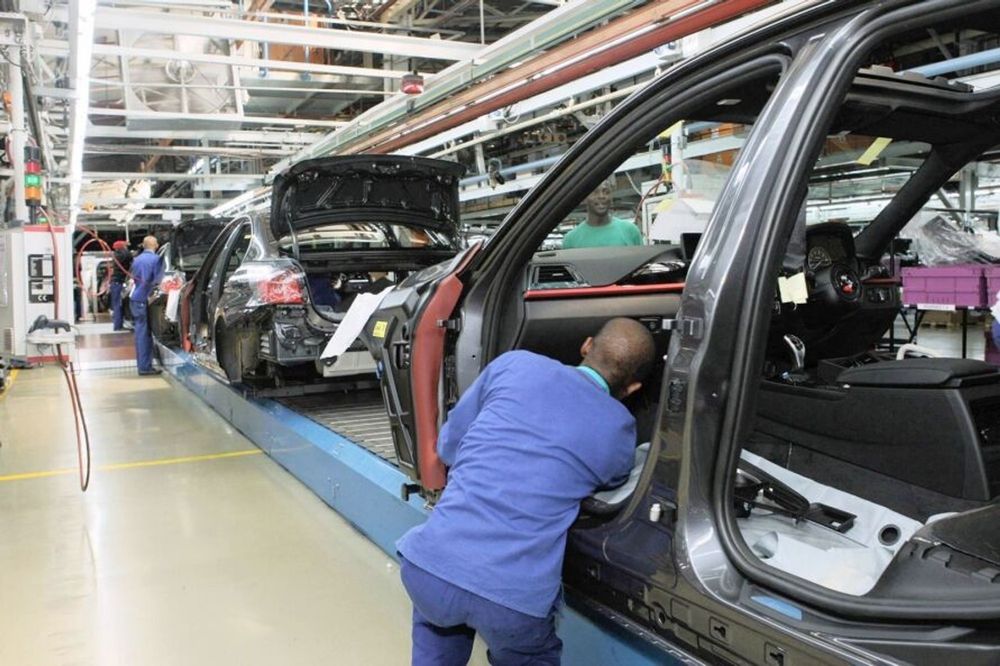
Manufacturing production fell 1.7% year on year in June after an upwardly revised 4.4% contraction in May, with output dropping significantly in the food and beverages division, Stats SA said on Tuesday.The data confirmed another shrinkage in the industry in the second quarter of 2026 after declining in the first, suggesting it will be another dampener on GDP growth for the period.Like other sectors of the economy, manufacturers are grappling with higher input costs largely driven by more expensive fuel as a result of the Middle East war.Output in food and beverages fell 3.9% year on year in June, contributing a negative one percentage point to the headline number, while wood and wood products, paper, publishing and printing slumped 8.9% — its 12th consecutive year-on-year decline — and contributed a negative 0.9 percentage point. (Dorothy Kgosi) The third-biggest drag was motor vehicles, parts and accessories and other transport equipment, where production dropped 5.3% on an annual basis.Seven of the industry’s 10 divisions were stronger in June compared with the same month last year, but their gains were not enough to lift the sector into positive territory, Stats SA said.On a month-on-month basis, seasonally adjusted production was up 0.9% in June compared with May.Despite this, production decreased 1.5% during the April-June quarter compared with the first three months of the year, with seven of the 10 manufacturing divisions reporting negative growth rates.Factory production was down 0.8% in the first quarter of the year, helping to limit GDP growth for the period to an underwhelming 0.5%.Absa’s latest purchasing managers report suggests the weakness in the sector extended into July, with factory activity at its lowest in seven months, confidence still subdued and export demand weak.“Manufacturers have been faced with elevated uncertainty and a rise in input costs as a result of the war in the Middle East, while domestically the sector continues to be held back by elevated administered prices, and logistics inefficiencies weighing on export potential,” Investec economist Lara Hodes said on Tuesday.At last month’s annual Manufacturing Indaba, deputy trade, industry & competition minister John Steenhuisen said regional and continental markets provide one of the best opportunities for the sector’s growth, making it essential that South Africa’s ports and rail infrastructure are fit for purpose.President Cyril Ramaphosa echoed the sentiment at a Total South Africa event, saying the country must improve the performance of its ports and rail network if it is to remain a globally competitive manufacturing and export base.Ramaphosa noted that state logistics firm Transnet’s vehicle terminals in Durban, Gqeberha and East London handled more than 792,000 fully built vehicles in the 10 months to February, calling it the highest productivity achieved in recent years.The manufacturing industry has been in steady decline over the years, with its contribution to GDP being whittled to about 13% from around 23% in the 1990s. The automotive sector remains one of its bulwarks, contributing about 5% to GDP, supporting more than 115,000 direct jobs and more than 500,000 jobs across the broader value chain.Business Day