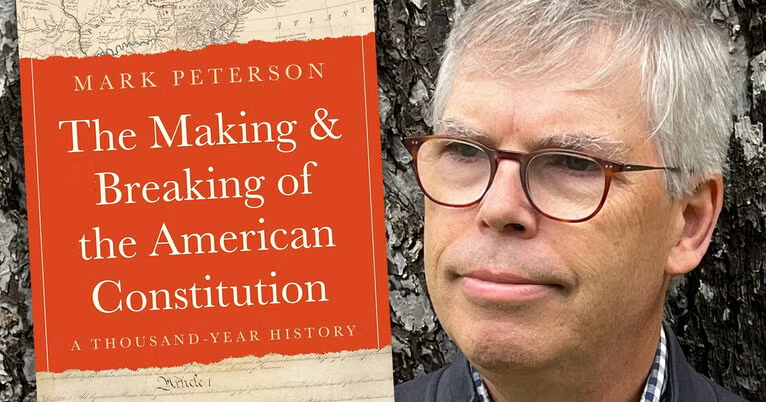
For the first 140 years of U.S. history, the federal budget was constrained. Two fiscal rules provided the constraint: the U.S. Constitution, which grants Congress only eighteen rather narrowly defined powers, and an informal rule that the government could only borrow during recessions and wars. Since then, the Constitution and accompanying informal rules have become little more than a parchment barrier. As a result, the scope and scale of the federal government have grown enormously. It is time to recognize reality. The federal government has grown too big, promised too much, lost control of the budget, undercut states’ rights, and has no strategic plan with outcome-based performance indicators. It is flying blind, without an instrument panel, in mountains of debt, and with few constraints.
The federal government does not need modest reforms; it needs a dramatic transformational change. Indeed, it does not need a nip-and-tuck job; it needs radical reconstructive surgery.
DOGE was the last attempt to rein in the federal government. DOGE intended to fight waste, fraud, abuse, and mismanagement. While it resulted in attracting a great deal of attention to government failures, it fell way short of achieving its much advertised savings goal and has subsequently largely disappeared from the news flow.