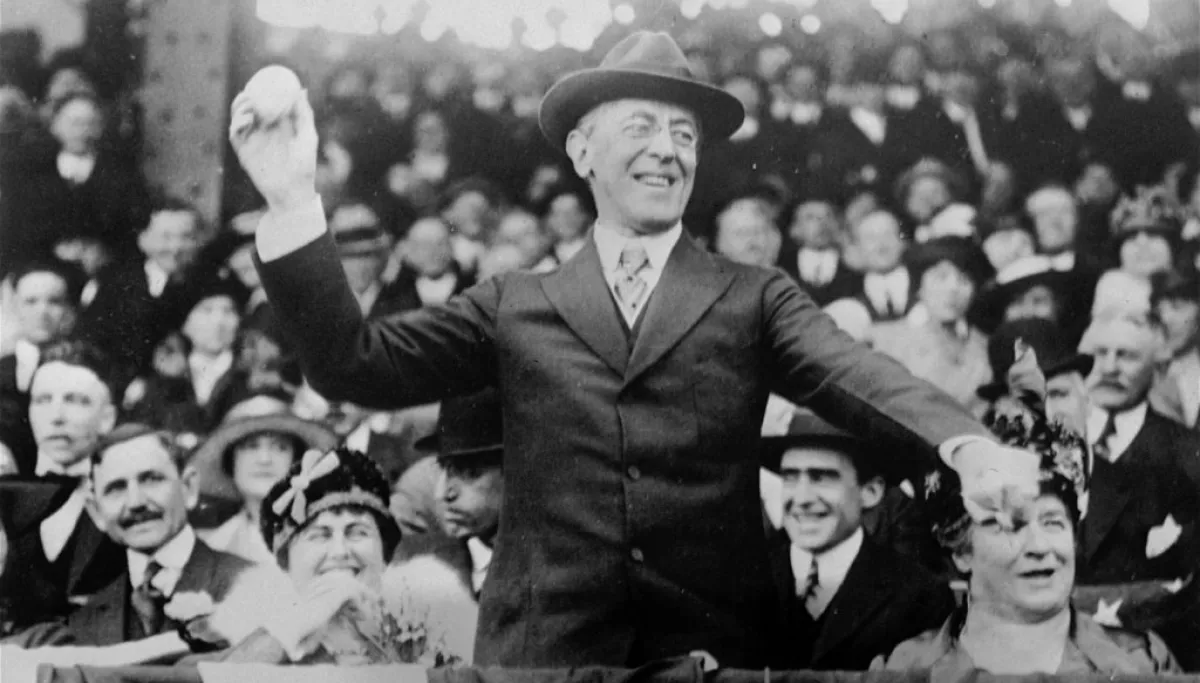
Most Americans couldn’t tell you what happened in 1913. They know Woodrow Wilson became president. They might recall the Federal Reserve. A few will mention the income tax. Almost none will connect all three — the Sixteenth Amendment, the Seventeenth Amendment, and the Federal Reserve Act — as a single constitutional rupture that restructured the relationship between citizens, states, and the federal government more thoroughly than any comparable twelve-month period in American history.I’m not a lawyer. I’m a financial professional with 30 years in institutional investment management, a California property taxpayer, and a citizen who has spent a career watching what governments do when nobody’s reading the original documents. What happened in 1913 didn’t just change policy. It changed the architecture. The building we live in today — the one with a $39 trillion national debt, a Senate that functions as a national legislature rather than a chamber of state sovereignty, and a central bank whose decisions reach into every household in America — was designed that year.Start with the Sixteenth Amendment, ratified in February. The Supreme Court had ruled in Pollock v. Farmers’ Loan and Trust Co. (1895) that a direct federal income tax was unconstitutional without apportionment among the states. The progressive movement spent eighteen years building the political coalition to overturn it. The Sixteenth Amendment gave Congress the power to lay and collect taxes on incomes from whatever source derived, without apportionment. The original rate structure was almost quaint: 1% on income above $3,000, a surtax capped at 7% on income above $500,000. In 1913 dollars, $3,000 was roughly equivalent to $95,000 today. The income tax, as originally enacted, touched fewer than 4% of Americans.
The year that broke the constitution
The solutions chosen in 1913 share this: they were constitutional choices with consequences that extended well beyond what their advocates described.
988 words~4 min read