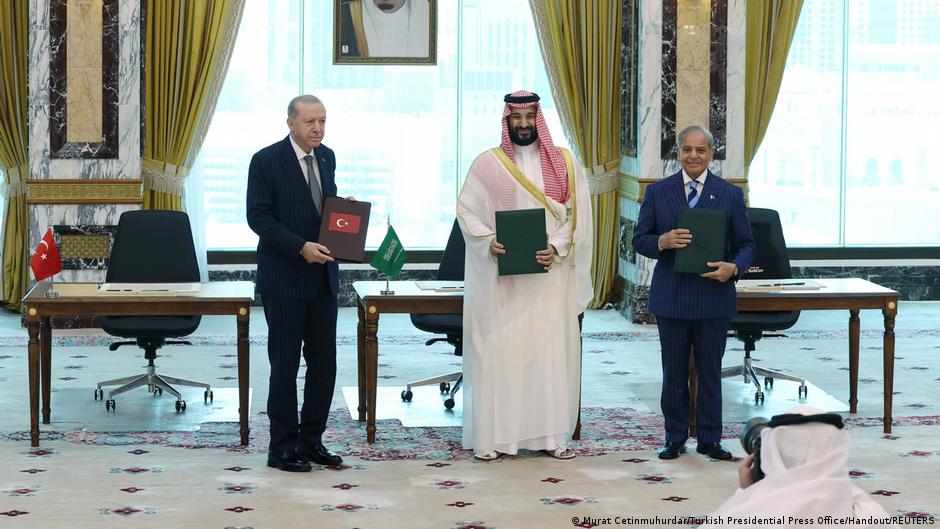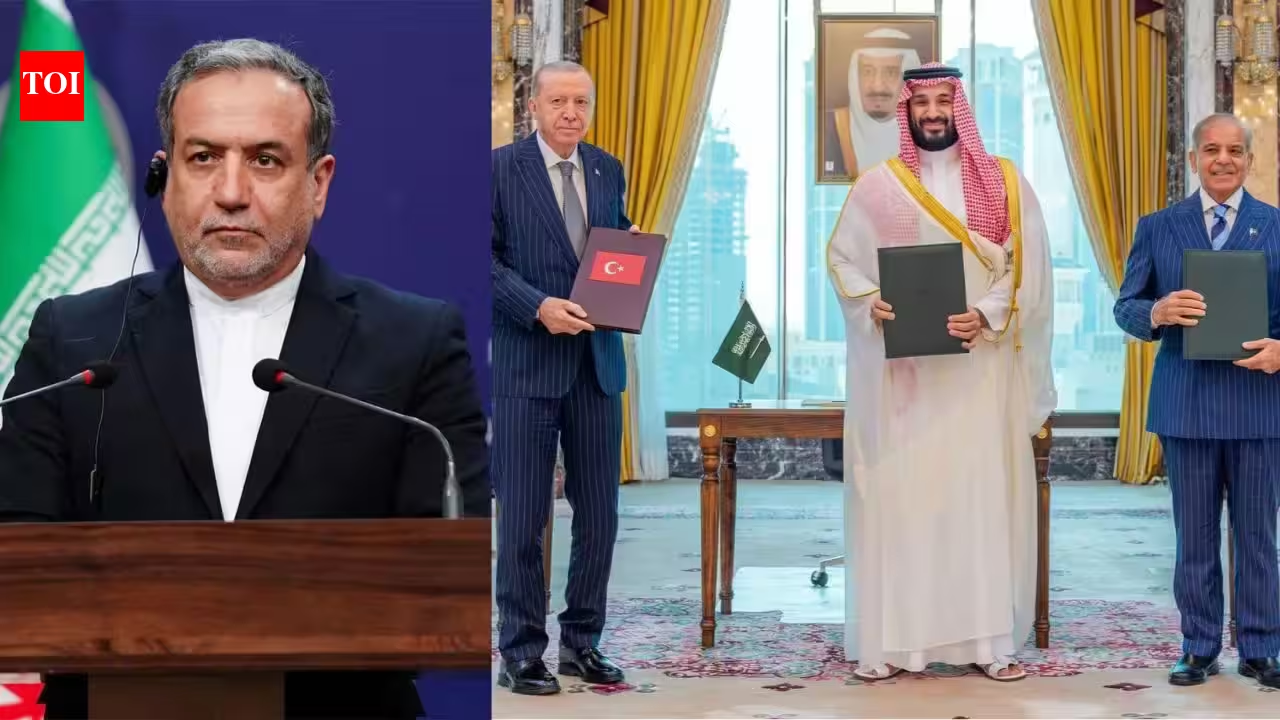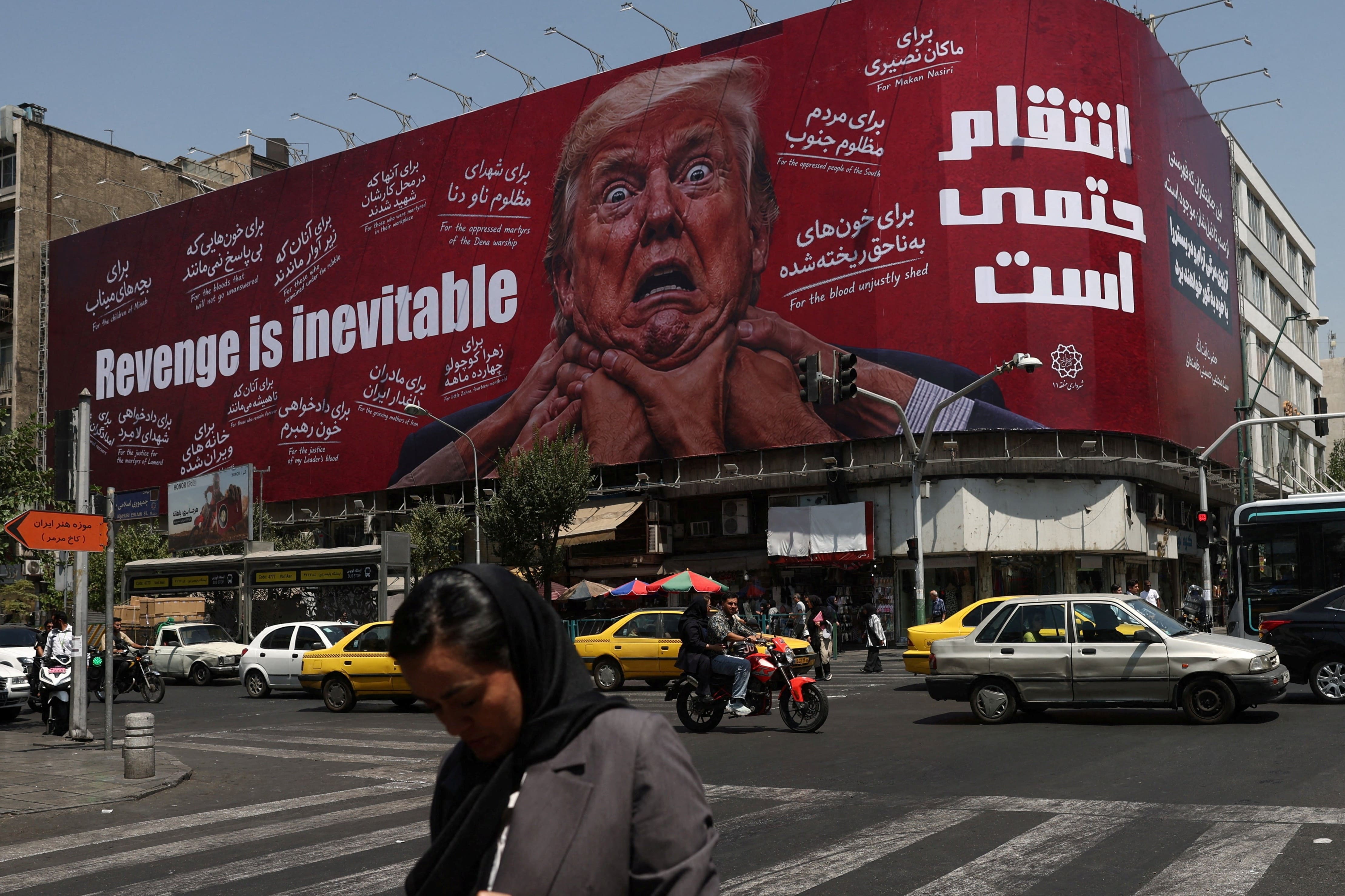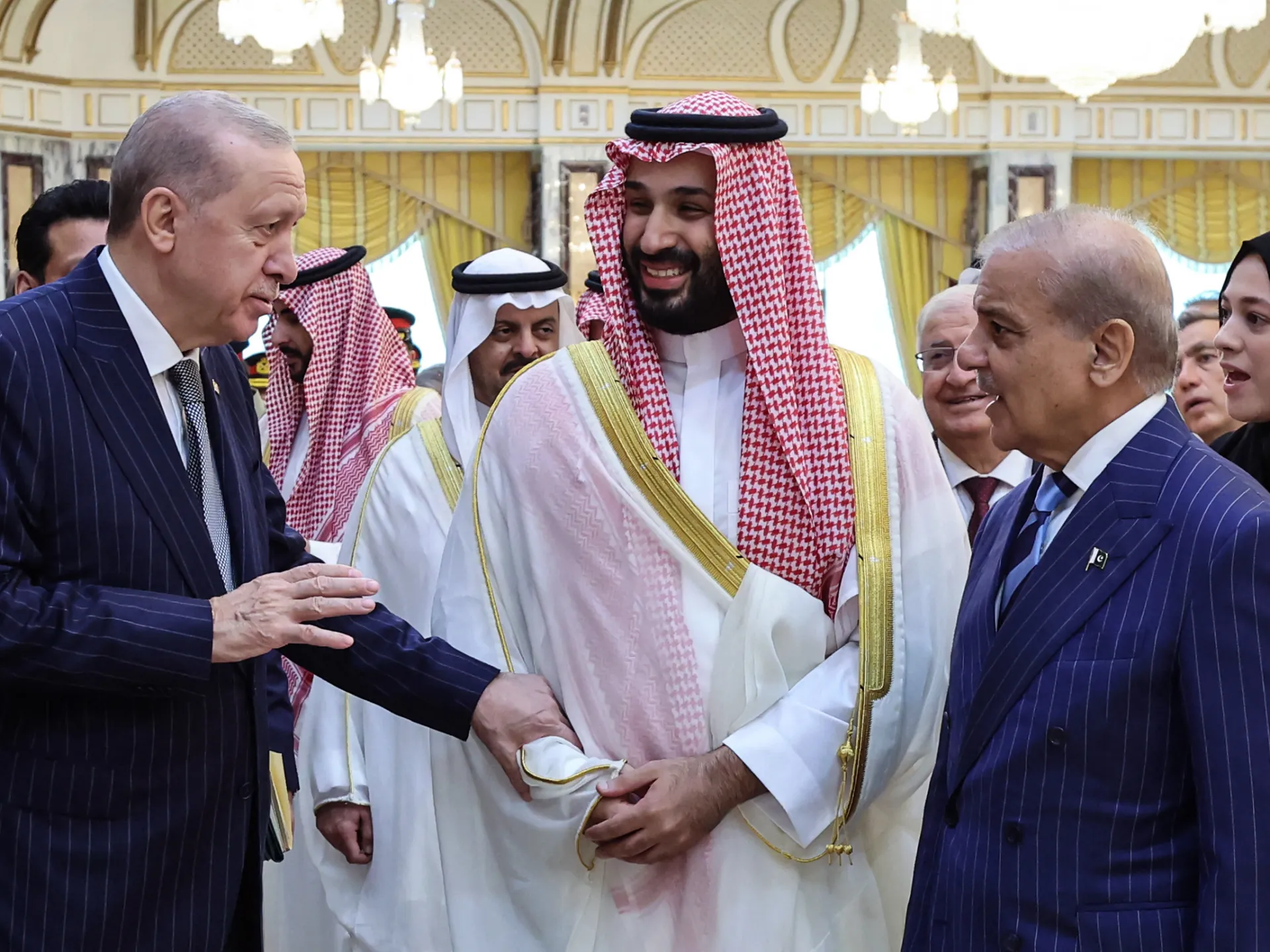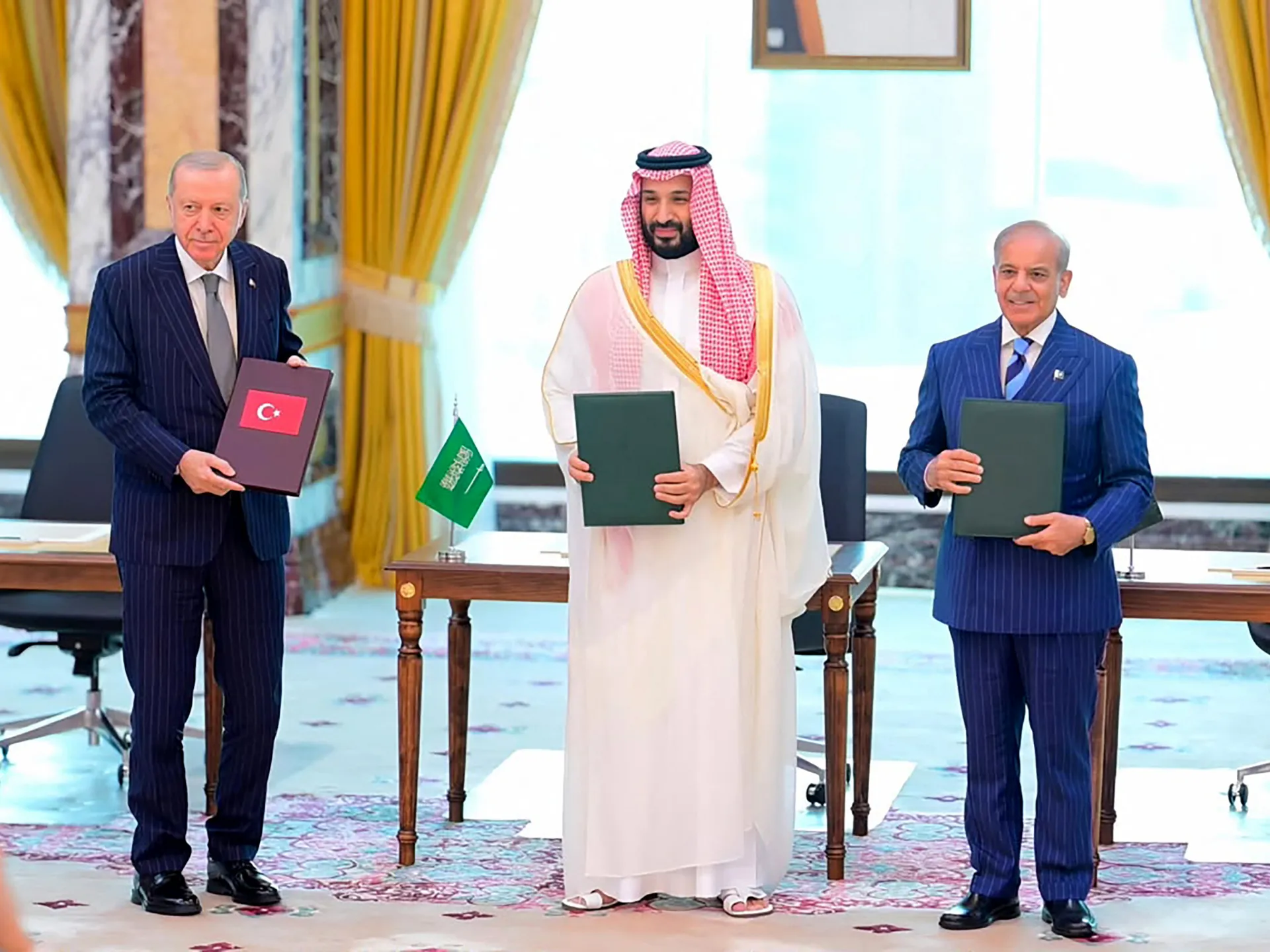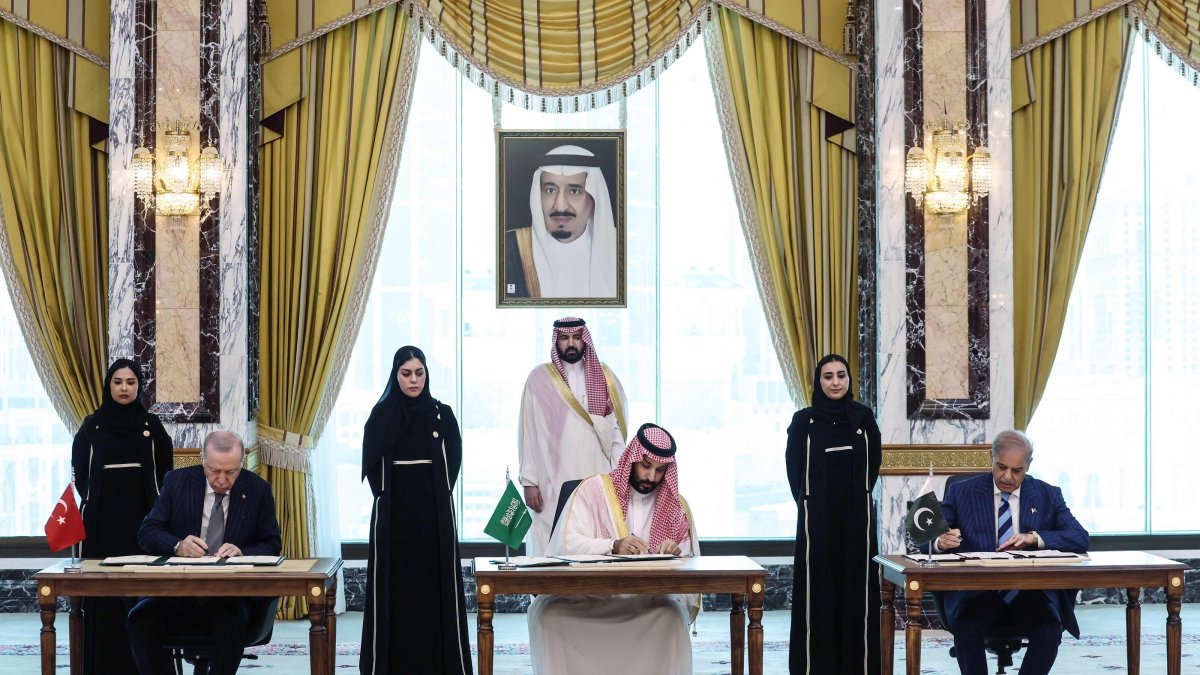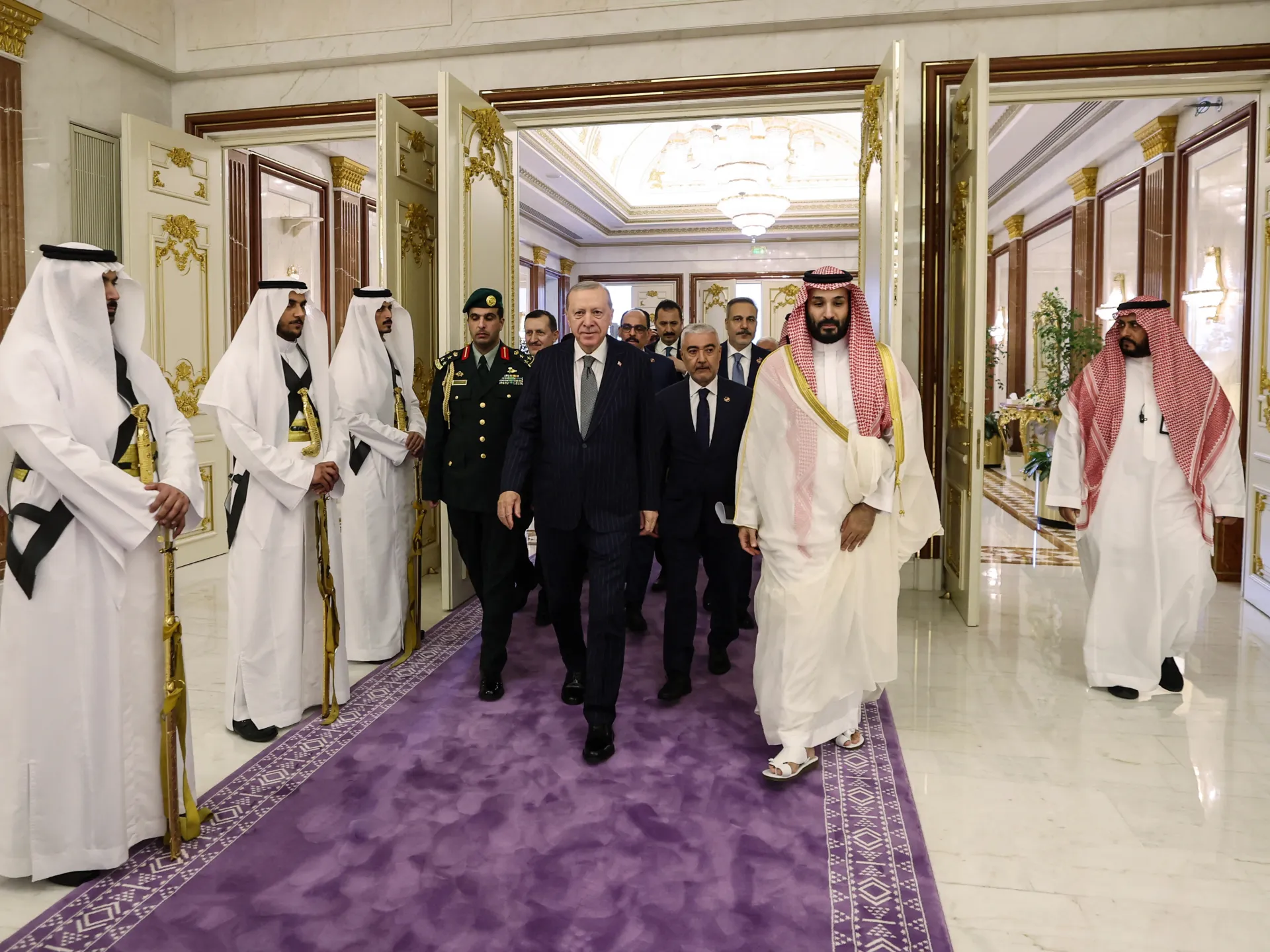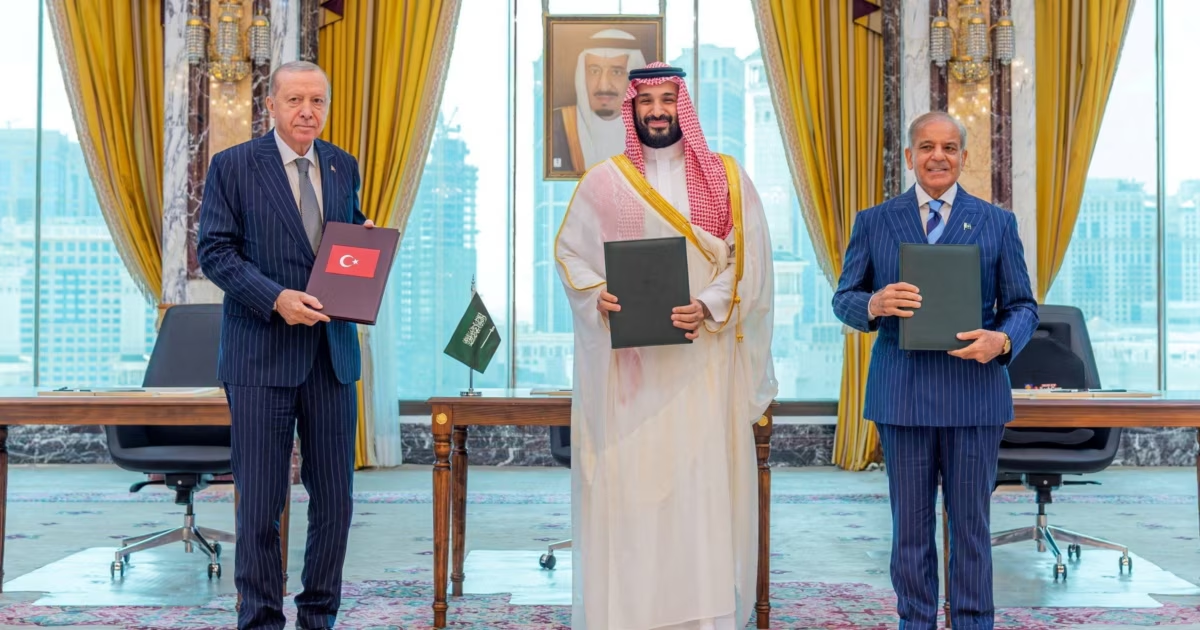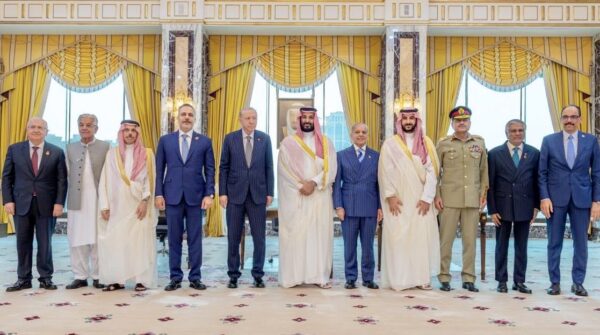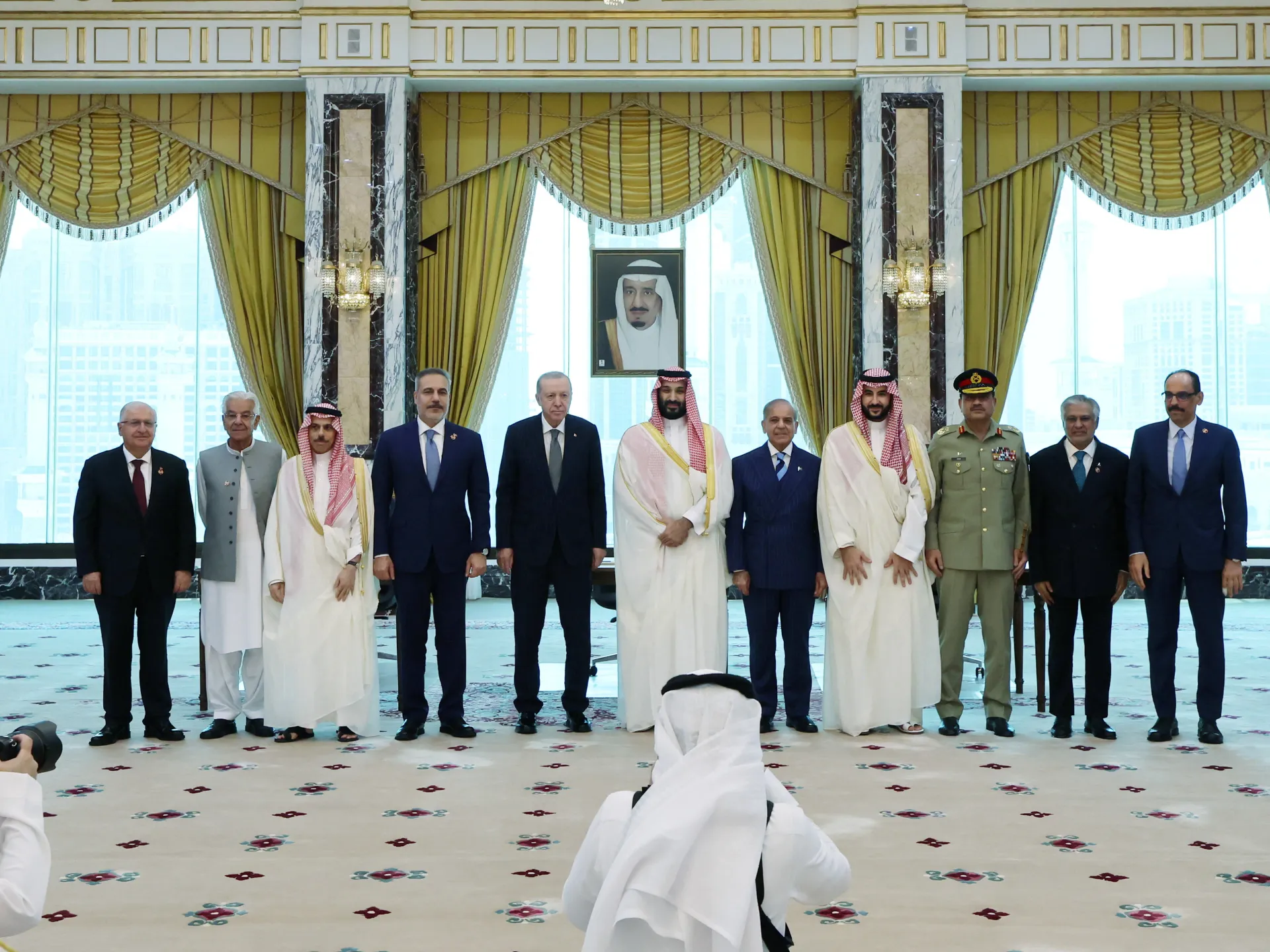
For years, Iran has told its neighbors that the Middle East should rely less on the United States for its security. On Aug. 7, Saudi Arabia, Turkey, and Pakistan took a step toward doing just that. Iran, however, was not included.
The three countries signed the Mecca Joint Defense Agreement, under which an armed attack on one would be treated as an attack on all three. Turkish Foreign Minister Hakan Fidan later compared the provision to NATO’s Article 5. The pact will have a ministerial committee and a permanent secretariat in Saudi Arabia.
For years, Iran has told its neighbors that the Middle East should rely less on the United States for its security. On Aug. 7, Saudi Arabia, Turkey, and Pakistan took a step toward doing just that. Iran, however, was not included.
The three countries signed the Mecca Joint Defense Agreement, under which an armed attack on one would be treated as an attack on all three. Turkish Foreign Minister Hakan Fidan later compared the provision to NATO’s Article 5. The pact will have a ministerial committee and a permanent secretariat in Saudi Arabia.
Just how effective this new agreement proves and how ready its members are to come to one another’s defense remain to be seen. Iran may be tempted to put this to the test in the hopes of revealing the pact’s weakness. But there is a real risk that doing so would only deepen its regional isolation.