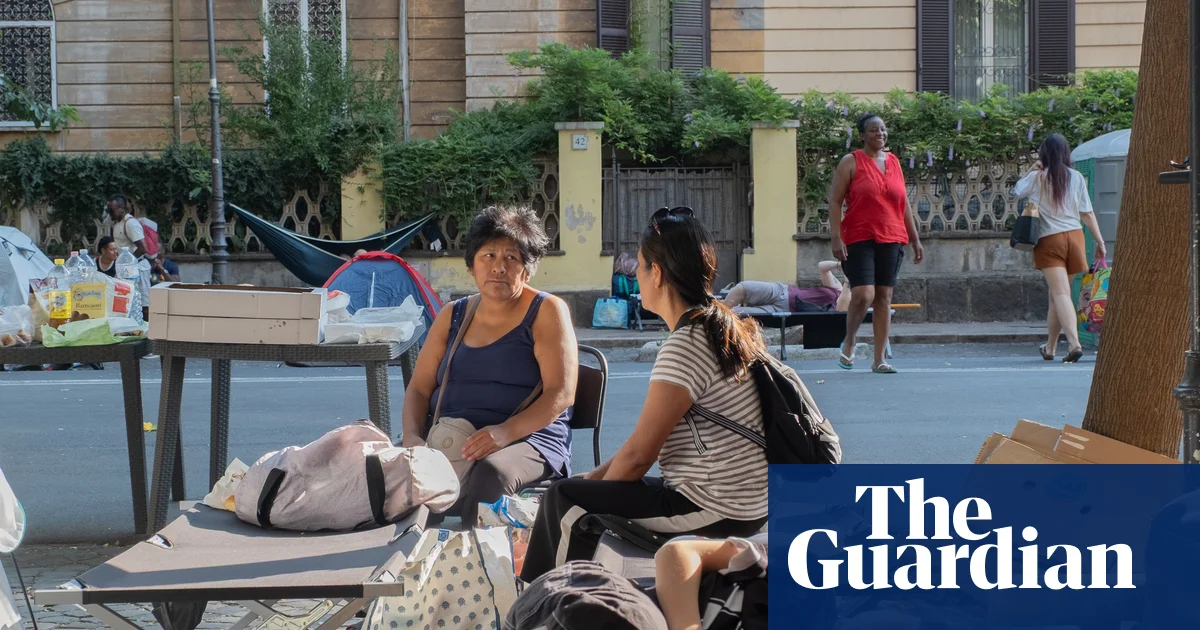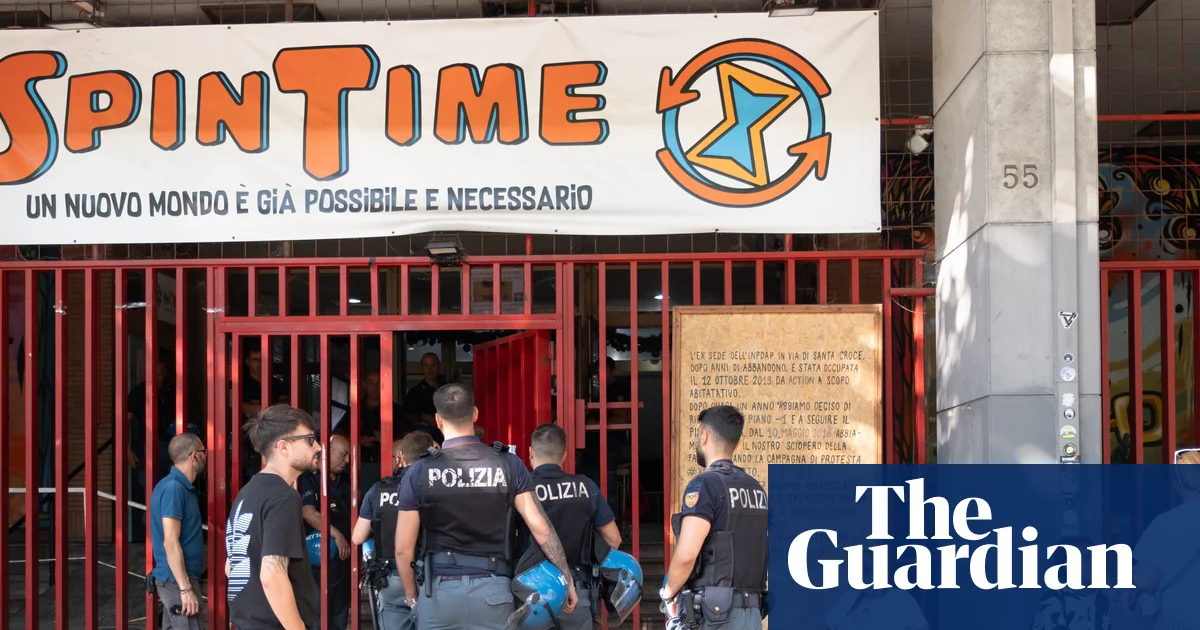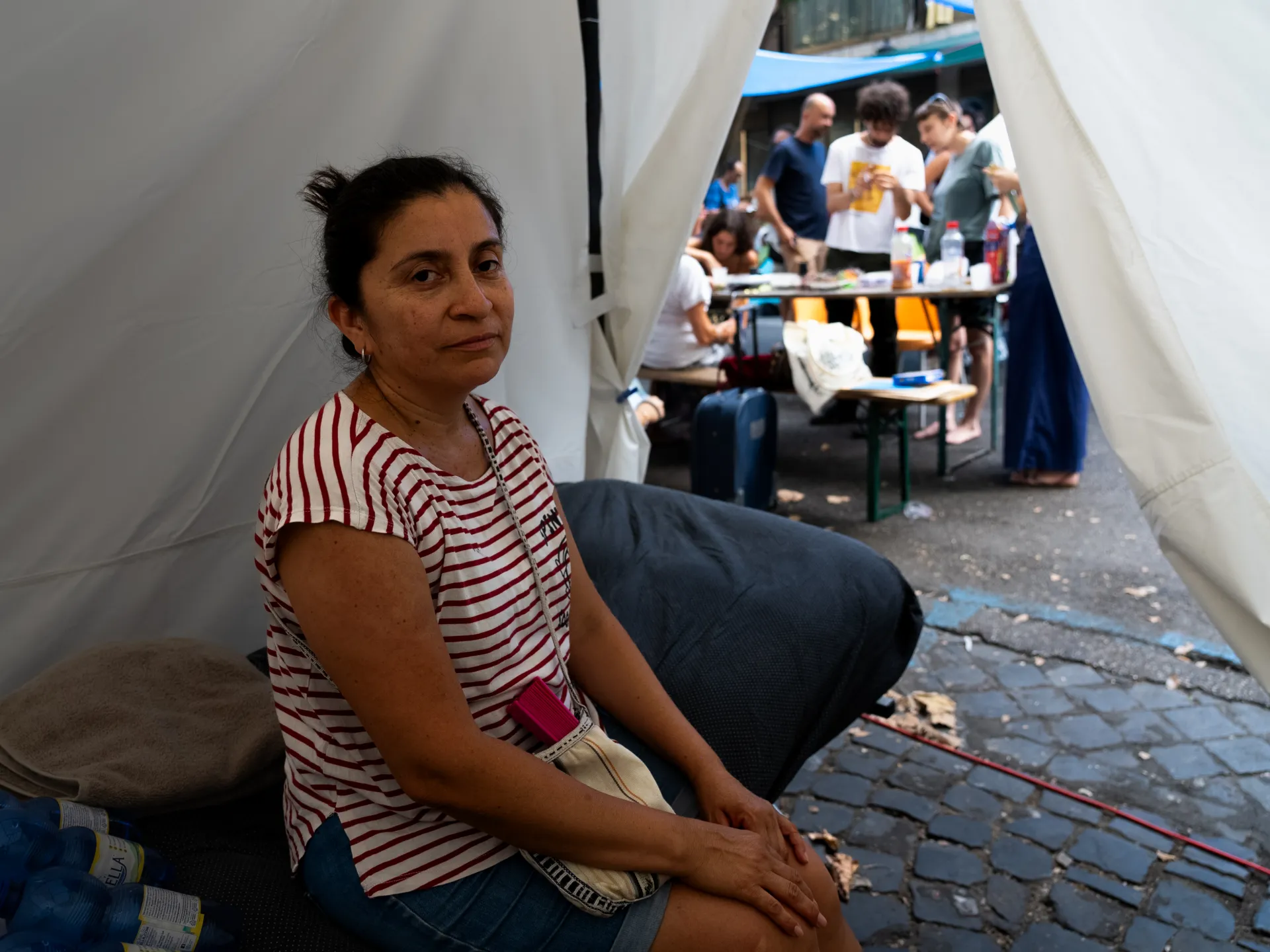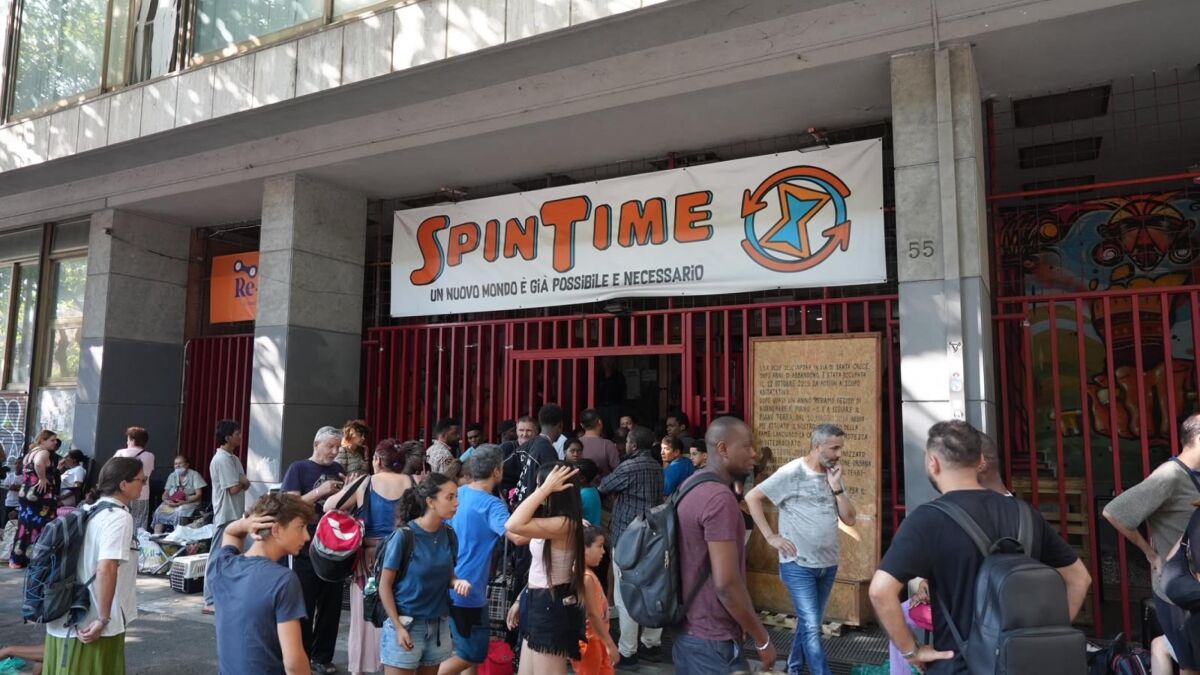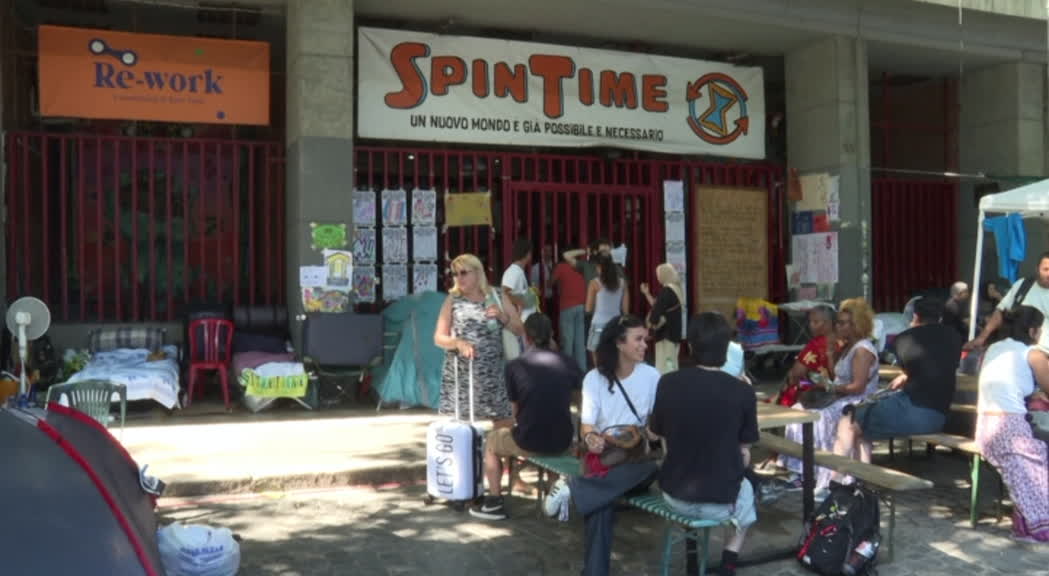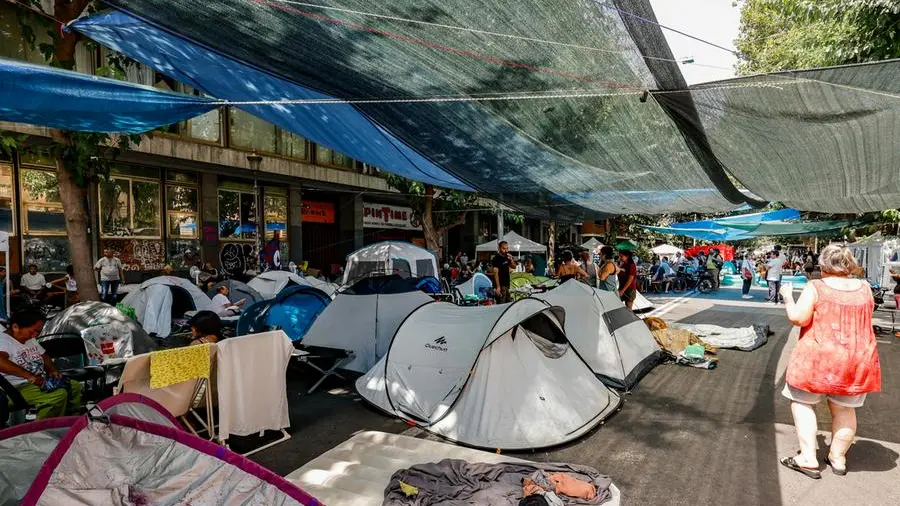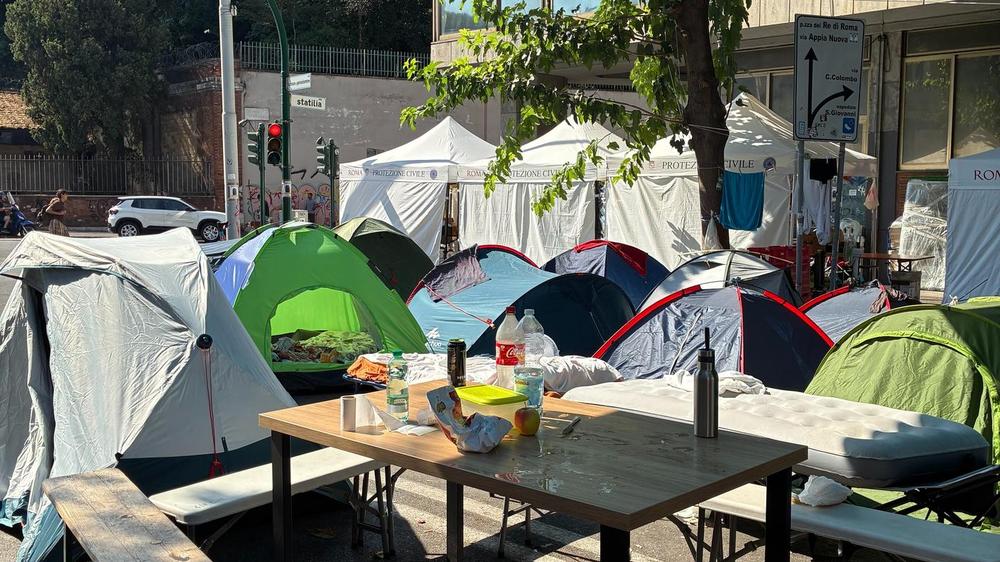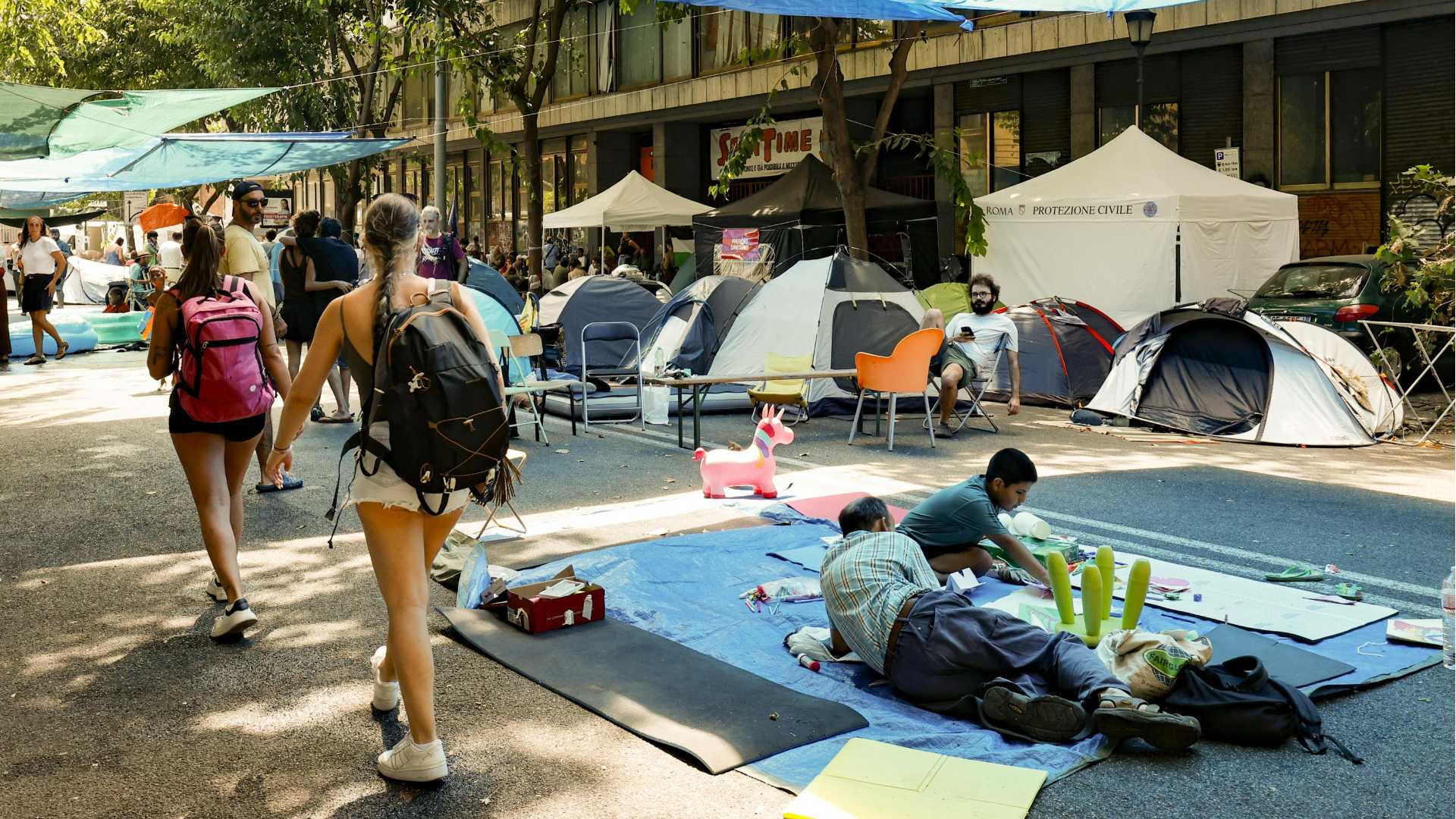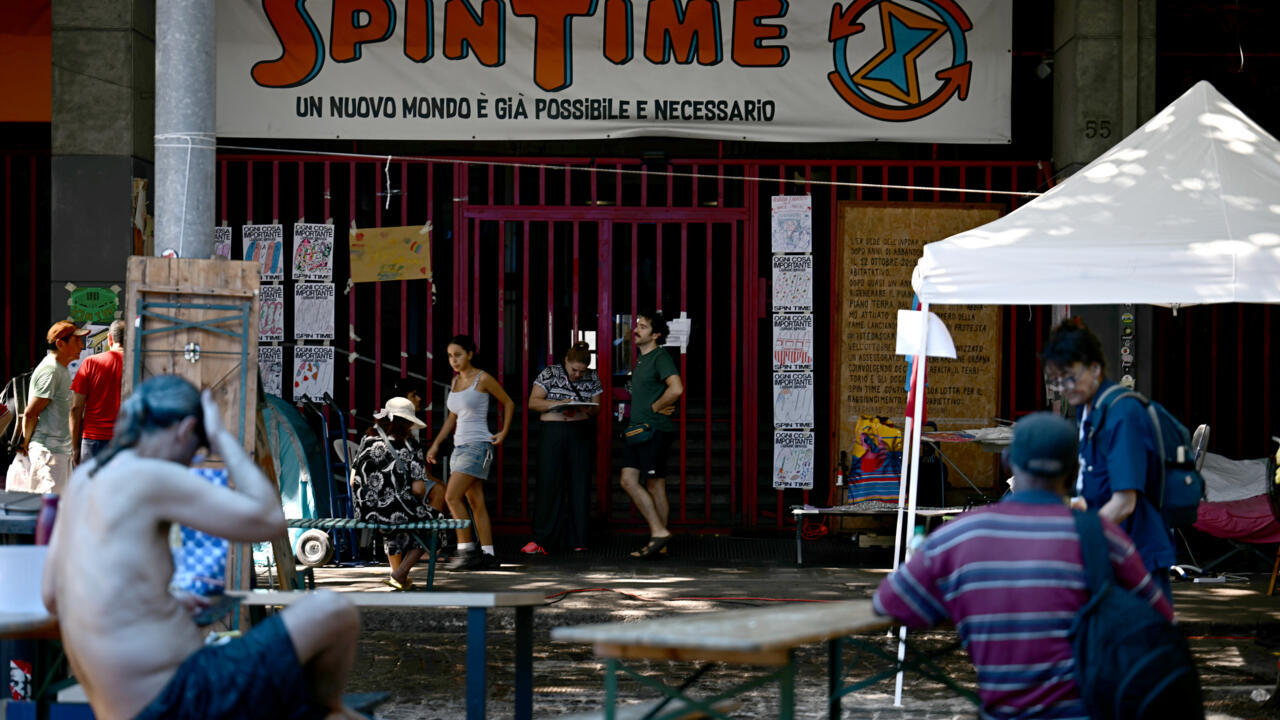
The centre, occupied since 2013 despite an eviction order and threats from far-right Prime Minister Giorgia Meloni's government, was evacuated last month following a minor fire and seized by police.Now, families, elderly residents and pets are sleeping in tents and on camp beds outside the chained gates of Spin Time Labs, as temperatures in Rome near 40C."As the days go by, we are seeing increasing psychological distress; people are at their limit, they are exhausted," Anastasia Destro, a 33-year-old doctor helping the evictees, told AFP."We've seen all the health issues associated with living on the street and spending the entire day exposed to the sun," said Destro, part of a team offering medical and psychological aid.The fate of the building and its 400 or so residents, including children and disabled people, has generated a groundswell of support.
Spin Time over a decade grew to include a food bank, canteen, carpenter studio, newspaper and theatre © Filippo MONTEFORTE / AFP
Volunteers from across Rome have donated clothing, food and toys, while the left-wing city council has supplied tents, air-conditioning units, portable toilets and a drinking water truck.Film directors from Italy's Paolo Sorrentino to Britain's Ken Loach have called for the residents to be allowed back, while Matteo Garrone put on a showing of his film "Pinocchio" for the children.Spin Time, which over a decade grew to include a food bank, canteen, carpenter studio, newspaper and theatre, became a high-profile symbol of solidarity towards the marginalised. It even won the support of the pope: in 2019, Pope Francis's charity czar -- a cardinal -- climbed down a manhole to restore electricity after it was cut off.The community has provided sanctuary for those who found themselves "in an emergency situation", said Marco Perilli, a 60-year-old Italian construction worker who has lived there since 2013.'Life changed'"The building was home to 27 different ethnic groups, cultures, and religions" who found a way to get along as "one big family", said Perilli, who moved in after separating from his partner.Perilli said it pained him to see residents "forced into unsanitary conditions, facing major health issues and serious illnesses".