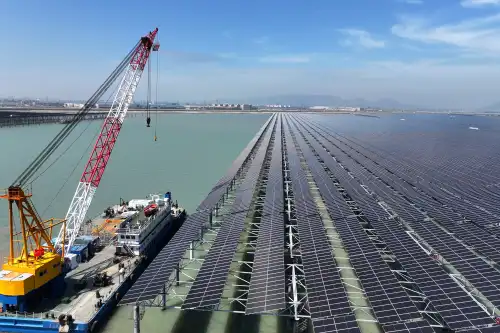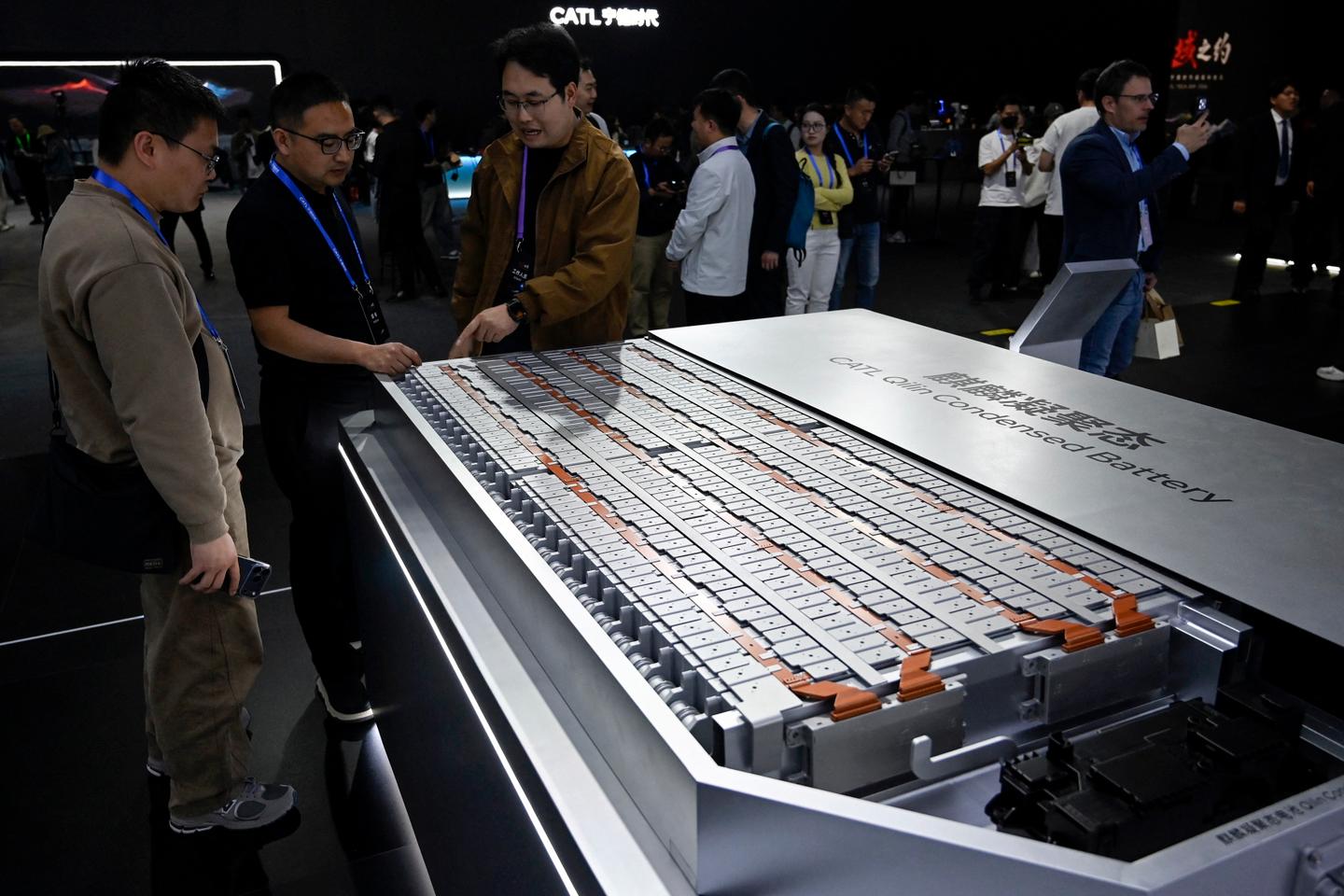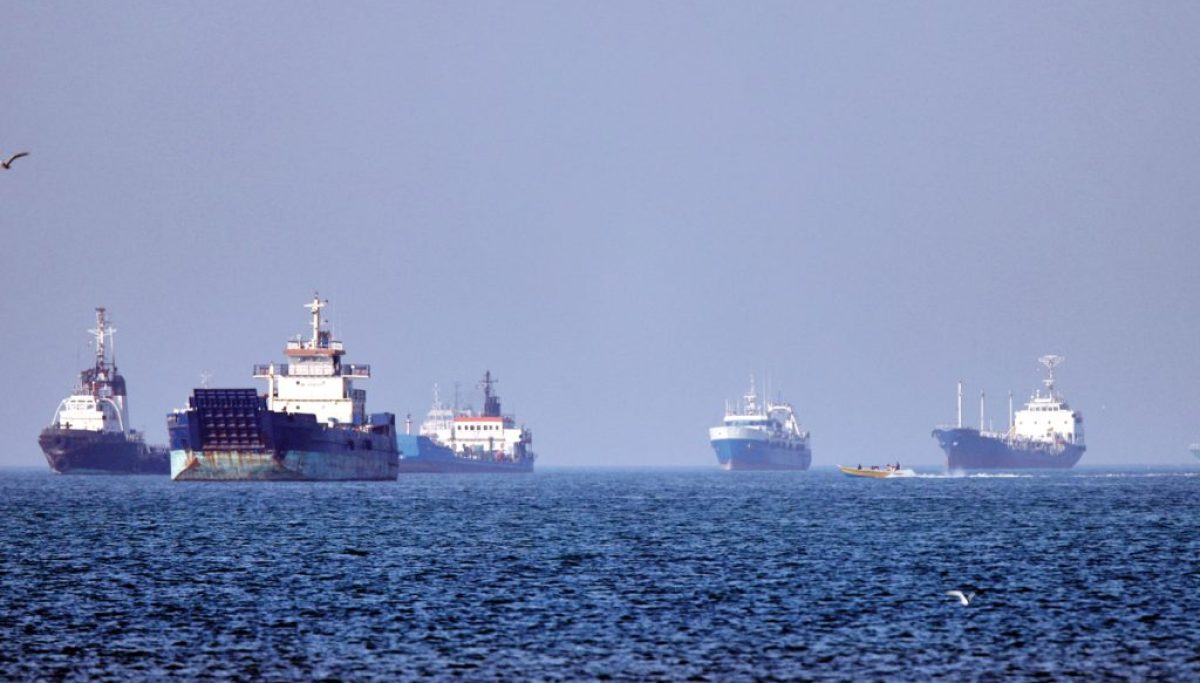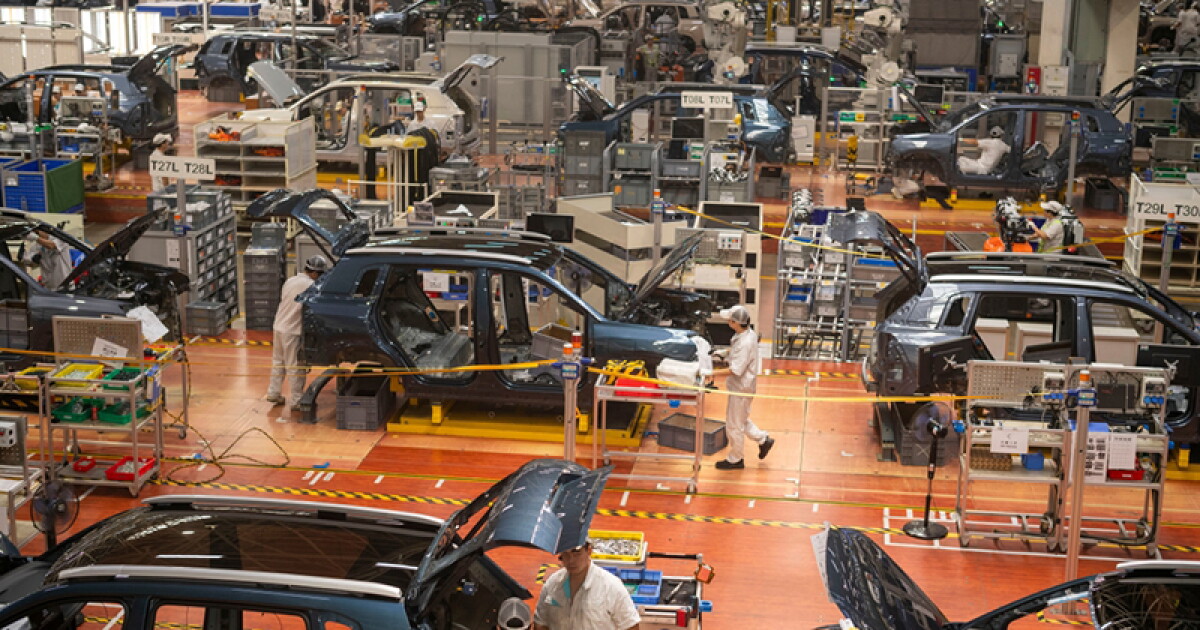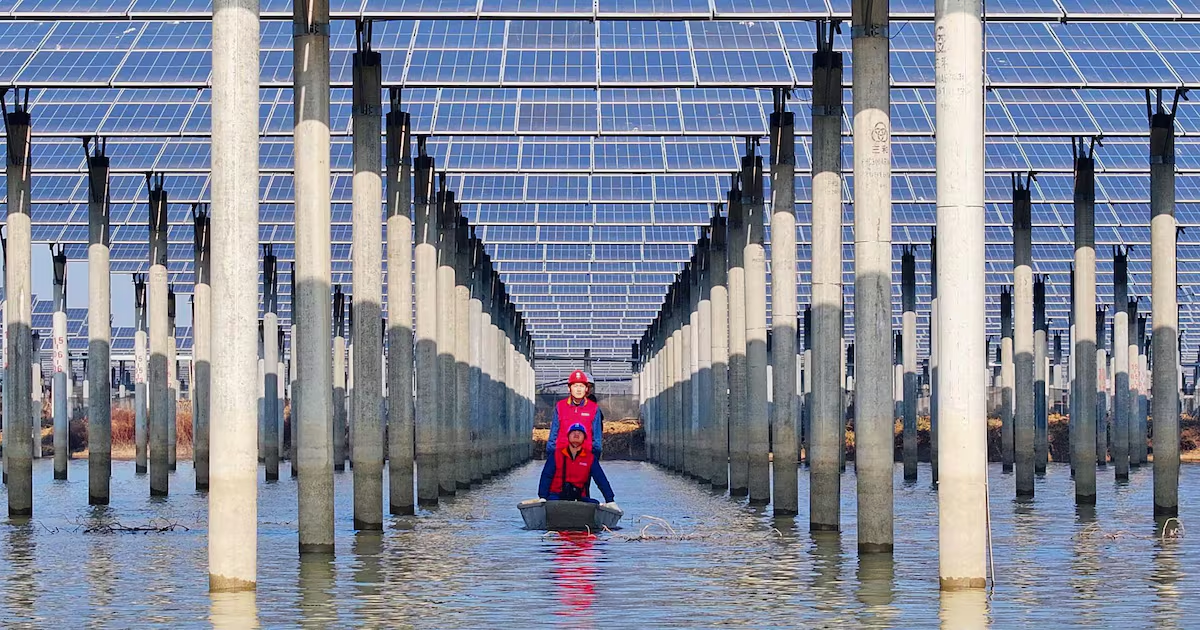
As disruption in Strait of Hormuz rattles energy markets, Beijing’s long push towards electrification is cushioning the impact and reshaping global powerWorkers check solar panels installed on a lake in Tianchang, eastern China’s Anhui province, on January 12th, 2026. Photograph: CN-STR/AFP via Getty Images/China Out Tue Aug 11 2026 - 14:24 • 5 MIN READIf you stand near any busy junction during rush hour in Beijing and shut your eyes, it will sound like a much quieter street somewhere in Europe or the United States with the sound of the tyres turning on tarmac often the only alert that a car is approaching. Half of all cars sold in China last year were electric vehicles and electricity also powers almost all buses and trains, as well as a growing number of heavy goods vehicles.China leads the world in the electrification of its economy with about 30 per cent of energy consumed in the country supplied by electricity. This compares to about 20 per cent in the United States and the European Union, where the electrification rate has remained flat for about 15 years while it has almost doubled in China since 2005.This offers an edge in the contest for supremacy in AI, which requires enormous amounts of electricity to power the data centres the technology depends on. It has also given Beijing a major advantage over its Asian neighbours in dealing with the fallout from the Iran war and the choking off of oil supplies through the Strait of Hormuz.China was by far the biggest importer of crude oil from the region before the war, accounting for nearly 38 per cent of the oil shipped through the Strait of Hormuz in the first three months of 2025, somewhere between a third and a half of its total oil imports. But as noted in a recent report from the Asia Group, a Washington consultancy run by veteran China hawk Kurt Campbell, Beijing has fared better than its neighbours.“In Asia, emerging markets were hit first and hardest. India has thus far proven resilient but remains vulnerable if further disruptions lead to a broader slowdown that would reverberate through the global economy. Advanced economies such as Japan and South Korea entered the crisis with substantial reserves and stronger buffers but would confront difficult fiscal and political trade-offs if disruptions persist,” it said. “China stands out as the sole exception. While not immune from the pain points, China is set to emerge from the crisis best positioned – with limited exposure and more to gain from the broader economic and geopolitical trends the conflict sparked than any other country.”A Zeekr electric car factory in Ningbo, China. Photograph: Gilles Sabrié/New York Times China enjoys the cushion of huge strategic oil reserves, the size of which are a state secret but estimated to be enough to satisfy domestic demand for more than six months. But it has another important advantage in the electrification of its transport system which has shifted most of its trains, half of its new cars and many of its heavy-duty trucks away from petrol, diesel and gas.China is leading the world not only in generating renewable energy but also in its storage and distribution of electricity and in the export of the technologies associated with it. This has led to the description of China as the world’s first electrostate, in contrast to petrostates that derive their wealth, power and influence from oil.“China’s clean energy transition is accelerating and deepening, despite geopolitical tensions and mounting domestic economic pressures. It is not just about expanding renewable generation, but about switching energy demand from fossil fuels to electricity, and reimagining how energy is produced, supplied and used across the entire economy,” the energy think tank Ember noted in a report on China’s electricity transition.[ Taiwan prepares for war, but China has other optionsOpens in new window ] “Years of record spending are now delivering a rapid buildout of renewables alongside world‑leading expansion of storage and grid infrastructure, as well as market reforms that unlock flexibility. On the demand side, electrification is spreading across end‑use sectors – and together, these shifts are already weighing on fossil‑fuel demand.”Workers maintain a high-speed train at Nantong High-Speed Train Depot in Jiangsu province in eastern China, on June 29th, 2026. Photograph: CN-STR/AFP via Getty Images/China Out The electrification of transport started with China’s high-speed rail network which is twice as large as the rest of the world combined, easing demand for air travel that relies on fossil fuels. Electric trucks now account for 20 per cent of heavy truck sales, displacing diesel, and a similar process is under way for shipping on inland waterways.Electric vehicles, like solar and wind energy, are environmentally friendly and their expansion helps China to reach its climate change decarbonisation targets. But the primary focus of Beijing’s policy is on energy security and reducing the use of oil and gas, most of which it has to import.This policy approach has seen China build more coal-fired power stations and it remains the world’s biggest coal producer and consumer. Coal’s share of China’s energy mix has been declining and the latest five-year energy plan published in June envisages it being reduced to a supporting role with renewable energy taking the lead.The need for cheap, reliable and abundant electricity has grown more acute since the advent of AI, with data centres worldwide consuming as much electricity in 2024 as the whole of France and now using much more. As Beijing and Washington compete for primacy in AI, China’s access to cheap, abundant electricity offers a counterweight to the US edge in the most advanced semiconductor technology.Most of China’s electricity is consumed in the south and east of the country, where the industrial centres and most of the biggest cities are situated but most renewable energy is generated in the more sparsely populated north and west. New battery technologies for storage and distribution are making China’s electricity grid, which is the largest in the world, more efficient by harnessing more of the renewable energy that is generated.China accounted for about a third of the world’s investment in energy transition last year, with clean technology sectors almost doubling in value between 2022 and 2025. It not only generates huge amounts of solar, wind and hydro power but it has built a dense industrial system around it.Solar panels and wind turbines are pictured on a barren mountain at Shenjing Village in Zhangjiakou, Hebei province, China. Photograph: VCG via Getty Images China’s capacity to produce solar panels, wind turbines, batteries and related technology cheaply and at scale has made electrification a viable option for developing countries in the Global South. Beijing has deep economic and diplomatic relationships with many such countries in Asia, Africa and Latin America and it can offer them the prospect of energy sovereignty at a fraction of the cost of western systems.This has created a kind of multiplier effect for China’s electricity transition as it benefits the country environmentally, socially and economically but also enhances its standing as a developmental model.“China’s investment in the electro-technology revolution is creating choices for every other country, unlocking a clean, more affordable and secure energy future and opening the door to a new diplomacy, moving beyond the geopolitics of oil and gas. Most profoundly, China is showing that a highly electrified energy system centred on wind and solar generation is entirely compatible with a modern, growing, highly industrialised economy,” the Ember think tank report said. “The scale, pace and depth of China’s transition raises questions about the future of fossil fuel production globally. China has been the main ‘swing state’ for global fossil fuel demand for a decade. Its energy-related fossil fuel consumption is likely to begin falling soon due to the twin trends of clean generation and end-use electrification, and made-in-China electro-technologies are displacing fossil energy across the world. The implications for governments basing their economic growth plans on exporting coal, oil and gas are plain to see.”[ Crisis-stricken Volkswagen is emblematic of Germany’s ailing economyOpens in new window ]IN THIS SECTION
China’s clean-energy gamble is paying off
As disruption in Strait of Hormuz rattles energy markets, Beijing’s long push towards electrification is cushioning the impact and reshaping global power
1,340 words~6 min read