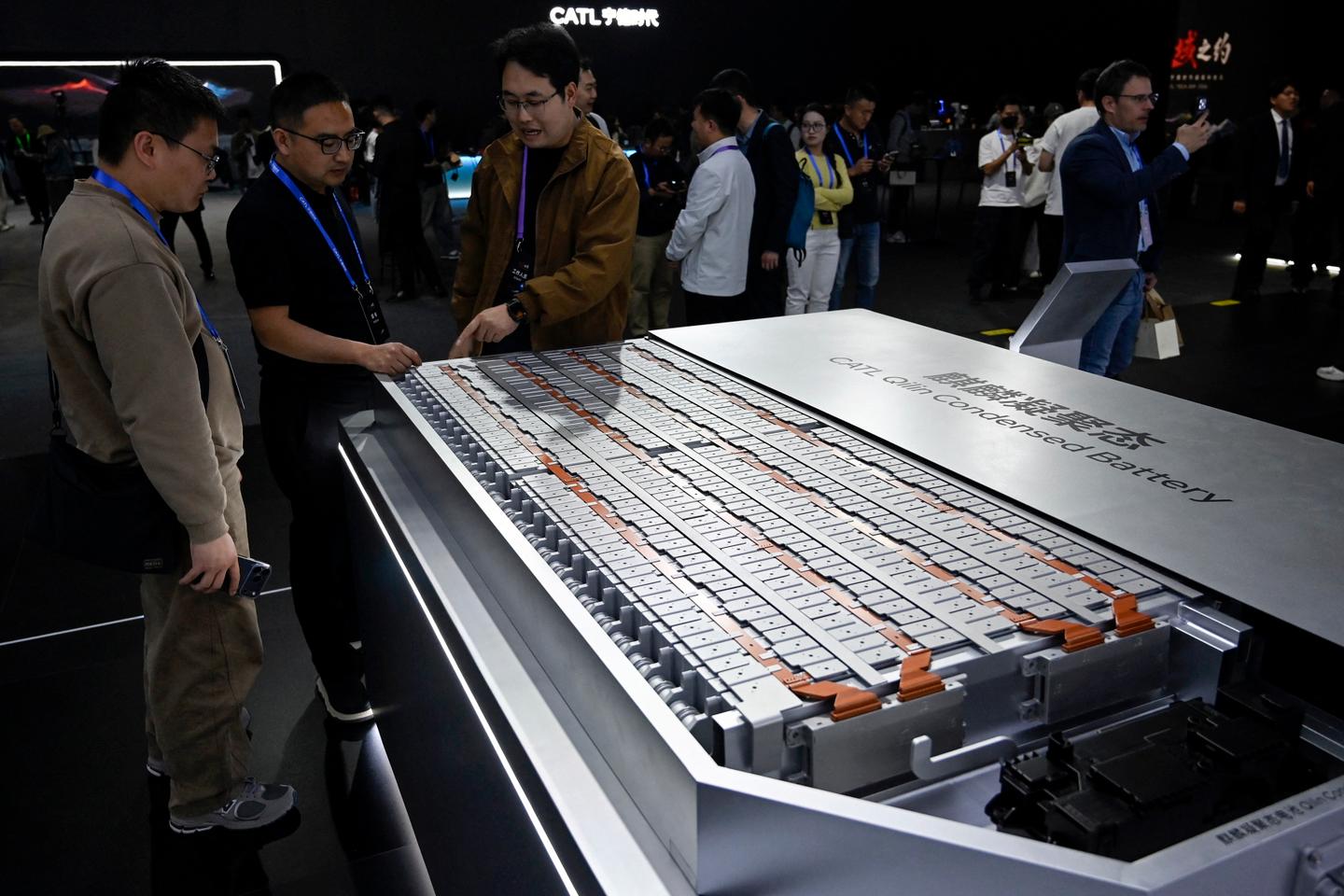
A Qilin condensation battery produced by CATL, at the CATL Tech Day event in Beijing, April 21, 2026. WANG ZHAO/AFP
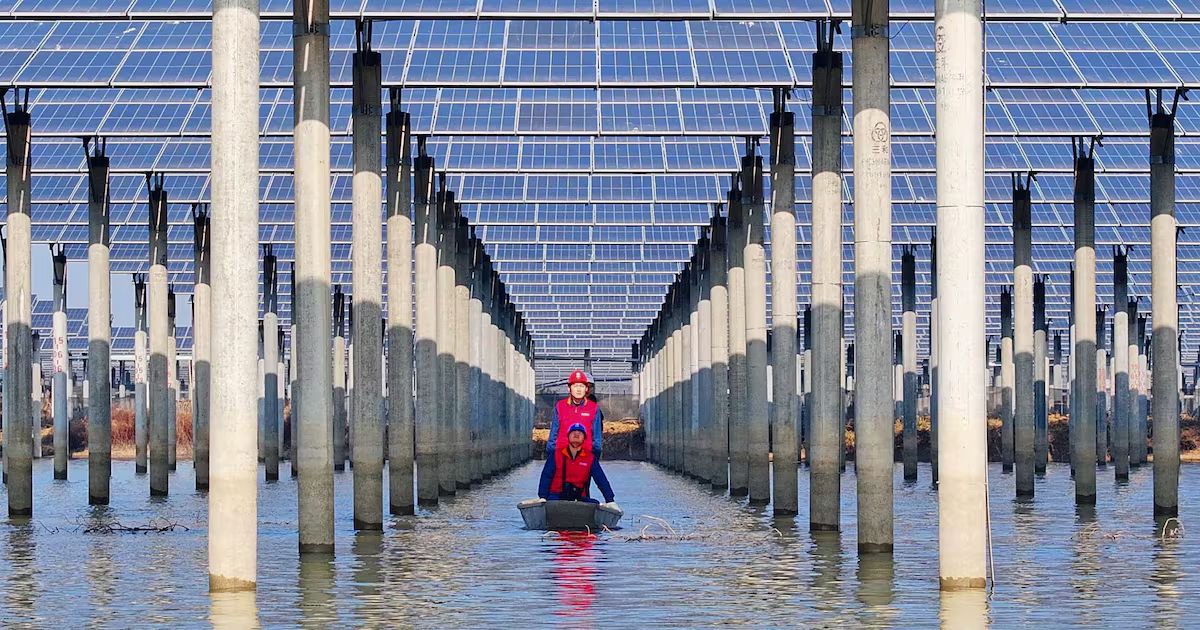
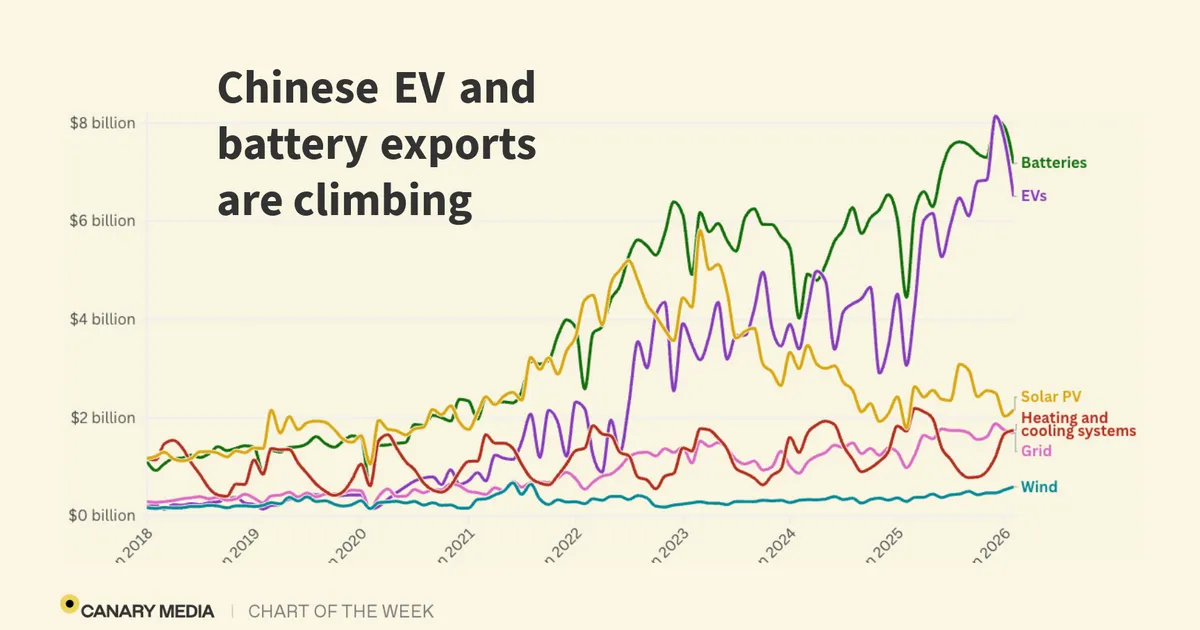
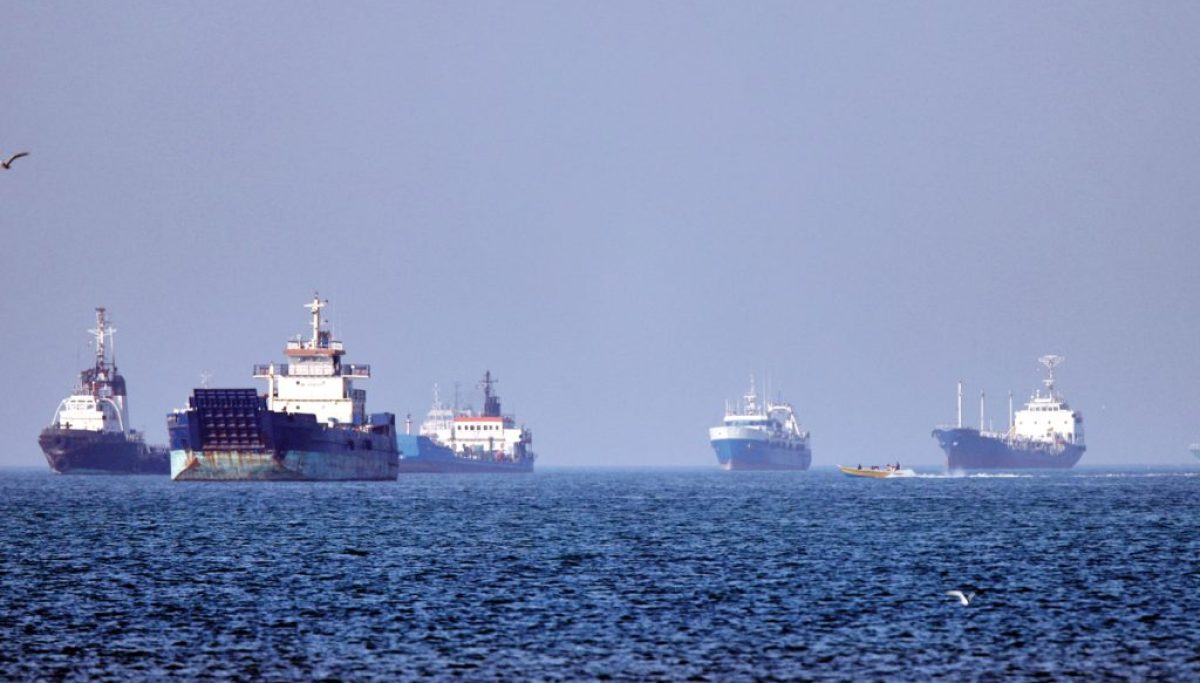
Long before the war around the Strait of Hormuz disrupted global hydrocarbon supplies, China had already taken a significant lead in the production of solar panels, batteries and electric vehicles. Its new energy industries are emerging as winners in this race, as consumers worldwide now face the sudden and worrying spike in oil and gas prices – and even question the availability of these resources in some Asian countries. While this trend will need to be confirmed over the longer term, early signs have shown an increase in demand for these Chinese energy transition products since the conflict began on February 28.
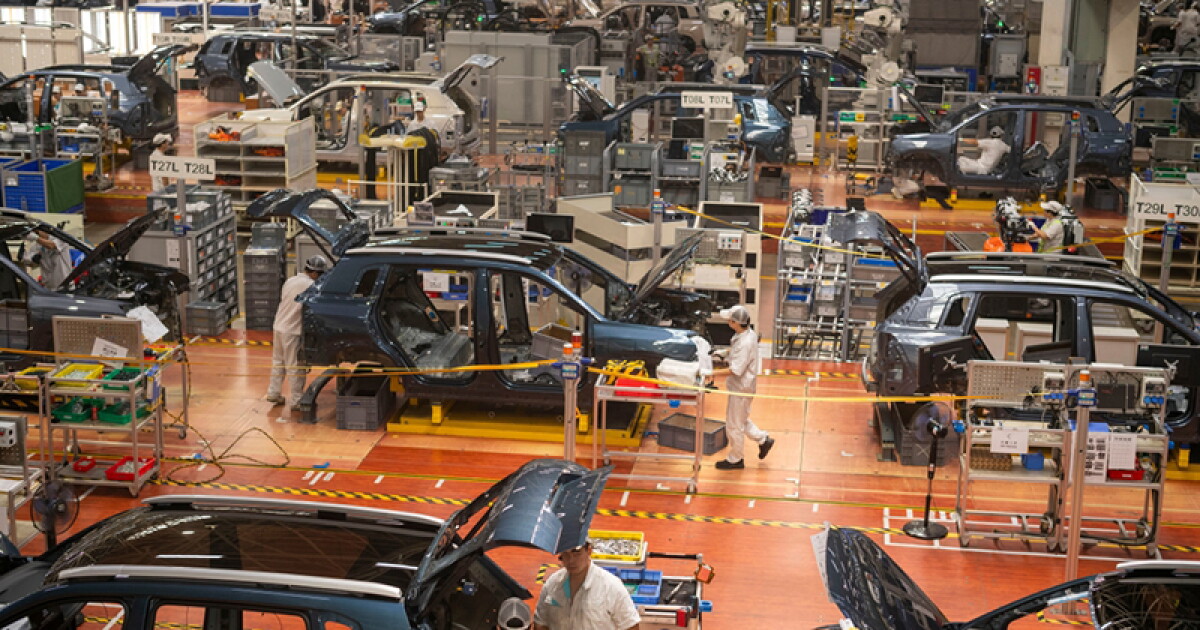
In March, China exported 371,000 electric or hybrid vehicles, a 130% increase year-on-year and a 31.6% rise compared to February. This strong export performance is crucial for manufacturers, who face fierce competition and overcapacity issues in the domestic market. Moreover, since the beginning of the year, a change in the tax regime – a 10% purchase tax exemption for electric and hybrid vehicles that had boosted the market – expired on January 1, leading to a decline in sales in China during the first months of 2026.