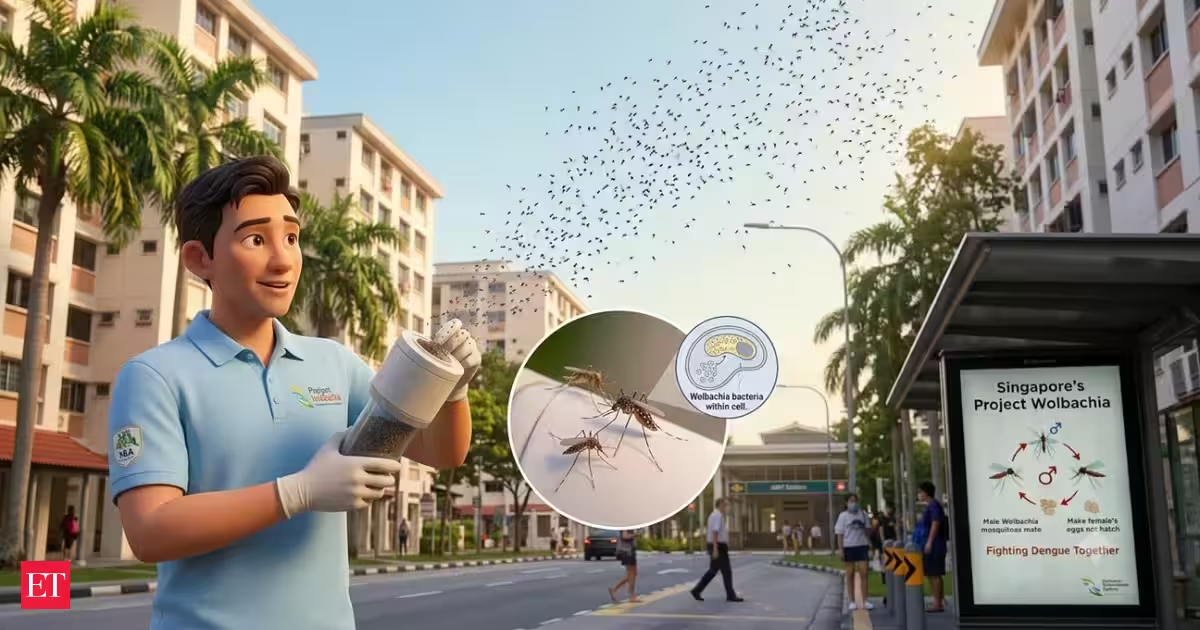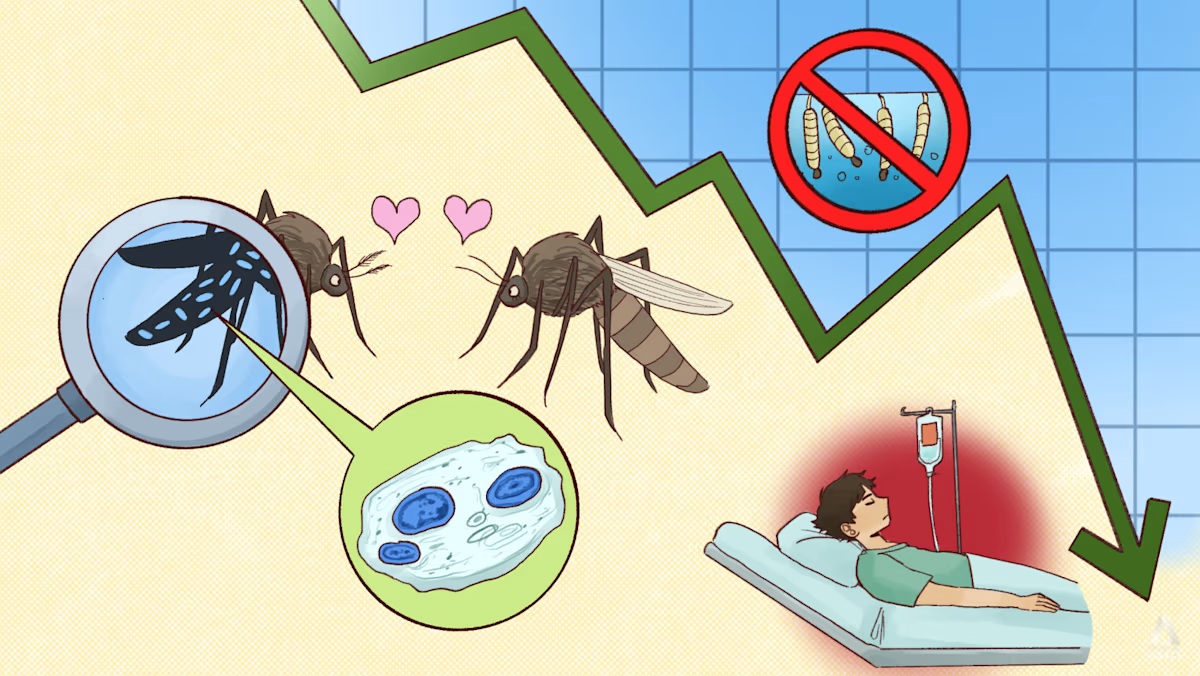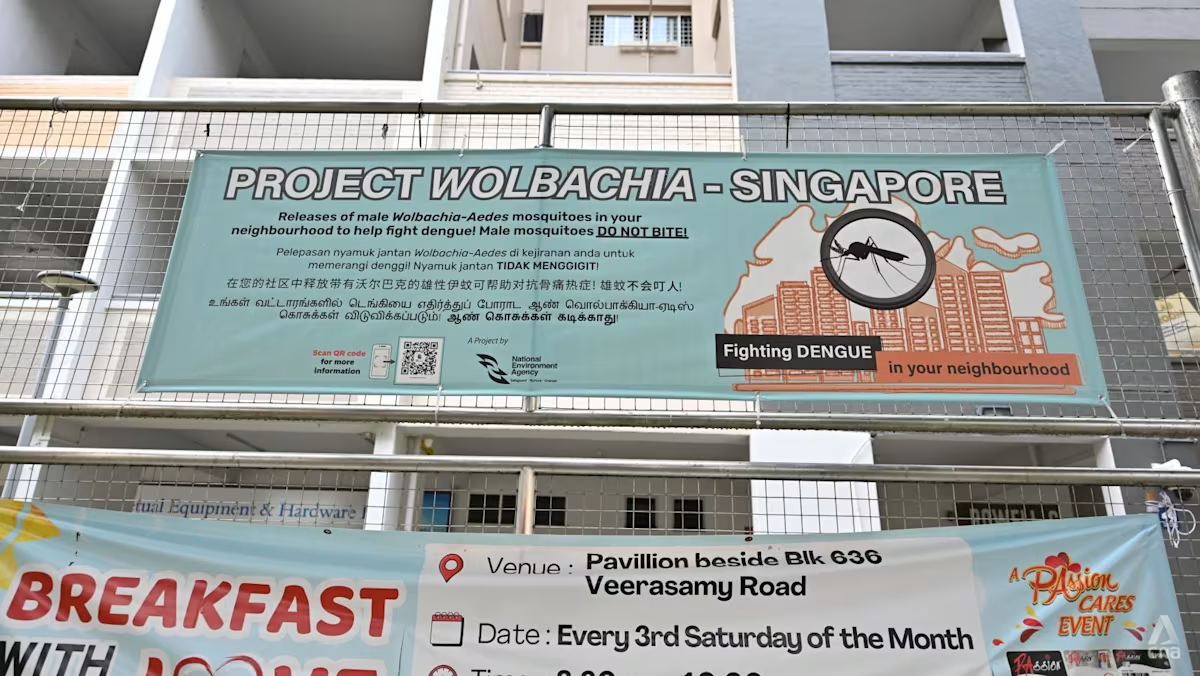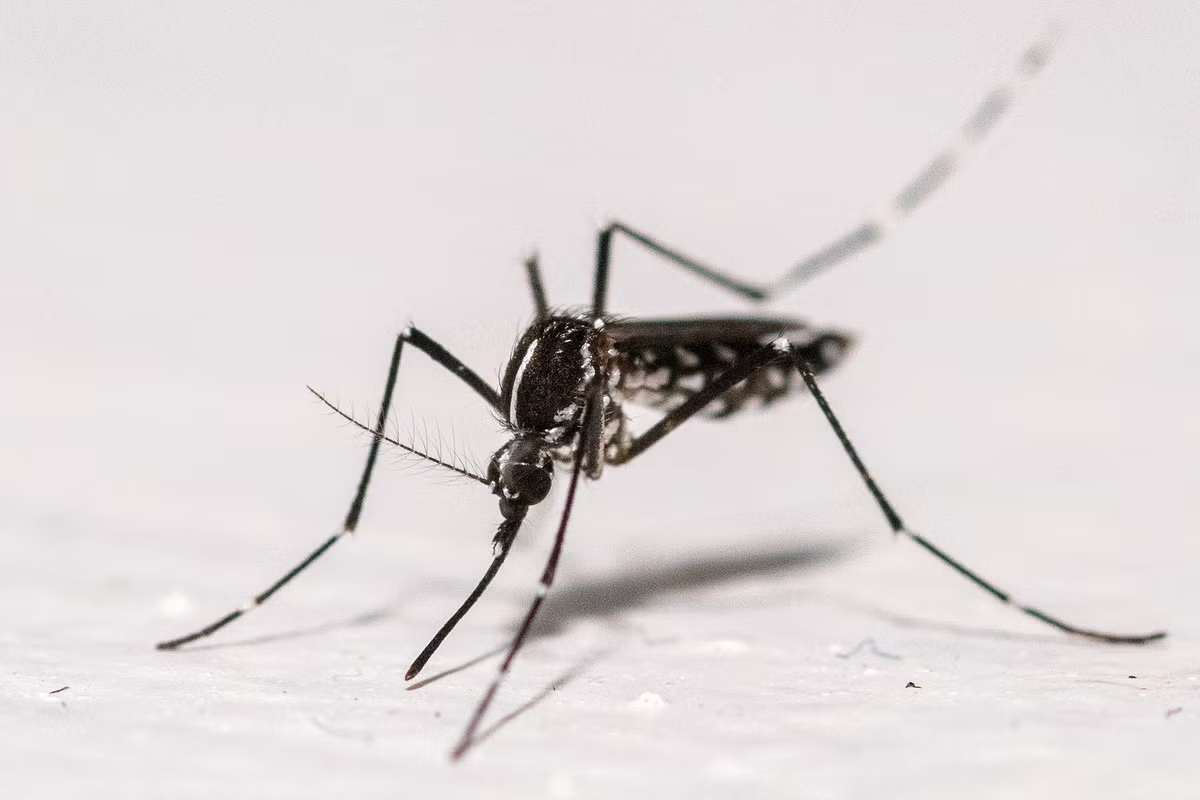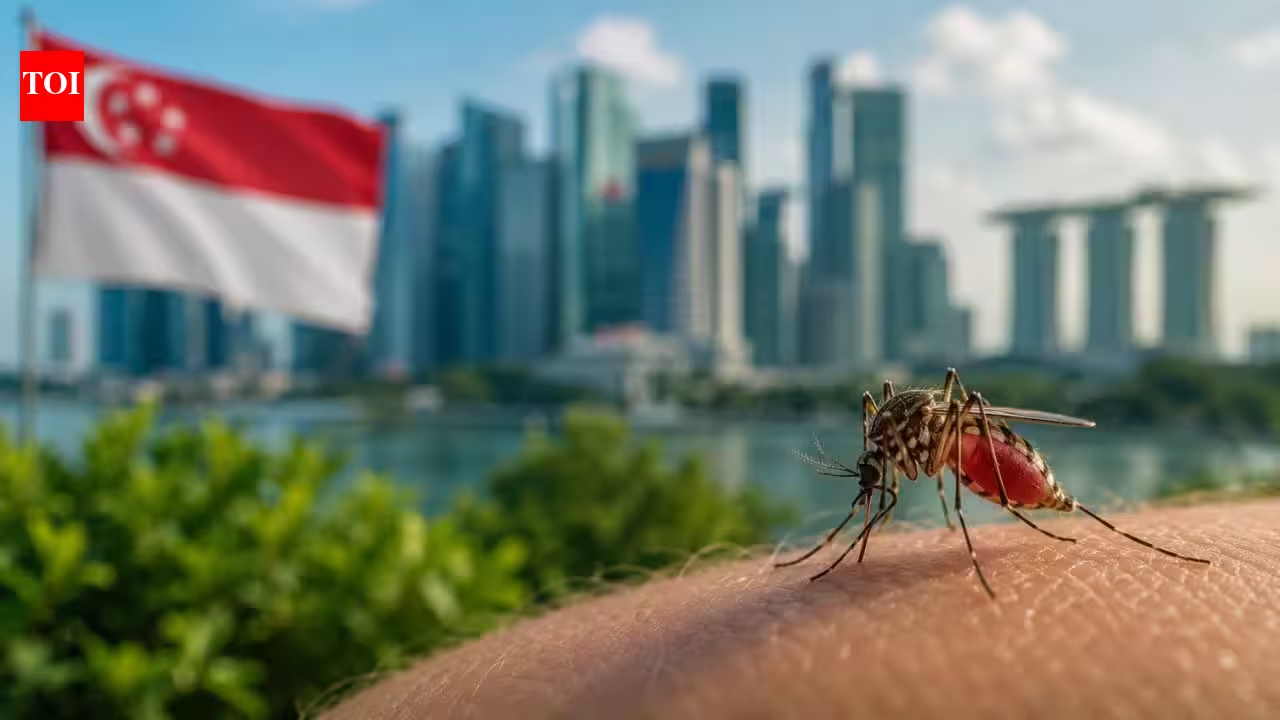
For decades, Singapore has had an unusually difficult relationship with a very small insect. Aedes aegypti mosquitoes thrive around people and can spread dengue in densely populated neighbourhoods, making control a constant public-health task. In 2016, Singapore tried something different. Instead of relying only on conventional mosquito-control measures, officials began releasing male Aedes aegypti mosquitoes carrying the naturally occurring bacterium Wolbachia. The males do not bite, and their purpose is not to increase the mosquito population.They are released to interfere with reproduction and help suppress the disease-carrying mosquitoes in selected areas. The programme would eventually expand, but there was another question to answer: would people accept it?How Wolbachia turned male mosquitoes into a dengue-control toolThe idea behind Project Wolbachia–Singapore was fairly simple, even if putting it into practice was not.Male Aedes aegypti mosquitoes carrying Wolbachia are released into an area where wild mosquitoes are already present. When these males mate with females that do not carry the same bacterial strain, the resulting eggs do not develop normally. The released males therefore act as part of a population-suppression strategy rather than as a new source of biting mosquitoes.Male mosquitoes do not bite humans while female Aedes aegypti are the ones that seek blood meals, which they need for egg production.That made the approach particularly interesting in a place where dengue control requires persistent effort. Singapore had already spent years working to reduce mosquito breeding sites and limit transmission. The Wolbachia method offered another tool, aimed at the mosquito population itself.The first releases began in 2016 at selected study locations.The project was not simply about releasing mosquitoesFor a programme involving insects that can transmit disease, public understanding matters almost as much as the technology.The word “mosquito” tends to carry an immediate association with bites, nuisance and infection. Asking residents to accept the deliberate release of millions of them could therefore raise obvious questions. What exactly was being released? Would the mosquitoes bite? Could they multiply? What would happen to the environment?Singapore's programme relied on communication alongside the field work. Residents in areas involved in the project needed to understand what the released insects were intended to do and why male mosquitoes were being used.According to the study published in PubMed Central, titled ‘A Household-Based Survey to Understand Factors Influencing Awareness, Attitudes and Knowledge towards Wolbachia-Aedes Technology’ reveals that as the programme expanded, officials also had to consider whether existing communication was enough. This became the subject of a household survey conducted in two Project Wolbachia study sites between July 2019 and February 2020. The survey involved 500 people.Awareness did not mean full understandingThe results offered a fairly clear picture of how the programme was being received several years after its introduction.About three quarters of those surveyed 74.8% said they were aware of Project Wolbachia–Singapore. Awareness, however, did not necessarily mean that people understood the technology in detail.That distinction stood out in the findings. Knowledge of the Wolbachia-Aedes approach was lower than general awareness of the project itself. In other words, many residents knew that Singapore was releasing mosquitoes carrying Wolbachia, but fewer necessarily understood how the method worked.That gap is important in a programme that depends on residents being comfortable with what is happening around their homes. Knowing the name of a project is one thing. Understanding why male mosquitoes are being released, what Wolbachia does and how the method is supposed to suppress Aedes aegypti is another. The survey pointed towards a need for more detailed public information rather than simply more publicity.Acceptance varied by age and educationAcceptance of the programme was associated with age and education. The survey found that younger respondents were more likely to express high acceptance of Project Wolbachia. Higher levels of education were also associated with greater acceptance.That did not mean that older or less-educated residents broadly rejected the project. The wider finding was that acceptance and trust were high across the population surveyed.The differences instead offered clues about where communication might be strengthened. Public-health programmes rarely reach everyone with exactly the same message in exactly the same way. What one group already understands may need to be explained more carefully to another.For Project Wolbachia, that mattered as the programme moved beyond its original study locations.The biggest gap was between awareness and knowledgeThere is a subtle difference between recognising a public-health programme and understanding its technology.Someone might know that Wolbachia mosquitoes are being released nearby without knowing that the mosquitoes being released are male, that males do not bite, or that the method is designed to interfere with reproduction.The researchers identified knowledge gaps that could leave room for misunderstanding and misinformation. Their findings therefore supported continued communication as the project expanded into larger areas.The issue was not simply persuading people to accept the programme. It was giving them enough accurate information to understand what was being done in their neighbourhoods.Why Wolbachia became part of Singapore’s dengue strategyThe technology works through a biological quirk of Wolbachia, a bacterium found naturally in many insect species.Scientists can introduce particular strains of the bacterium into Aedes aegypti. In Singapore's suppression approach, infected males are released to mate with females in the wild population. When the mating involves an incompatible combination, the eggs fail to hatch normally.Repeated releases can therefore reduce the number of viable offspring produced by the wild mosquito population.It is not a method that makes mosquitoes disappear overnight. It works through repeated releases and population dynamics, and it sits alongside other forms of mosquito control.That matters in Singapore, where dengue prevention involves several layers of intervention. The Wolbachia approach was developed as a complement to existing vector-control measures rather than as a replacement for them.The experiment expanded beyond its first study sitesWhat began with selected study areas in 2016 did not remain a small, isolated experiment.Singapore continued expanding Project Wolbachia–Singapore, bringing the method to larger areas as the programme developed. With that expansion came a different practical challenge. A trial involving a limited number of neighbourhoods is one thing; a public-health programme covering a much wider population requires broader public understanding. The 2019–2020 household survey was conducted against that backdrop.By then, the project had been around long enough for residents in some areas to have had years of exposure to it. The survey suggested that this longer exposure was linked with greater awareness.That gave public-health officials something more useful than a simple approval rating. It showed how familiarity, education and communication were connected with the way residents understood the programme.A mosquito programme also became a public communication exerciseThe survey's findings point to an aspect of mosquito control that can easily be overlooked.The science may happen in laboratories and field sites, but the programme operates in ordinary residential areas. People see mosquito traps, hear about releases and live in the places where the intervention is taking place. Their understanding of the work becomes part of how the programme functions. For that reason, communication cannot stop once a project has been introduced.The Singapore survey found high levels of trust and acceptance among the people questioned, while also identifying areas where understanding could be improved. That combination is significant: broad support does not necessarily mean every technical detail is understood. As Project Wolbachia expanded, the findings suggested that communication would need to keep pace with the programme itself.
Singapore began releasing millions of Wolbachia mosquitoes in 2016 to fight dengue. Years later, the experiment showed why not every mosquito is the enemy
For decades, Singapore has had an unusually difficult relationship with a very small insect. Aedes aegypti mosquitoes thrive around people and can spread dengue in densely populated neighbourhoods, making control a constant public-health task.
1,207 words~5 min read