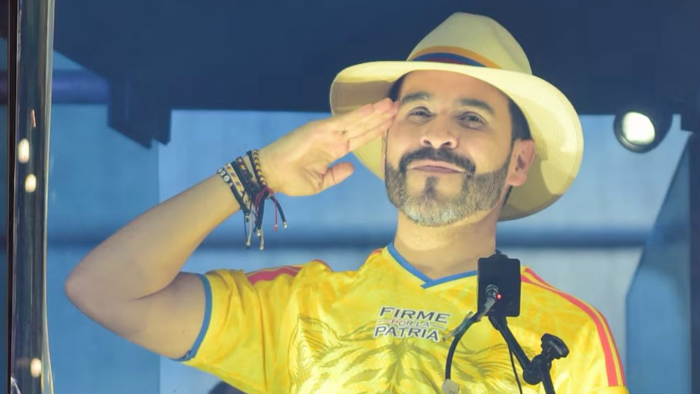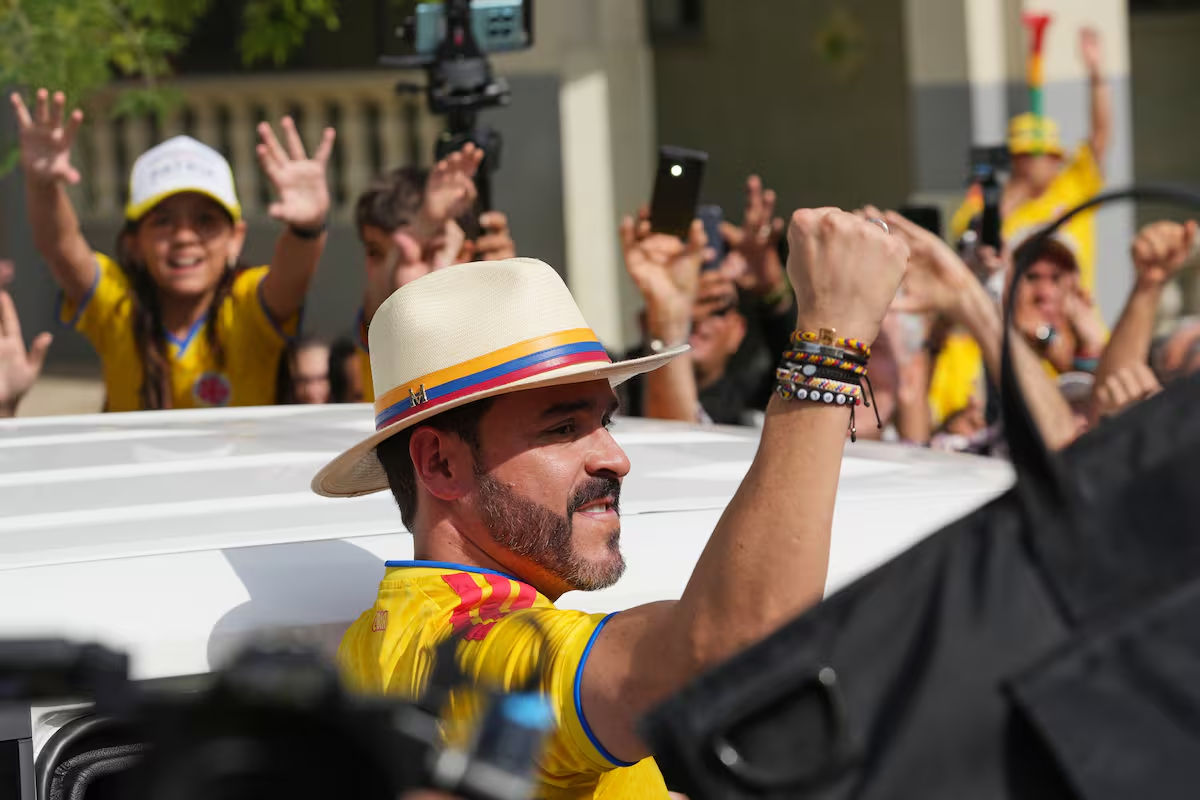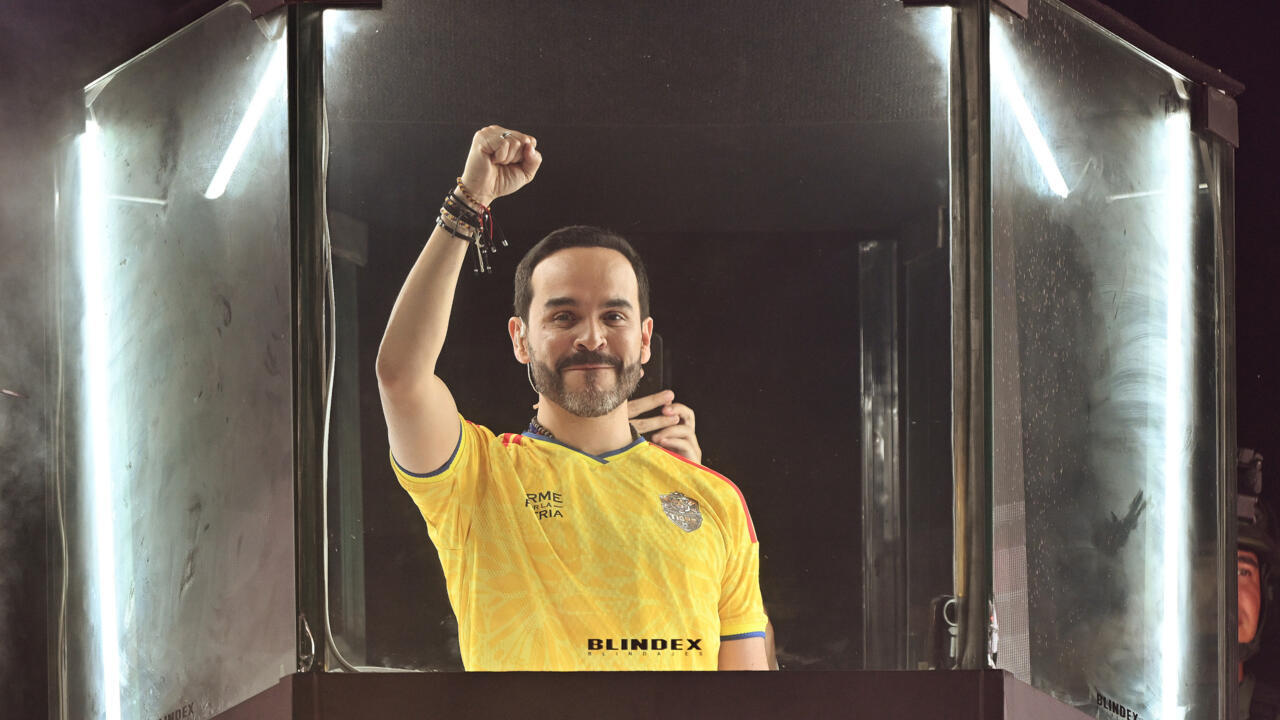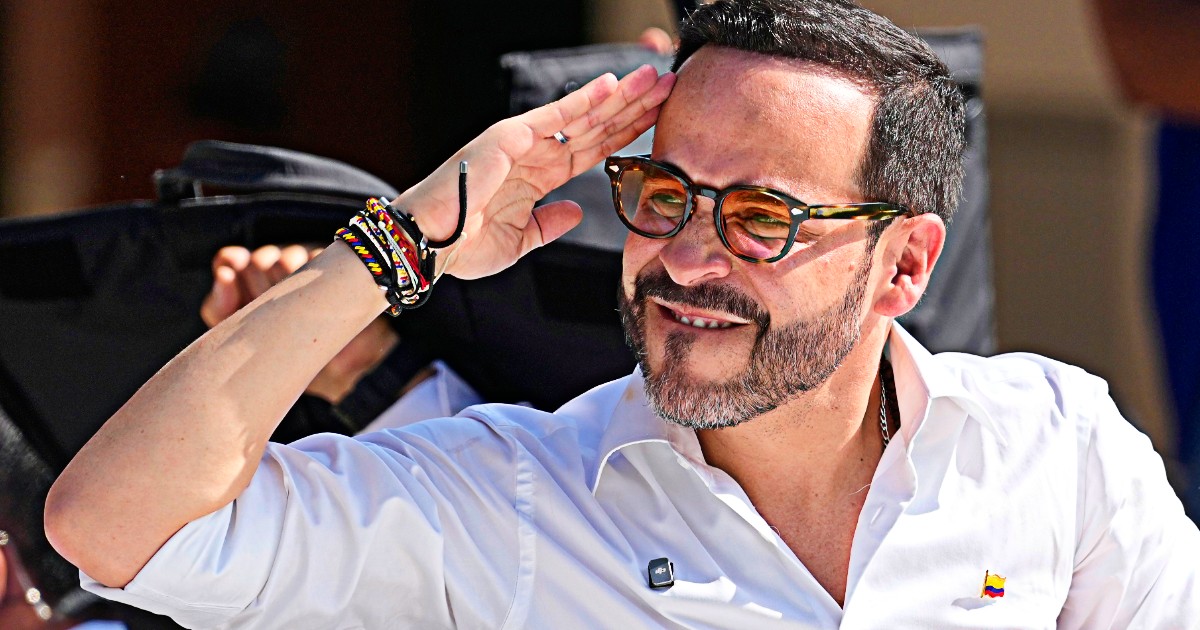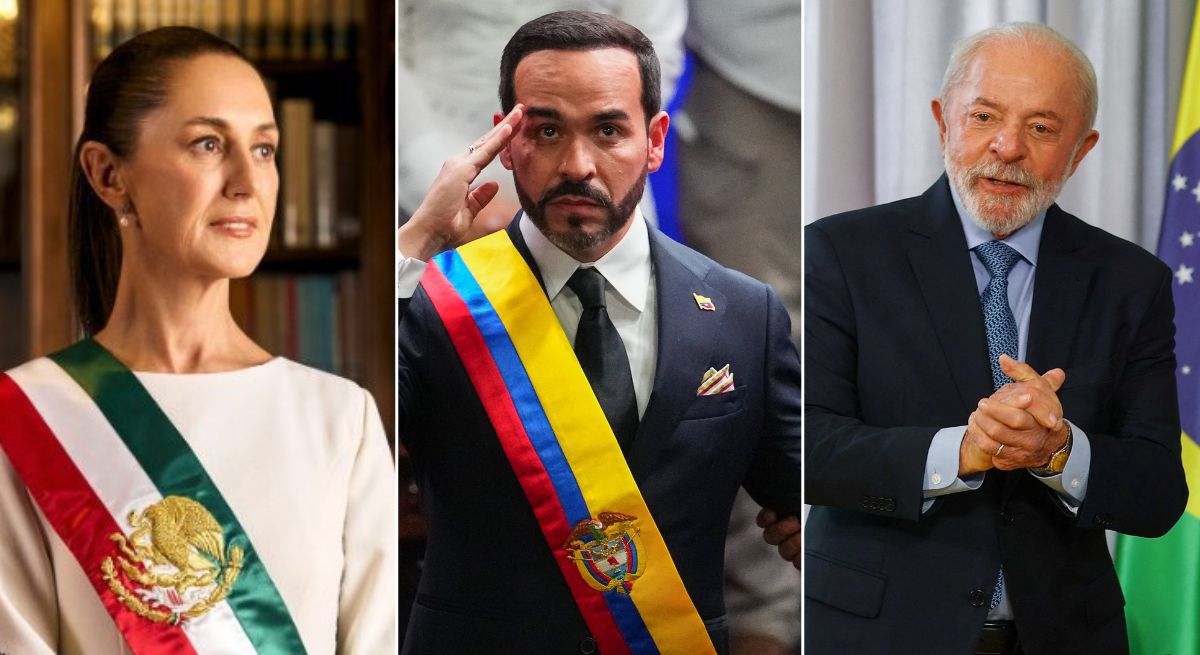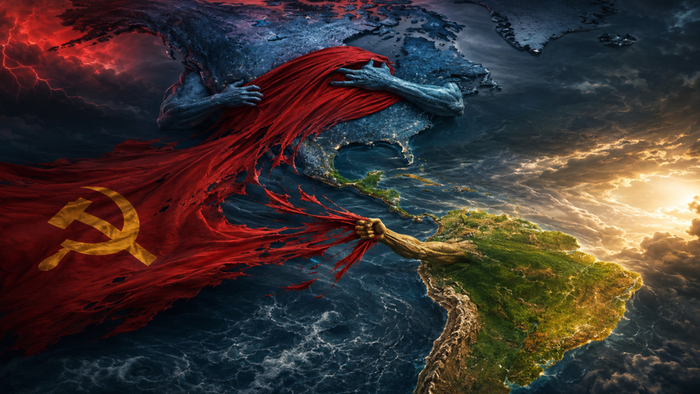
Authored by Kaizen Asiedu of Clear Thinker Academy, I've been in Colombia for the last three months.Yesterday, right-wing Abelardo de la Espriella, aka "The Tiger," was sworn into office, succeeding left-wing self-proclaimed socialist Gustavo Petro.This is what the streets of Medellín looked like when The Tiger won in June.Colombia, Bolivia, Peru, Honduras, Ecuador, Argentina, Chile, El Salvador — all of these Latin American countries had explicitly socialist, far-left, or Marxist governments that they rejected within the last three years:Bolivia. Last October, voters ended two decades of rule by a party named the Movement Toward Socialism.Chile. In December, voters chose José Antonio Kast over a Communist Party candidate.Honduras. In November, they voted out the democratic socialist party of President Xiomara Castro.Ecuador. Rejected the heirs of Rafael Correa's socialist project for the second time in two years.El Salvador. In 2024, the party of former Marxist guerrillas that governed for a decade — during which the country became the murder capital of the world — was wiped from the legislature entirely. Zero seats.Peru. Two weeks ago, Keiko Fujimori was sworn in after defeating a leftist who served in the cabinet of Pedro Castillo, the Marxist president Peruvians impeached and imprisoned.Argentina. The left-wing governments that ran the country for most of two decades nationalized the oil company, the airline, and private pension funds. Inflation passed 200%. In 2023 voters elected Javier Milei, who campaigned on reversing all of that.Applying the socialist label can be tricky, because it's an abstract ideology.Some will argue that a few of the examples I gave aren't socialism.They're right — about the labels.These movements went by different names.Some called themselves socialists.Some were Marxists who never used the word.Some skipped labels entirely and just governed the same way — nationalizing industries, centralizing control.Different branding. Same ideology: state control over the market, and wealth as something to seize and redistribute rather than create.That's what I mean by "socialism" in this letter.That's the worldview that the leaders of all of these countries had.And it's what voters rejected.It's an abstract ideology, with some variation.I'll get more into what socialism technically is later to make things concrete.But what wasn't abstract were the results these administrations produced: increased crime, gang violence, unchecked immigration, economic problems.What wasn't abstract was the experience of voters who had to live with the actual results of abstract theories — and rejected them.Meanwhile, in America — the country people fleeing socialism risk everything to reach — socialism is growing in popularity.66% of Democrats now view socialism positively.62% of Americans under 30 have a favorable view of socialism.South America is moving away from socialism, after having tried it.North America is moving toward socialism, having never tried it.We shouldn't have to learn this lesson the hard way.In my first month in Colombia, on my way back from Spanish class, I met a man who explains all of this better than any thinkpiece could — a deported Venezuelan who called Trump the modern-day Hitler.But then thanked him in the same conversation.More on that later.Americans Don't Know What Socialism Actually IsThe problem with discussing socialism is that often when it's discussed, we're not all talking about the same thing.Many of the Americans excited by socialism think it's defined by universal healthcare, affordable housing, free childcare.That is incorrect.Many Americans also think socialism is what Scandinavian countries (Norway, Sweden, Denmark) do.That is also incorrect.In the words of Denmark's own prime minister, from a talk he gave at Harvard in 2015: "Denmark is far from a socialist planned economy. Denmark is a market economy."AKA — capitalist.The confusion is measurable.According to Gallup polling: in 1949, 34% of Americans defined socialism as government ownership or control of the economy, and only 2% said "benefits and services."The 34% were correct.By 2018, government ownership had fallen to 17% while "equality" had climbed to 23% — the single most common answer.The word has drifted from being understood correctly as a description of how an economy operates, to a vibe about fairness.So let's restore the definition, because clear thinking requires clear definitions.Socialism is defined by one thing: who owns the means of production.The "means of production" are the infrastructure used to produce goods and services — factories, land, firms, capital. Whoever owns them captures the wealth they generate.Under capitalism, private individuals own the means of production and keep the profits.Under socialism, that ownership is through collectives, or the government.In practice, it's almost always the government.That's the dividing line. Not tax rates. Not government benefits. Not wealth inequality. Not social justice.You can have a capitalist system with high taxes, high government benefits, and low wealth inequality — that's what Scandinavian countries are.You can also have a capitalist system with low taxes, low government benefits, and high wealth inequality — like Singapore.Or you can have America — which is in between.And there are socialist countries where the state controls the money, benefits are generous on paper, and inequality is low. Venezuela. Cuba.Countries where the taxes are high, but the money doesn't actually help people.Countries where government benefits are high on paper, but low quality in reality.Countries where there's low wealth inequality — because everyone is poor.Fortunately for the Latin American countries that recently rejected socialism, they cut the socialism experiment short before it wrecked them.Some countries, like Venezuela, weren't so fortunate.The Venezuelan Who Called Trump Hitler — and Thanked HimWhile in Medellín, I met a man who was born in Venezuela and brought to America by his parents when he was a boy.He lived in America for 34 years.He was deported by ICE and is now homeless on the streets of Medellín.He asked me for money, so I gave him some.We had a conversation about his experiences.He described Donald Trump as the modern-day Adolf Hitler.Now you might wonder — why is a Venezuelan-born man who was deported from America living in Colombia? Why not go back to Venezuela?Because Venezuela has been ruined by socialists.Most Americans who want socialism, have never spoken to someone who lived under socialism.
South America Just Rejected Socialism. So Why Is North America Buying It?
"You don't need history books to evaluate socialism anymore. You don't even need a passport. You can go look at the results in the present day — or talk to the people in America who escaped them."
2,205 words~10 min read