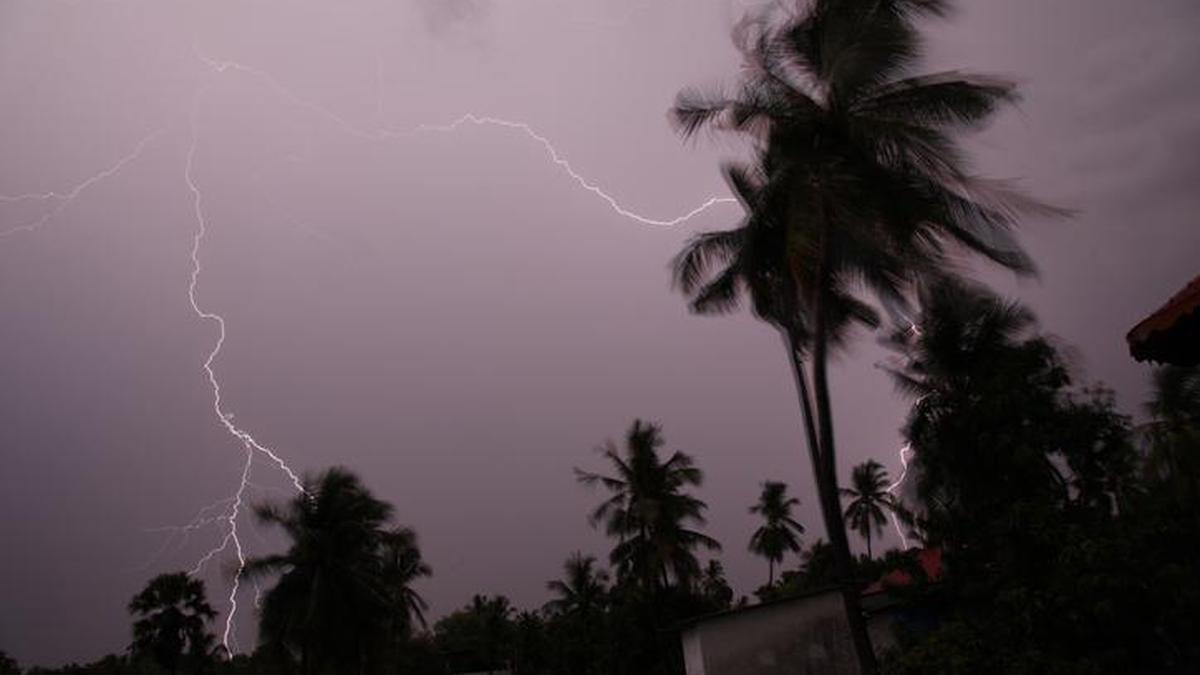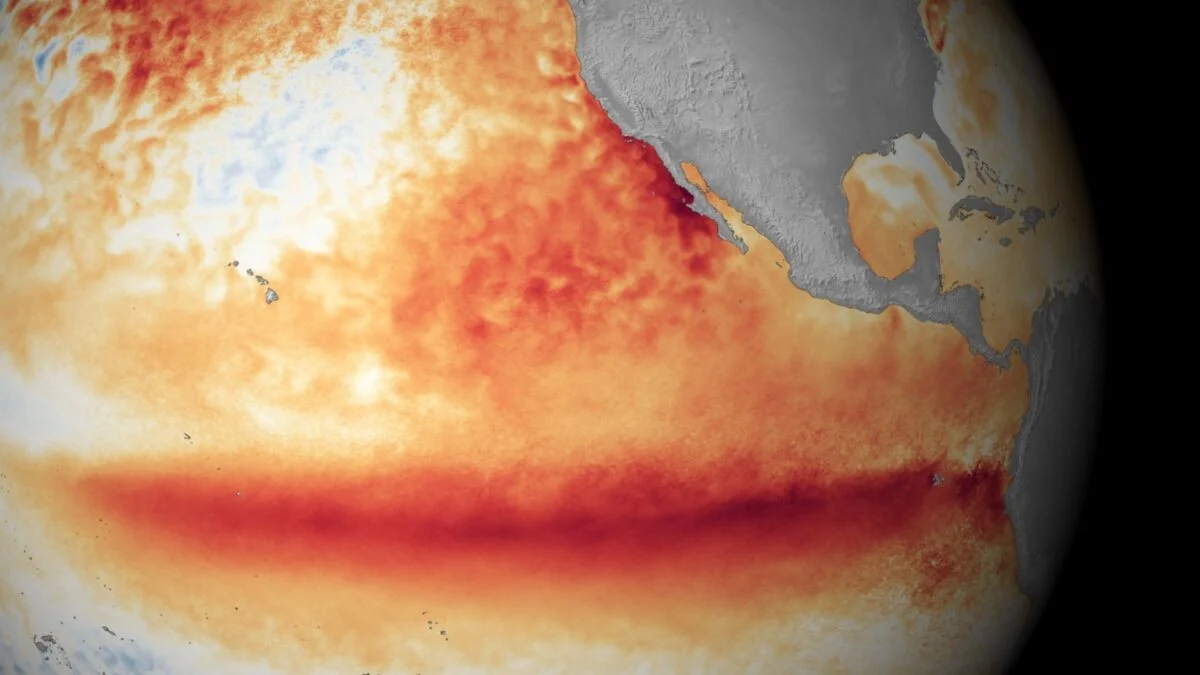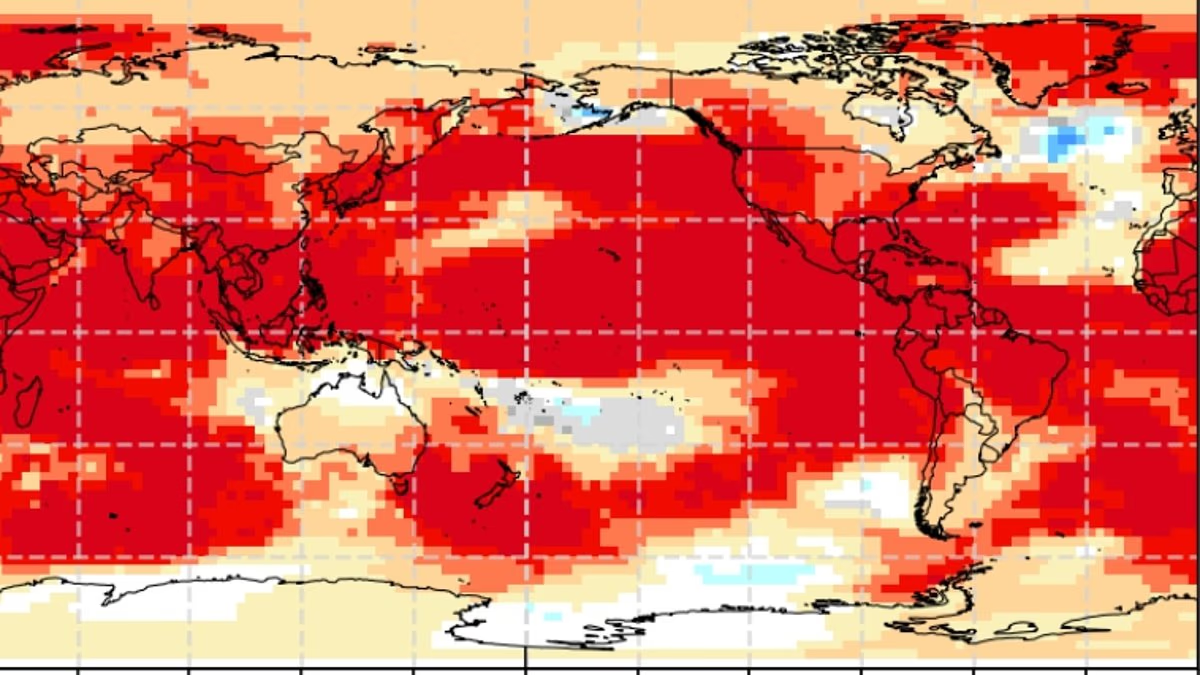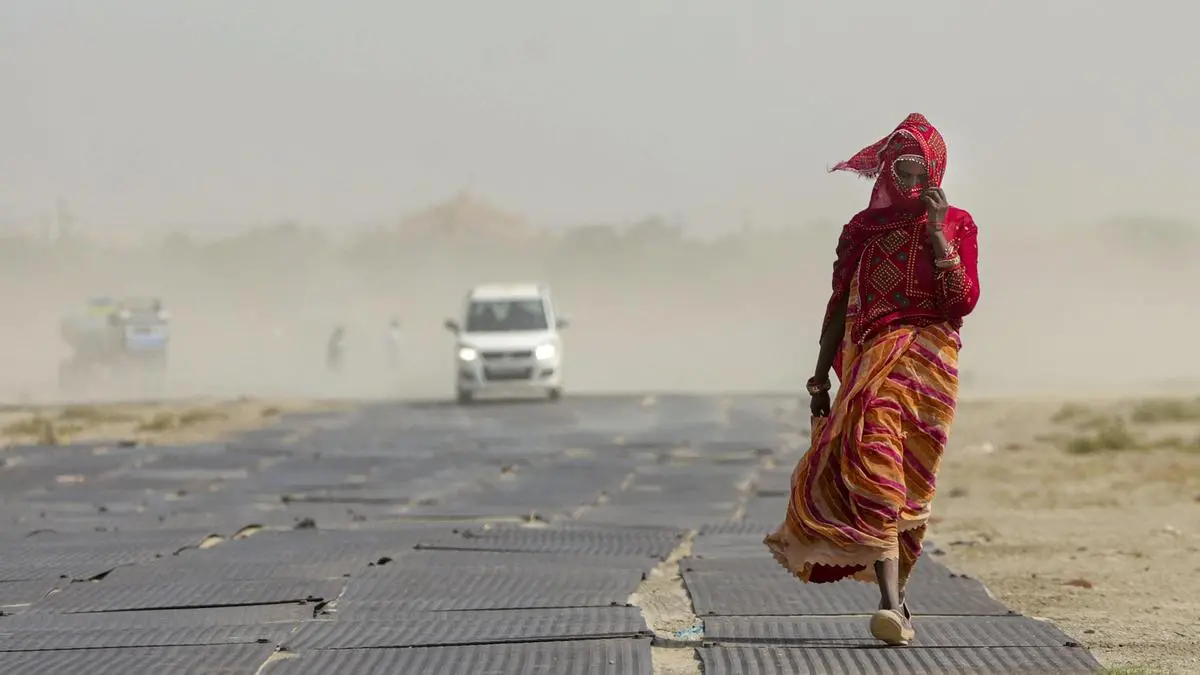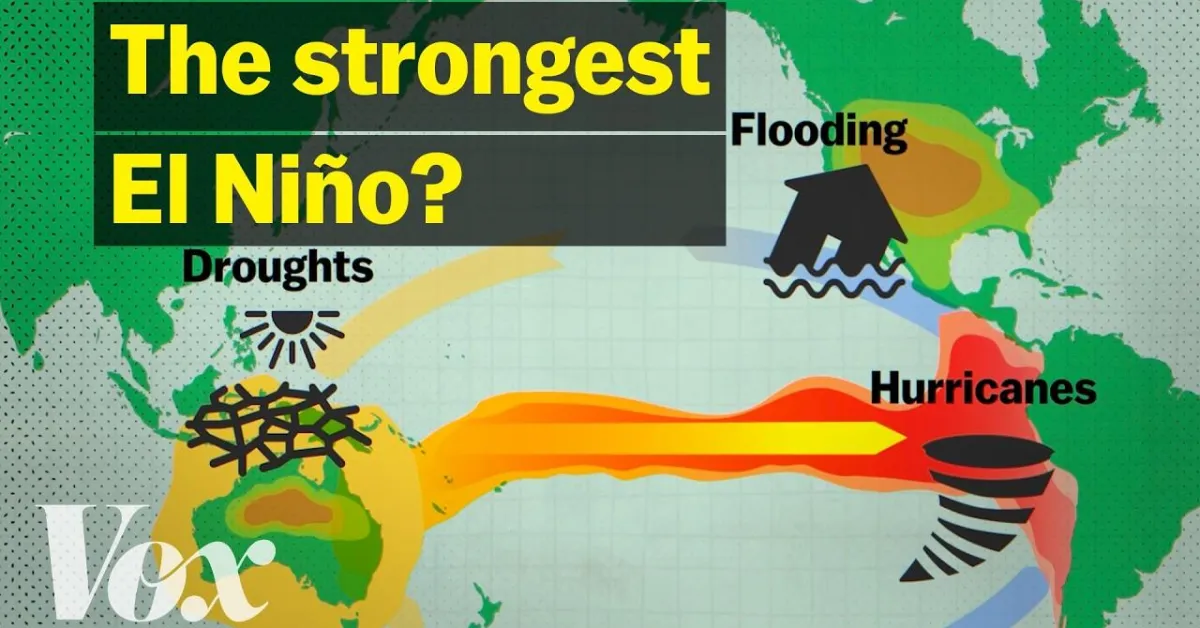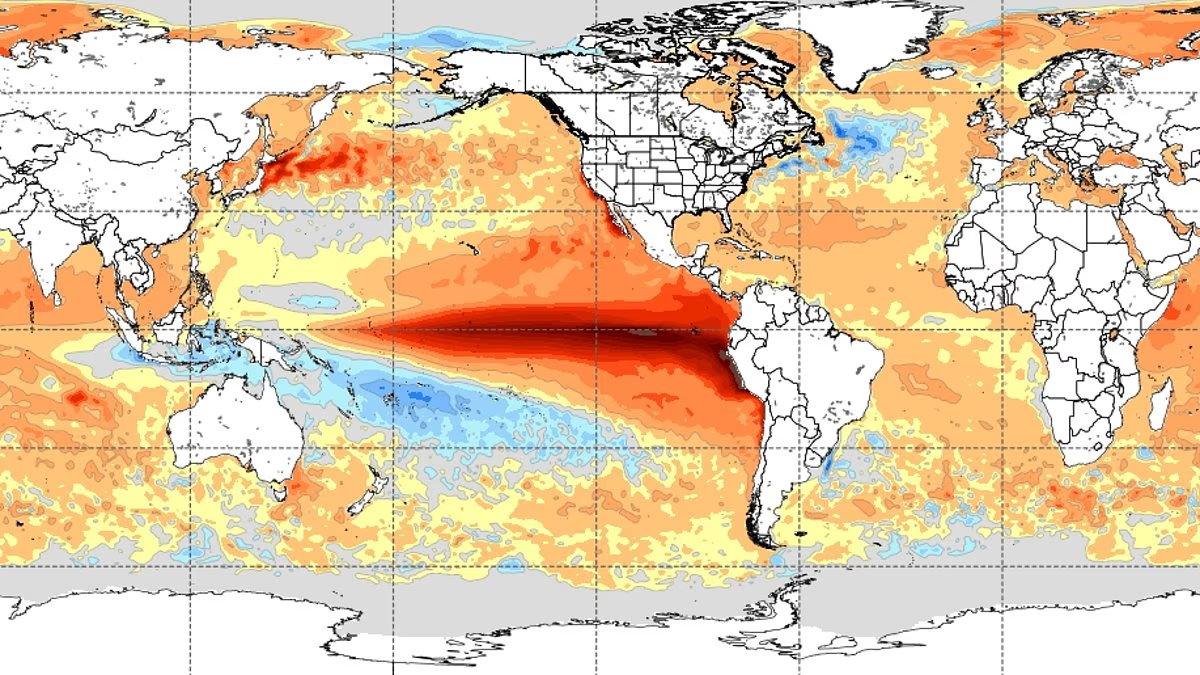
With Super El Niño now well underway, a terrifying report has revealed the impact the climate event could be having on your health. Scientists have long known that marine heatwaves can be devastating for ocean ecosystems.But researchers from Adelaide University and the University of Hong Kong now warn they can also spark a slew of physical and mental side effects.According to the experts, these extreme weather events can trigger everything from respiratory and cardiac issues to grief, anxiety and post–traumatic stress disorder.This comes as new data shows that the still–growing El Niño in the Pacific has sent sea surface temperatures soaring to their highest levels ever recorded for July.The EU's Copernicus Climate Change Service found that this has already triggered severe marine heatwaves around Europe, with conditions only predicted to worsen in the coming months. Lead author Dr Laura Falkenberg, from Adelaide University, says: 'Marine heatwaves are no longer just recognised as an environmental issue; they are increasingly also perceived as a human health issue.'They can intensify storms and atmospheric heatwaves, affect the availability and safety of seafood, disrupt livelihoods and contribute to anxiety, grief and other mental health impacts in communities that depend on healthy oceans.' With Super El Niño sending ocean temperatures soaring, a terrifying report warns that marine heatwaves could wreak havoc on your healthJust like those occurring over land, marine heatwaves are intense periods of above–average temperatures lasting from days to months.For marine life, these sudden periods of unseasonable heat can be deadly, driving mass die–offs and disastrous coral bleaching.That can already have a significant impact on people who rely on fish stocks for their livelihood but scientists warn that marine heatwaves can also have more direct impacts.Most dramatically, marine heatwaves 'supercharge heat and moisture exchange between water and air'.This rapidly intensifies storms and heatwaves over land in ways that long–term forecasts find extremely difficult to predict.For example, in 2023, marine heatwaves contributed to the intensification of Hurricane Otis as it made landfall in Mexico, displacing 34,500 families and causing more than $15 billion (£11.11 bn) in damage.Likewise, a particularly intense marine heatwave worsened the impact of Typhoon Doksuri in that same year, affecting more than two million people across Southeast Asia.In addition to the initial deaths, Typhoon Doksuri triggered widespread outbreaks of crop and animal diseases in China, leading to long–lasting health impacts. Marine heatwaves intensify tropical storms. In 2023, an intense heatwave worsened the impact of Typhoon Doksuri, affecting more than two million people across Southeast Asia. Pictured: The aftermath of Typhoon Doksuri in Hebei province, China This comes after global ocean temperatures hit a record high in a worrying sign that the Super El Niño is strengthening How can marine heatwaves harm your health? Accelerating tropical storms, which trigger outbreaks of disease due to dead animals and stagnant water Intensifying heatwaves on land, sparking respiratory and cardiac issues Algal blooms can lead to skin-irritating rashes for swimmers and dangerous conditions for people with compromised immune systemsTriggering poisonous contamination of seafood Increasing mental health issues, such as anxiety, grief and post–traumatic stress disorder The sudden temperature spike associated with a marine heatwave also triggers sudden and extremely intense algal blooms.These are explosions of microscopic plants and phytoplankton in the water that are driven to reproduce faster in the warm temperatures.As the algae grow, they produce toxins which can be deadly for any animals in the surrounding area.While algal blooms do occur naturally, studies have shown that marine heatwaves lead to events that are faster, larger, and more toxic than they would be under normal gradual warming.The researchers warn that this can contaminate food supplies and lead to poisoning and pose a serious health risk to those living in coastal areas.Given that around 3.2 billion people get 20 per cent of their dietary protein from seafood, any disruption to marine ecosystems threatens to undermine food sustainability.However, the researchers also argue that marine heatwaves can have mental health impacts as well as purely physical ones.Dr Falkenberg says: 'Many people rely on healthy oceans not only for food and income, but also for recreation, cultural identity and their overall sense of wellbeing. Heatwaves also drive toxic algal blooms, like the one that poisoned the waters around South Australia for almost a year, starting in 2025Algal blooms can be deadly for local wildlife, which can cause serious mental health impacts for people who live and work around the sea. Pictured: A great white shark killed by the 2025 algal bloom in South Australia 'When marine ecosystems suffer, the impacts ripple through communities.'For example, in 2025, a marine heatwave off the coast of South Australia pushed temperatures 2.5°C (4.5°F) above average.This combined with elevated nutrient levels to produce an unprecedented algal bloom that officially lasted from March 2025 until February 2026 and covered some 7,741 square miles (20,050 km squared) of ocean.During the bloom, researchers noted that people suffered from high levels of 'eco–anxiety'.This led to grief, frustration and depression, alongside physical conditions such as respiratory irritation and asthma.Dr Falkenberg says: 'We are seeing increasing evidence that these changes can contribute to eco–anxiety, grief and other mental health challenges, particularly for people who feel deeply connected to the marine environment.'The researchers are now calling for marine forecasts to be incorporated into public health planning, arguing that governments and public health agencies should begin treating marine heatwaves in much the same way they prepare for land–based heatwaves.'If we only respond after disasters occur, we will continue to experience greater impacts than if we had acted proactively,' says Dr Falkenberg.WHAT IS THE EL NINO PHENOMENON IN THE PACIFIC OCEAN?El Niño and La Niña are the warm and cool phases (respectively) of a recurring climate phenomenon across the tropical Pacific - the El Niño-Southern Oscillation, or 'ENSO' for short.The pattern can shift back and forth irregularly every two to seven years, and each phase triggers predictable disruptions of temperature, winds and precipitation. These changes disrupt air movement and affect global climate. ENSO has three phases it can be: El Niño: A warming of the ocean surface, or above-average sea surface temperatures (SST), in the central and eastern tropical Pacific Ocean. Over Indonesia, rainfall becomes reduced while rainfall increases over the tropical Pacific Ocean. The low-level surface winds, which normally blow from east to west along the equator, instead weaken or, in some cases, start blowing the other direction from west to east. La Niña: A cooling of the ocean surface, or below-average sea surface temperatures (SST), in the central and eastern tropical Pacific Ocean. Over Indonesia, rainfall tends to increase while rainfall decreases over the central tropical Pacific Ocean. The normal easterly winds along the equator become even stronger.Neutral: Neither El Niño or La Niña. Often tropical Pacific SSTs are generally close to average.Source: Climate.gov
Super El Niño could wreak havoc on your HEALTH, report reveals
With Super El Niño now well underway, a terrifying report has revealed the impact the climate event could be having on your health.
1,123 words~5 min read