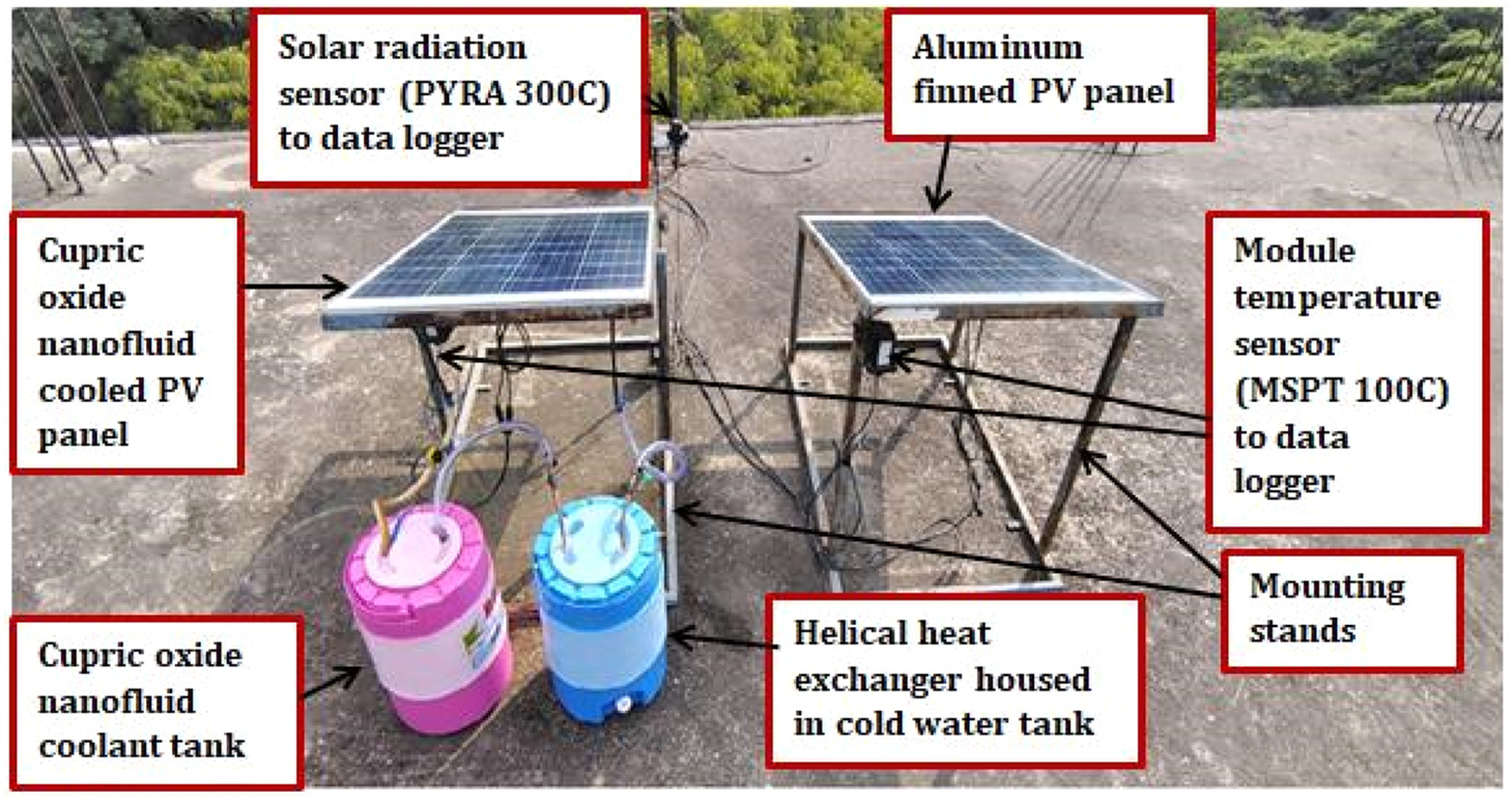
Indian scientists compared aluminum fins with CuO-water nanofluid cooling for PV modules, finding the nanofluid reduced average panel temperature and increased gross power output. However, after accounting for pump power consumption, passive aluminum fins delivered comparable electrical efficiency without requiring auxiliary energy.
A research team from India’s Visvesvaraya Technological University has experimentally compared two PV module cooling approaches – aluminum fins and a copper oxide (CuO)-water nanofluid – under identical operating conditions.
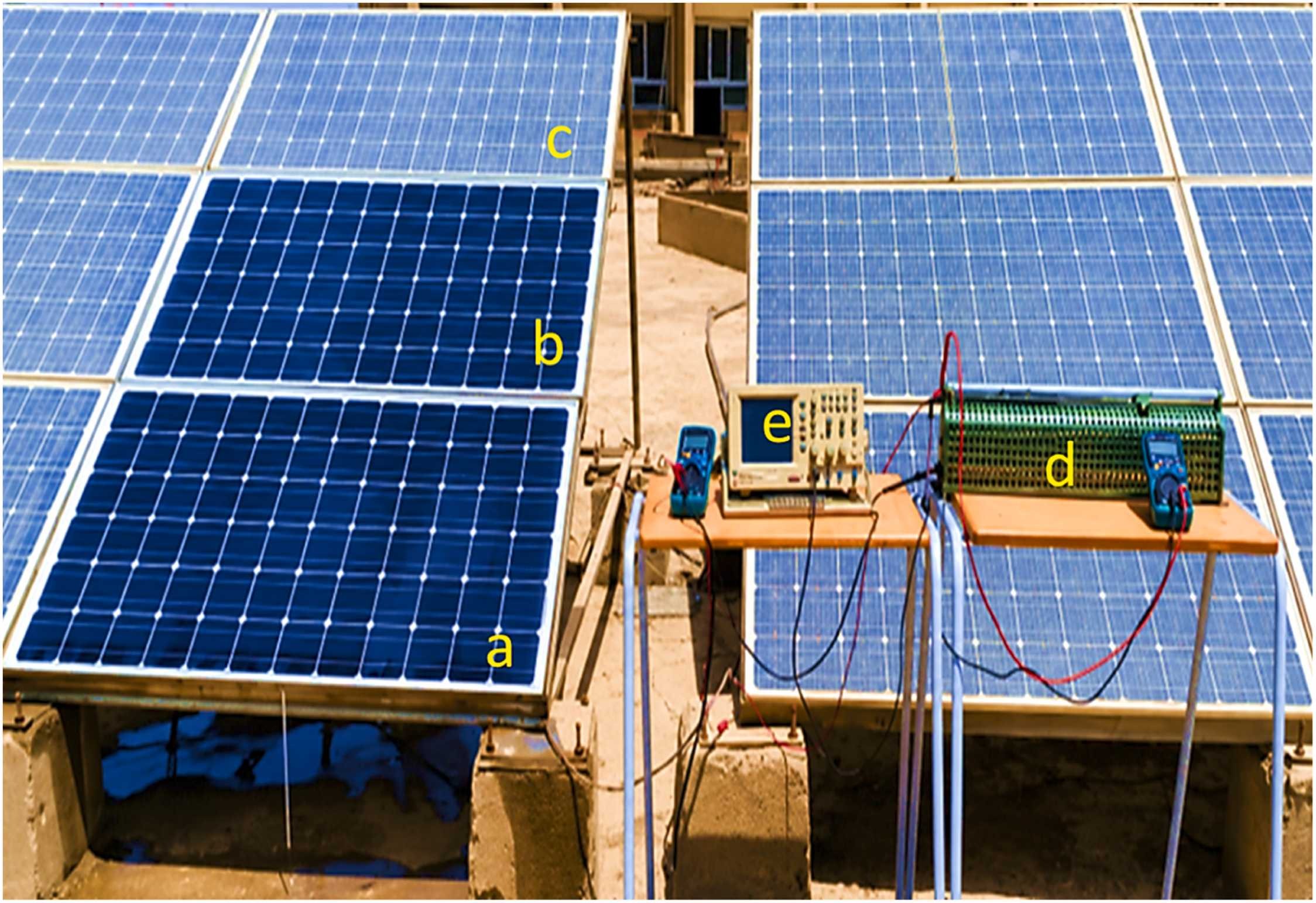
“In this work, two identical PV panels, one cooled by aluminum fins and the other by oxide (CuO) nanofluid, were used in a comparative experimental research,” the team said. “The goal of the experimental investigation was to evaluate the effectiveness of two thermal management approaches passive and active cooling applied to PV panels and examine the influence of each approach on panel temperature as well as electrical output power.”
The researchers evaluated the systems based on module temperature and electrical performance. They tested two identical 100 W polycrystalline PV panels, each with a surface area of 0.67 m². Each module had an open-circuit voltage of 21.9 V, a maximum-power-point voltage of 18.1 V, a short-circuit current of 6.05 A, and a maximum-power-point current of 5.76 A.