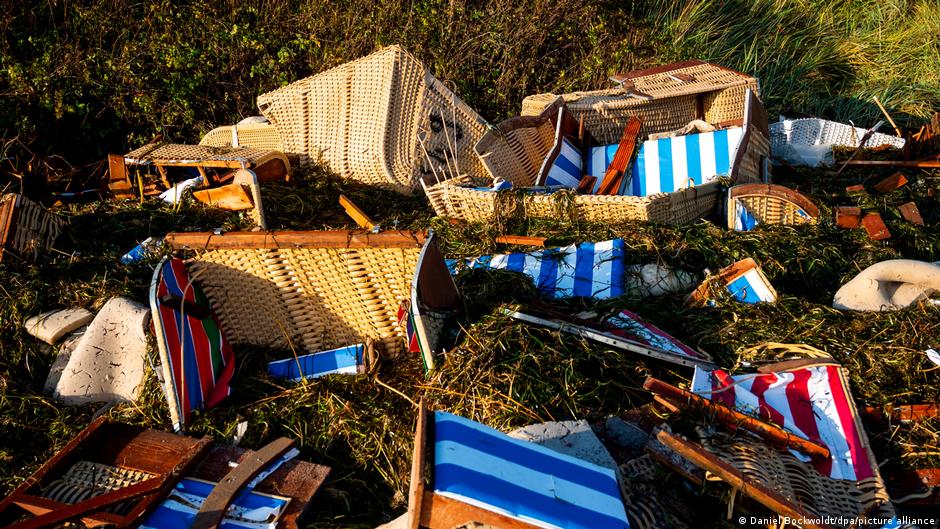
In October 2023, the worst storm surge in more than 150 years hit the Baltic Sea coast. It destroyed dikes, collapsed coastal cliffs and devastated marinas in the northern German state of Schleswig-Holstein and parts of southern Denmark.
The catastrophic surge wiped away 2.68 meters (8.79 feet) of coastal bluff in Kiel, a port city and Schleswig-Holstein's capital. That was more than four times the yearly average lost over the previous two decades.
Human-caused climate change is supercharging extreme weather such as storms. And in coastal cities like Kiel, the consequences are already impossible to ignore.
"The impacts of climate change are hardly abstract in Kiel," said Martina Baum, who heads the city's climate adaptation division. "Since at least the 2023 storm surge, we have all been reminded of the profound effects it can have on us, on our daily lives, and on the environment around us."
Those effects are forcing Kiel — among the first cities to declare a climate emergency back in 2019 — to rethink its design, and how it works. It has since become a front-runner in adapting to the realities of a changing climate, establishing Baum's division in 2025 to help make the city more resilient to weather extremes and adopting an adaptation plan in February 2026 to step up those measures.