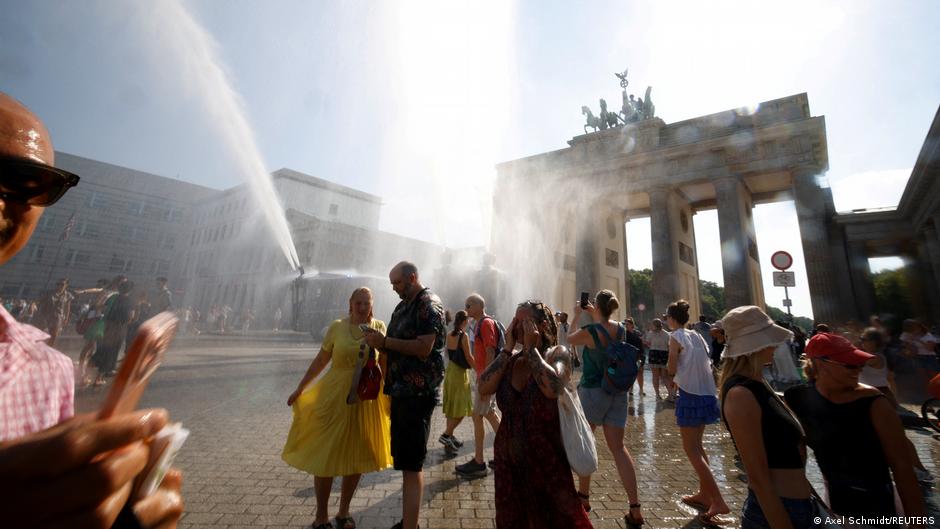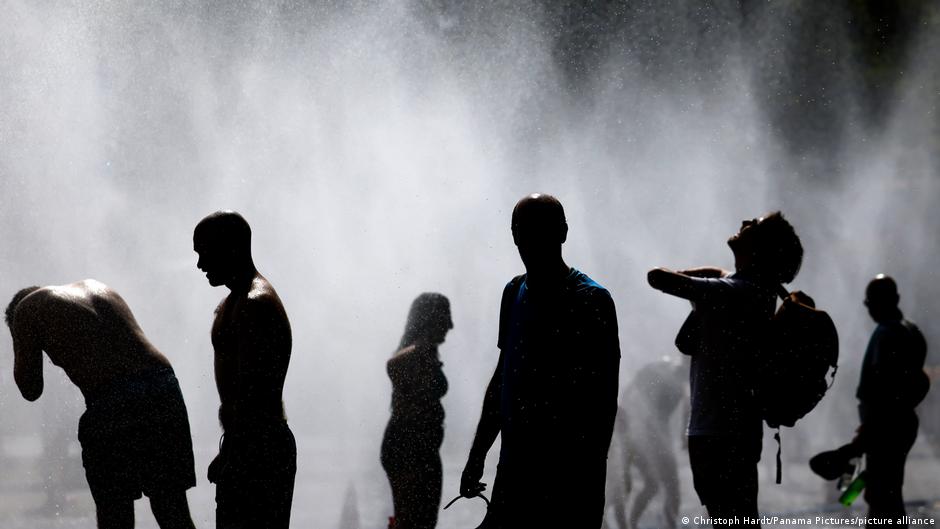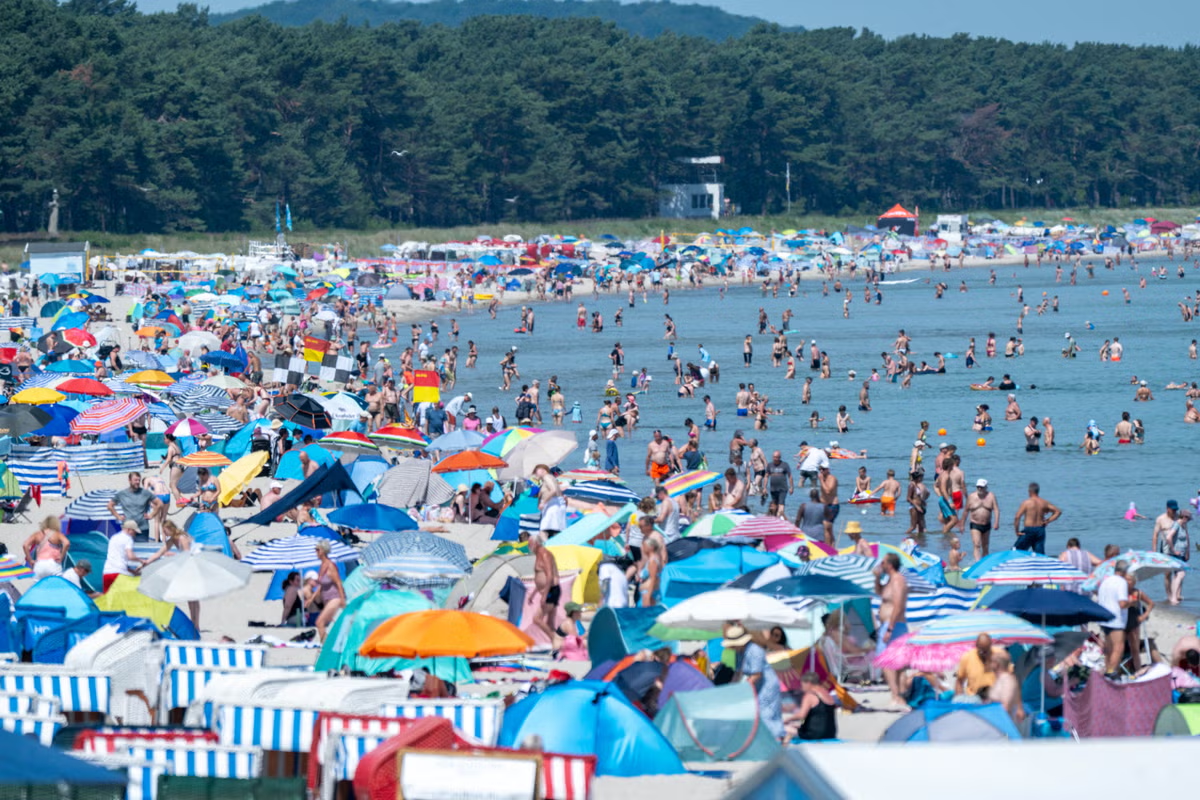
Authorities in Germany used police water cannons and fire brigade vehicles to help residents cool down as Europe endured an intense heatwave that pushed temperatures above 40 degrees Celsius in several countries, shattered weather records and disrupted transport and energy infrastructure.Videos circulating on social media showed German police using riot control vehicles to spray water on people gathered in parks, while a fire brigade vehicle equipped with a perforated hose sprinkled water along streets in the city of Cologne to help lower temperatures for residents.Also Read: Chinese mist cooling systems go viral as heatwave drives demand for outdoor coolingGermany records highest temperaturesBerlin recorded temperatures of up to 39 degrees Celsius on Saturday, prompting police to deploy two water cannons to lightly spray people seeking relief from the heat.Germany also registered a preliminary all-time temperature record of 41.5 degrees Celsius in Moeckern-Drewitz in the eastern state of Saxony-Anhalt, surpassing the previous day's record of 41.3 degrees Celsius near Saarbruecken, according to the German Meteorological Service.— DeshGujarat (@DeshGujarat) Elsewhere, Denmark recorded a preliminary all-time high of 37 degrees Celsius north of Aarhus, the highest since records began in 1874. The Czech Republic also set a new record with temperatures reaching 40.9 degrees Celsius north of Prague, while Switzerland registered its hottest June temperature. Slovakia's capital Bratislava experienced its hottest night on record.Heatwave disrupts transport and power generationThe extreme temperatures affected critical infrastructure across Europe.In Germany, Deutsche Bahn allowed passengers to cancel long-distance rail journeys into early next week, while National Express suspended some services in North Rhine-Westphalia as a precaution against heat-related damage. Near Hamburg, part of one of Germany's busiest motorways was closed after the asphalt cracked because of the heat.The heating of the River Danube forced Hungary's Paks nuclear power plant to reduce output from one reactor. In Switzerland, the Beznau nuclear power station temporarily shut down its reactors due to rising temperatures in the River Aare.— nocomment (@nocomment) Authorities issue heat warningsGerman authorities issued extreme heat warnings across most of the country as temperatures climbed well above 30 degrees Celsius. In France, the heatwave has been linked to dozens of deaths and temperatures above 40 degrees Celsius have disrupted rail services and electricity generation, while also prompting alcohol bans, class suspensions and the postponement of outdoor events.France also announced an extension of its summer sales period after the heatwave affected shopping activity.Italy's Health Ministry issued red alerts for 18 cities, including Milan, Rome, Turin, Venice, Genoa, Florence and Bologna. The River Po's water level has fallen sharply, allowing seawater to move further inland and threatening agriculture and local ecosystems.In the Alps, overnight temperatures remained unusually high. Bolzano in Italy's South Tyrol recorded a June night-time record, with temperatures not falling below 25.4 degrees Celsius.Climate experts link heat to global warmingScientists said the severity of the heatwave would have been virtually impossible without human-induced climate change, which has made this week's exceptionally warm nights around 100 times more likely than they would have been two decades ago, as a Reuters report.Meteorologists talking to Reuters attributed the prolonged heat to an "Omega block," a weather pattern that traps a large mass of hot air over a region for an extended period while cooler air remains around its edges. The most intense heat is expected to begin easing over the weekend, with heavy thunderstorms forecast in several parts of Europe.
European heatwave: Riot vehicles, fire hoses and soaked pedestrians. How Germany is battling record heat
Europe is grappling with an intense heatwave, shattering weather records and pushing temperatures above 40 degrees Celsius in several nations. Germany deployed water cannons to cool residents, while infrastructure like railways and nuclear power plants faced disruptions. Authorities issued widespread heat warnings as the extreme weather, linked to climate change, impacts daily life and poses significant challenges across the continent.
558 words~3 min read