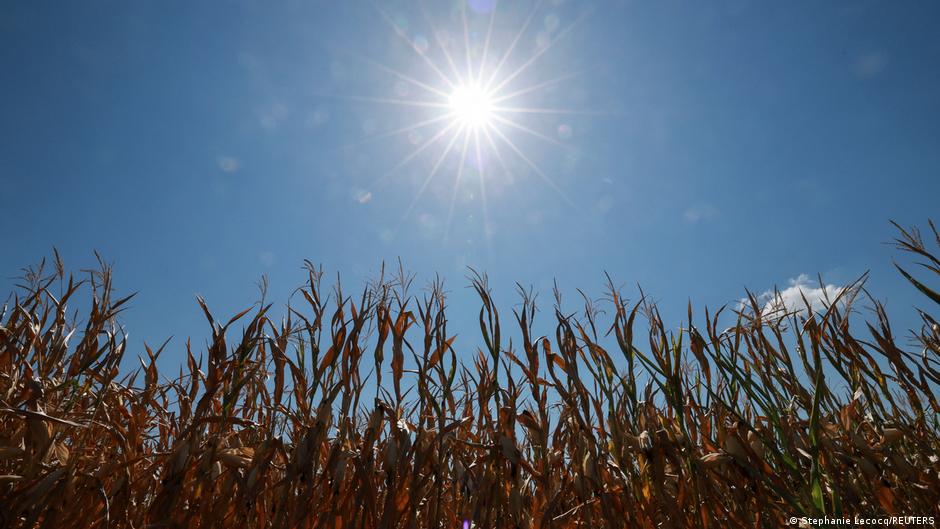
A man cools his head at water hoses spilling water to provide relief from the summer heat as part of Cologne's climate adaptation measures in Cologne, western Germany on June 25, 2026 during a heatwave in Europe. A heatwave sweeping Europe was starting to peak in Germany on June 25, 2026, with several open-air events cancelled and temperatures expected to top 40C through the weekend. Large parts of the country are already under "severe to extreme heat stress" with temperatures soaring to around 37C, the German Weather Service (DWD) said. (Photo by Ina FASSBENDER / AFP via Getty Images)AFP via Getty ImagesRecord-breaking heatwaves across the U.K and Europe this summer have inflicted substantial economic costs, according to two new analyses.The first by the think tank Verdant estimates the heatwaves have cost the U.K economy at least £4.4 billion in lost output since the extreme weather started in May.And the second by the Triodos Bank estimates that the extreme summer weather could reduce EU GDP approximately €180 billion and would effectively erase the growth previously forecast for the year.The Verdant analysis also claims cumulative losses from heatwaves will reach £25.6 billion by 2030 if they continue to intensify.It also confirms previous research by the LSE’s Grantham Institute on Climate Change and the Environment, which identified £1.1bn of losses from reduced working hours only during the UK’s June heatwave.Earlier this month, the U.K’s Met Office confirmed England and Wales have provisionally, recorded their driest July on record, with Southern England seeing its driest month ever recorded.And in May, a report by the Climate Change Committee (CCC) warned the growing impacts of climate change are affecting every aspect of British life, with the three biggest risks being heat, flooding and drought.“The economic costs of climate change are already with us and set to worsen in future years,” said Verdant co-director, Dr. James Meaday, in a statement. “Action by government to protect workers and businesses from the severe effects of extreme heat is well overdue.”MORE FOR YOUSamantha Dickinson, a partner at law firm Mayo Wynne Baxter, said the Verdant estimates of £4.4 billion in lost productivity shows how extreme temperatures are becoming a serious workplace issue, in a statement. Dickinson added employers should pay particular attention to people carrying out strenuous or outdoor work and employees whose health conditions make them more vulnerable to high temperatures.She said whether the U.K ultimately introduces a maximum working temperature is a matter for government, but employers cannot wait for a specific temperature threshold before acting. “With the government already reviewing workplace health and safety guidance on extreme temperatures, these figures will add to pressure for clearer rules on when workplaces become too hot to work safely,” said Dickinson. According to the Triodos Bank report, a loss of labour productivity is the largest and most firmly established economic effect of this summer’s extreme heat. It estimates an average labour-productivity loss of around 0.6% of EU GDP. And it warns higher food prices, constrained power generation and higher electricity prices, and disruption to transport infrastructure will all add to the economic damage.The analysis also claims the impact differs significantly by country., with France being hit the hardest, with GDP growth reduced by 1.4 percentage points.It adds Italy, Spain and to a lesser extent Belgium also face substantial losses, while Poland is less affected because it has experienced fewer exceptionally hot days.Recent figures published by the Copernicus Climate Change Service show Western Europe experienced its hottest June-July period on record and July saw the third and fourth heatwaves since May.The analysis also reveals much of the region also saw the widespread dryness observed in May and June persist and intensify, with exceptionally low rainfall reported in France, Spain, parts of Germany.“This summer shows that climate change is not a distant economic risk,” said Triodos Bank’s chief economist, Hans Stegeman, in a statement. “The extreme heat we all experience today shows concretely how climate change will affect lives, workers and prosperity across Europe.”
Economic Cost Of Summer Heatwaves Highlighted In New Research
Record heatwaves across the U.K and Europe this summer have inflicted substantial economic costs, highlighted by two new reports
662 words~3 min read