Academia
It is true that a hefty share of public spending went into FGDs, seminars and workshops that produced little. But his own government now suffers the opposite failure of executing before it plans, then improvising the plan as the execution collapses. Yet the damage is already done, heavily.
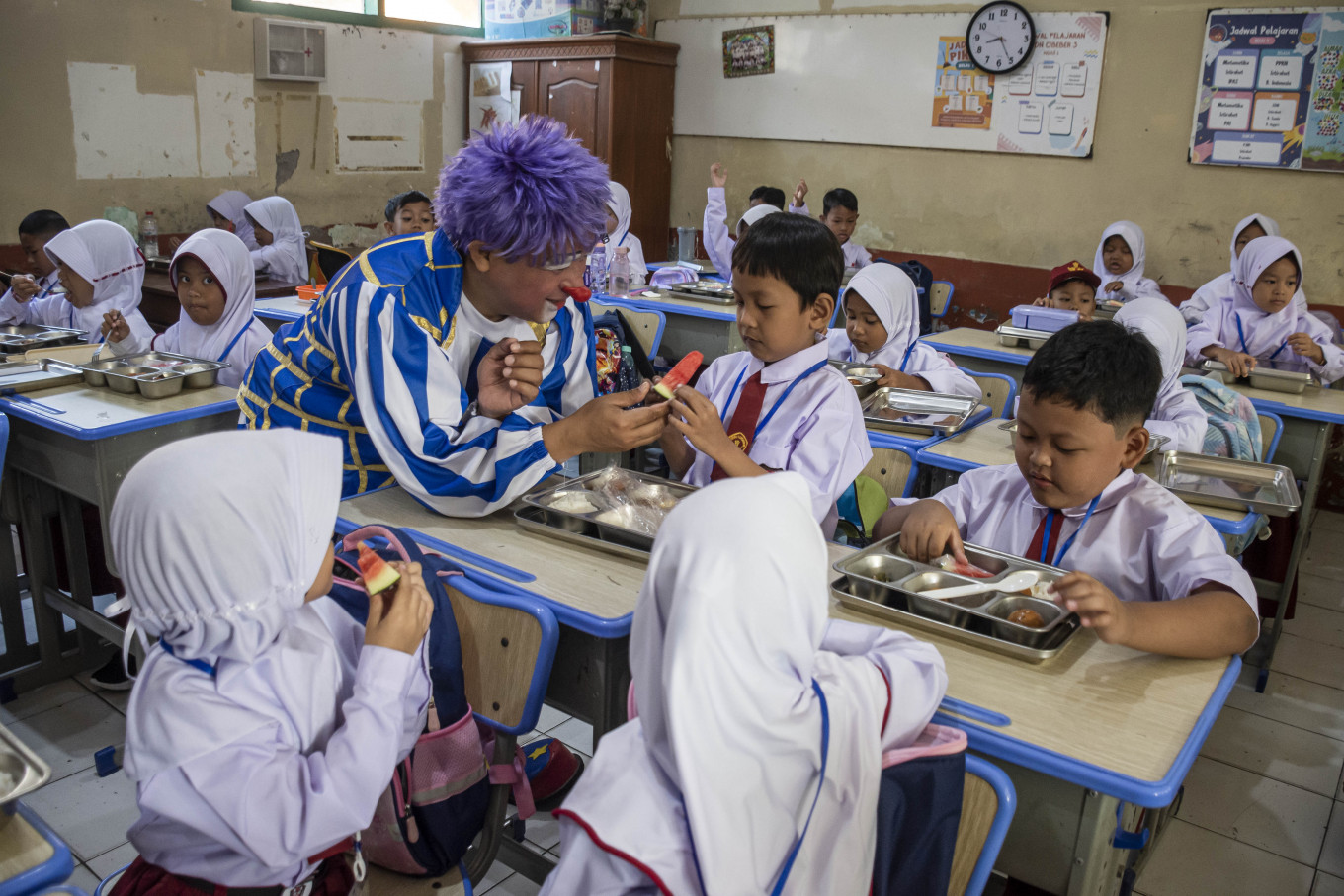
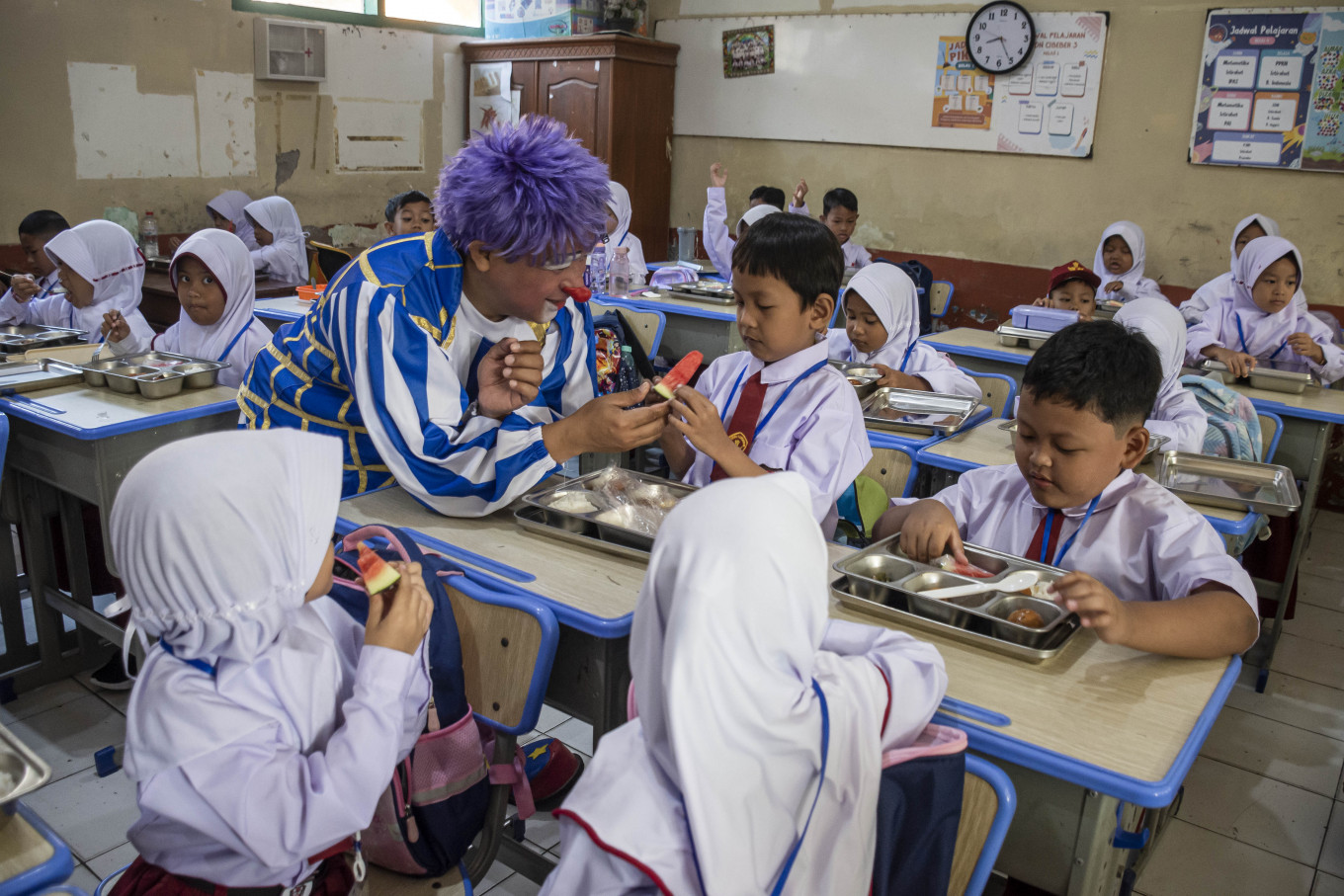
Members of the Cimahi Clown Community distribute free meals to new pupils during the school orientation program at the SD Cibeber state elementary school complex in Cimahi, West Java, on July 14, 2026. (Antara/Abdan Syakura)
When Prabowo Subianto, then a presidential candidate in 2024, mocked the government for holding "too many focus group discussions [FGDs], and too little work on the ground," he was diagnosing a real disease: bureaucracies that plan endlessly and act rarely. Two years into his presidency, the diagnosis has flipped. It is true that a hefty share of public spending went into FGDs, seminars and workshops that produced little. But his own government now suffers the opposite failure of executing before it plans, then improvising the plan as the execution collapses. Yet the damage is already done, heavily.
The clearest evidence sits in two of Prabowo's flagship programs. In the past two months alone, the free nutritious meal program and Red and White Cooperatives caught the spotlight for alleged corruption cases and changes to their implementation schemes, all traceable to planning that was never finished before rollout. For two programs that consume close to 10 percent of the 2026 state budget, about Rp 370 trillion (US$20.6 billion), the margin for error should be near zero, and the cost of mistakes is unimaginable.