Editorial
The case of fraudulent presenters at an international research conference exposes glaring vulnerabilities in the country's education system that stem from misplaced and misguided priorities.
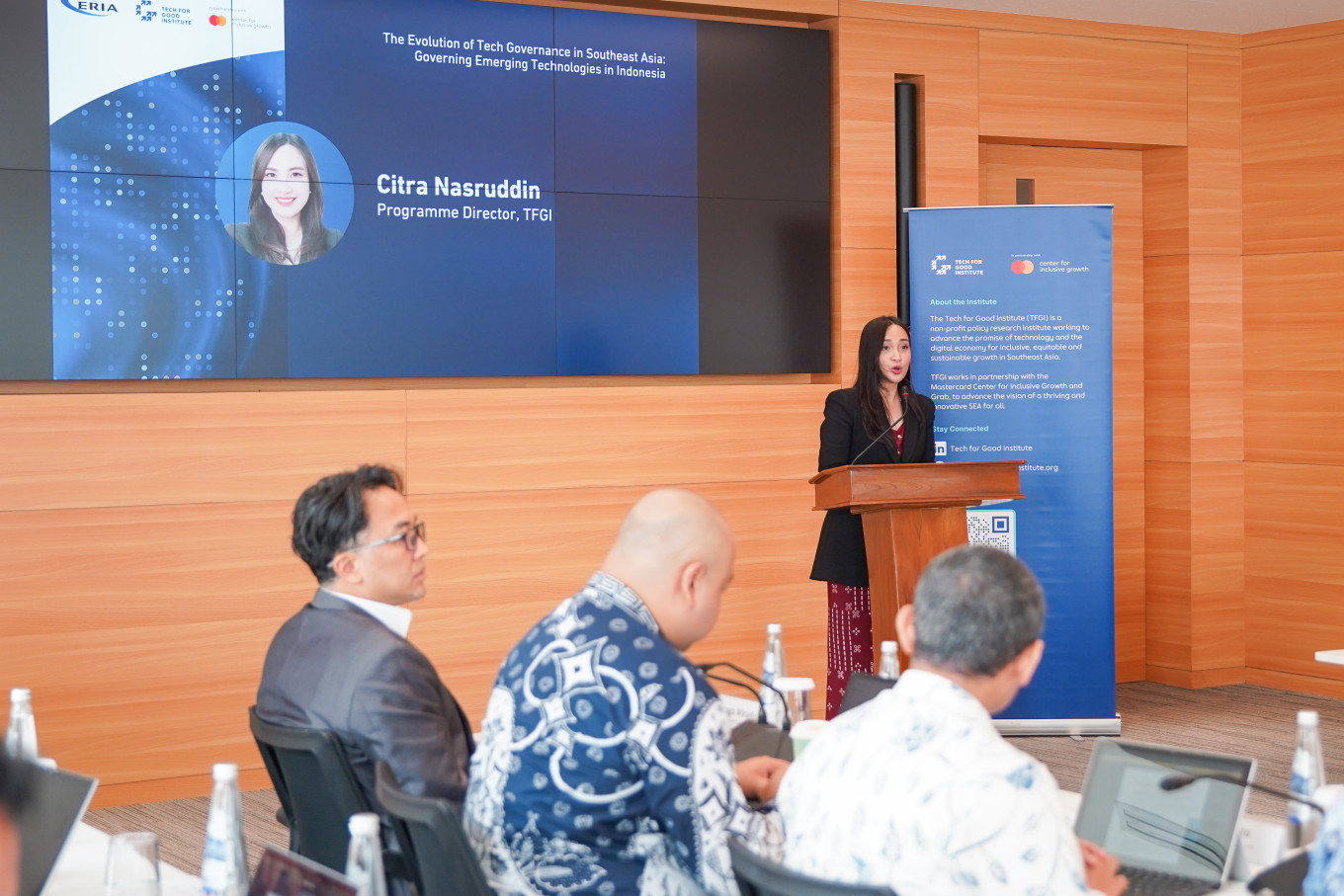
Citra Nasrudin, program director at the Tech for Good Institute (TFGI), delivers a presentation at The Evolution of Tech Governance in Southeast Asia: Governing Emerging Technologies in Indonesia on May 12, 2026, a closed-door roundtable in Jakarta organized in collaboration with the Economic Research Institute for ASEAN and East Asia (ERIA). (Courtesy of ERIA/-)
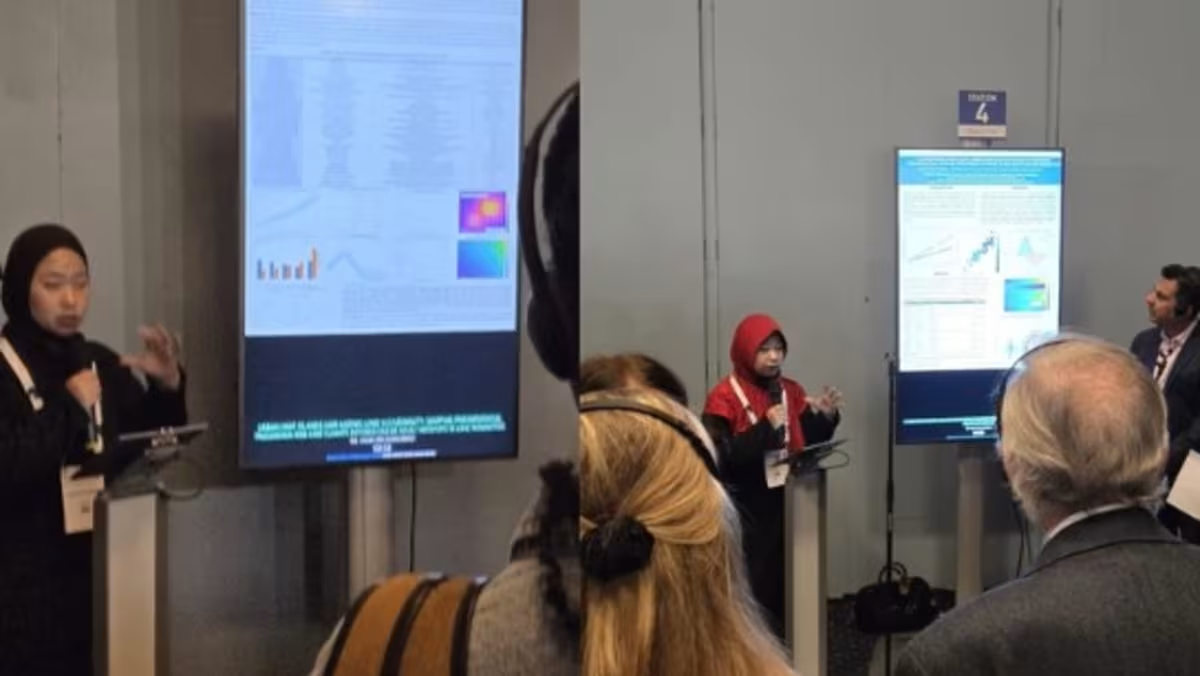
At a medical conference in Copenhagen last month, an Indonesian researcher was caught switching hijabs and name tags between presentation sessions, using several false identities to fraudulently claim travel grants on fabricated studies allegedly generated by artificial intelligence with her partner’s help. The International Society of Pneumonia and Pneumococcal Diseases canceled the grants, and the Higher Education, Science and Technology Ministry is investigating the incident.More important than how the fraud was carried out is how it was detected by an Indonesian doctoral student at Oxford, Wa Ode Dwi Daningrat: Indonesia's pneumonia research community is small enough that she had never heard of the fake presenters’ names.